
India, Sri Lanka reaffirm civilisational ties with exposition of sacred Devnimori Buddha relics
India and Sri Lanka’s centuries-old civilisational and spiritual relationship was highlighted with the first-ever international exposition of the sacred Devnimori relics of Lord Buddha in Colombo, an event described by Prime Minister Narendra Modi as a reflection of the deep cultural bonds shared by the two nations.
The relics, discovered at the Devnimori archaeological site in Gujarat’s Aravalli district, were flown to Sri Lanka aboard a special Indian Air Force aircraft and accorded full state honours, underlining their religious and diplomatic significance. A senior Indian delegation led by Gujarat Governor Acharya Devvrat and Deputy Chief Minister Harsh Sanghavi accompanied the relics.
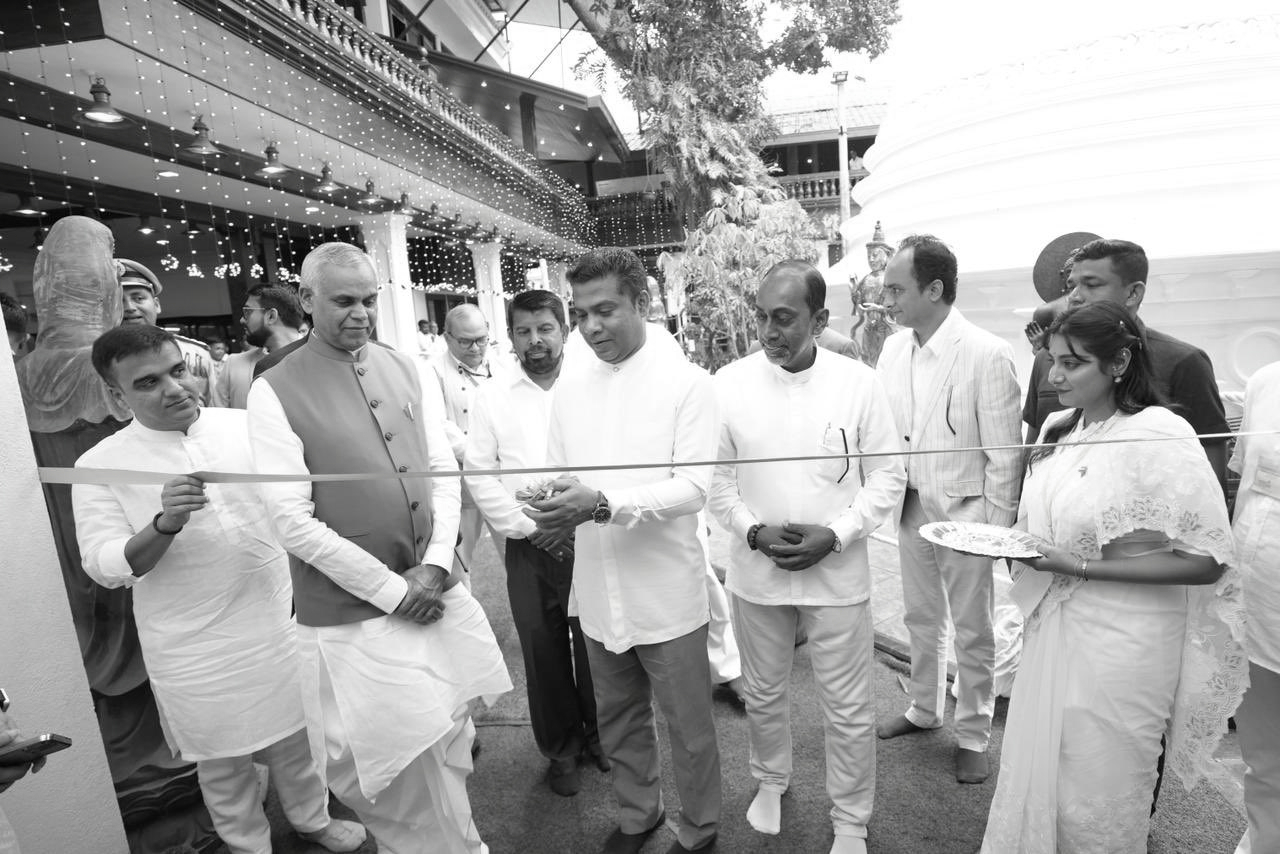
The exposition was inaugurated on February 4, 2026, at the revered Gangaramaya Temple in Colombo by Sri Lankan President Anura Kumara Dissanayake, in the presence of senior Buddhist monks, including the Chief Incumbent of the temple, Ven. Dr. Kirinde Assaji Thero. The relics will remain open for public veneration from February 4 to February 11.
In a message shared on social media, President Dissanayake thanked Prime Minister Modi and the Government of India for honouring their commitment to bring the relics to Sri Lanka, calling the gesture deeply meaningful for the island nation’s Buddhist community. Responding, Prime Minister Modi recalled that the decision to bring the relics to Sri Lanka was taken during his state visit in April 2025. “Our nations are connected by deep civilisational and spiritual bonds,” he said, adding that Lord Buddha’s timeless message of compassion, peace and harmony continues to guide humanity.
The Devnimori relics were unearthed during excavations conducted by the Archaeological Survey of India in the early 1960s. Archaeologists discovered a large Buddhist stupa, inside which was found a relic casket containing bone ashes (śarīra). An inscription associated with the relics explicitly refers to “Bhagavato Budhasa”, identifying them as relics of Lord Buddha. Based on inscriptions, coins, pottery and architectural features, the stupa has been dated to the 3rd–4th century CE, a period when Buddhism flourished across the Indian subcontinent.
Following their discovery, the relics were preserved by the Government of India under secure custody and treated as national and religious treasures. They are ordinarily enshrined at the Maharaja Sayajirao University of Baroda in Vadodara and had never been displayed abroad until the current exposition.
The display of the Devnimori relics in Sri Lanka is being seen as a powerful symbol of the shared Buddhist heritage linking the two countries. Buddhism reached Sri Lanka from India in the 3rd century BCE when Arahat Mahinda, son of Emperor Ashoka, introduced the faith to King Devanampiya Tissa. Over centuries, Sri Lanka emerged as a major centre of Theravāda Buddhism, preserving texts and traditions that later influenced Buddhist practice across Asia.
Beyond Buddhism, India and Sri Lanka share enduring cultural links through ancient trade routes, languages, literature, art, architecture and Hindu traditions shaped by centuries of interaction across the narrow stretch of sea separating them. The arrival of the relics coincided with Sri Lanka’s 78th Independence Day, lending additional symbolic importance to the event.
India has also extended financial assistance for the development of key Buddhist sites in Sri Lanka, including Anuradhapura, reinforcing its commitment to cultural and spiritual cooperation. Earlier, India had organised the exposition of the Kapilavastu relics in 2012 and the Sarnath relics in 2018 in Sri Lanka. The Devnimori exposition, however, marks the first public veneration of these relics outside India, further strengthening people-to-people ties between the two nations.