
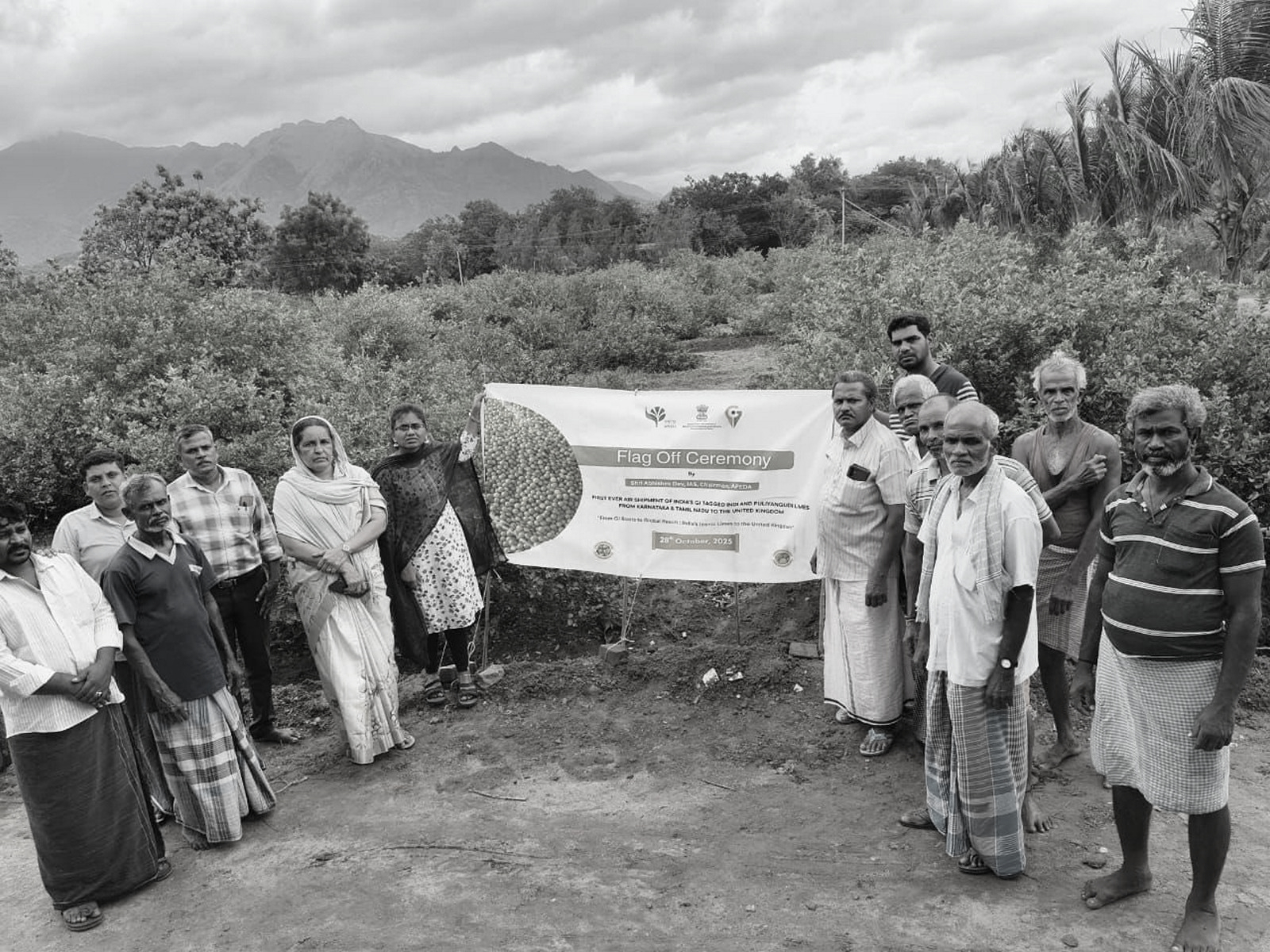
India sends first-ever air shipment of GI-tagged 'Limes' to United Kingdom
In a landmark move for India’s agri-exports, the country has dispatched its first-ever air shipment of Geographical Indication (GI)-tagged limes to the United Kingdom, marking a new chapter in promoting India’s region-specific horticultural produce in global markets.
The export, facilitated by the Agricultural and Processed Food Products Export Development Authority (APEDA) under the Department of Commerce, includes two of India’s premium lime varieties - the ‘Indi Lime’ from Karnataka and the ‘Puliyankudi Lime’ from Tamil Nadu. Announcing the dispatch, Union Commerce Minister Piyush Goyal said the initiative represents a “major step toward empowering farmers and taking India’s GI-tagged products to the world.”
Earlier this year, APEDA also enabled the export of three metric tonnes of Swadeshi Indi Lime from Vijayapura, Karnataka, to the United Arab Emirates, handled by Culveda Greentech Private Limited, a farmer-driven enterprise. While financial figures were not disclosed, the shipment was hailed as a milestone in building global recognition for India’s indigenous produce.
Both lime varieties have earned GI status for their unique characteristics tied to their native soil and climate. The Indi Lime, cultivated in Vijayapura’s black-cotton soil, is prized for its thin rind, high juice content, strong aroma, and elevated citric-acid level, giving it an intense tang and freshness ideal for beverages, pickles, and oil extraction. The Puliyankudi Lime from Tamil Nadu’s Tenkasi region is known for its bright color, uniform size, longer shelf life, and high essential-oil yield, making it sought-after in the food, cosmetic, and medicinal industries. The GI tag not only preserves their authenticity but also raises their market value abroad.
While APEDA led the coordination, the effort dovetails with several of Prime Minister Narendra Modi’s MSME-linked initiatives that support rural entrepreneurship and export diversification. Farmers and small processors engaged in lime cultivation have benefited from programs like the PM Formalisation of Micro Food Processing Enterprises (PM-FME) scheme, which offers capital subsidies up to 35 percent for upgrading processing and packaging units. The One District One Product (ODOP) initiative has identified Vijayapura and Tenkasi for lime value-chain promotion, providing branding and export-readiness training in collaboration with APEDA and the Department for Promotion of Industry and Internal Trade (DPIIT).
Through Atmanirbhar Bharat reforms, small producer groups have gained easier access to credit, export registration, and online marketing platforms, while cluster programs such as SFURTI have offered training in value addition and sustainable cultivation. As a result, lime growers now receive ₹45–60 per kg for export-grade produce, nearly double the domestic price-helping transform traditional cultivators into organized MSME exporters.
The latest shipment of GI-tagged limes to the UK not only reflects India’s rising strength in niche agri-exports but also demonstrates how coordinated support between APEDA, MSME programs, and local farmer groups can turn regional specialties into globally recognized brands.