
India Seeks $278 Billion for Land Restoration, Drought Resilience at COP17
India has called for diversified, adequate, predictable and sustained international finance to accelerate land restoration and strengthen drought resilience, while showcasing its own green-finance mechanisms at the 17th Conference of Parties (COP17) to the United Nations Convention to Combat Desertification (UNCCD) in Ulaanbaatar.
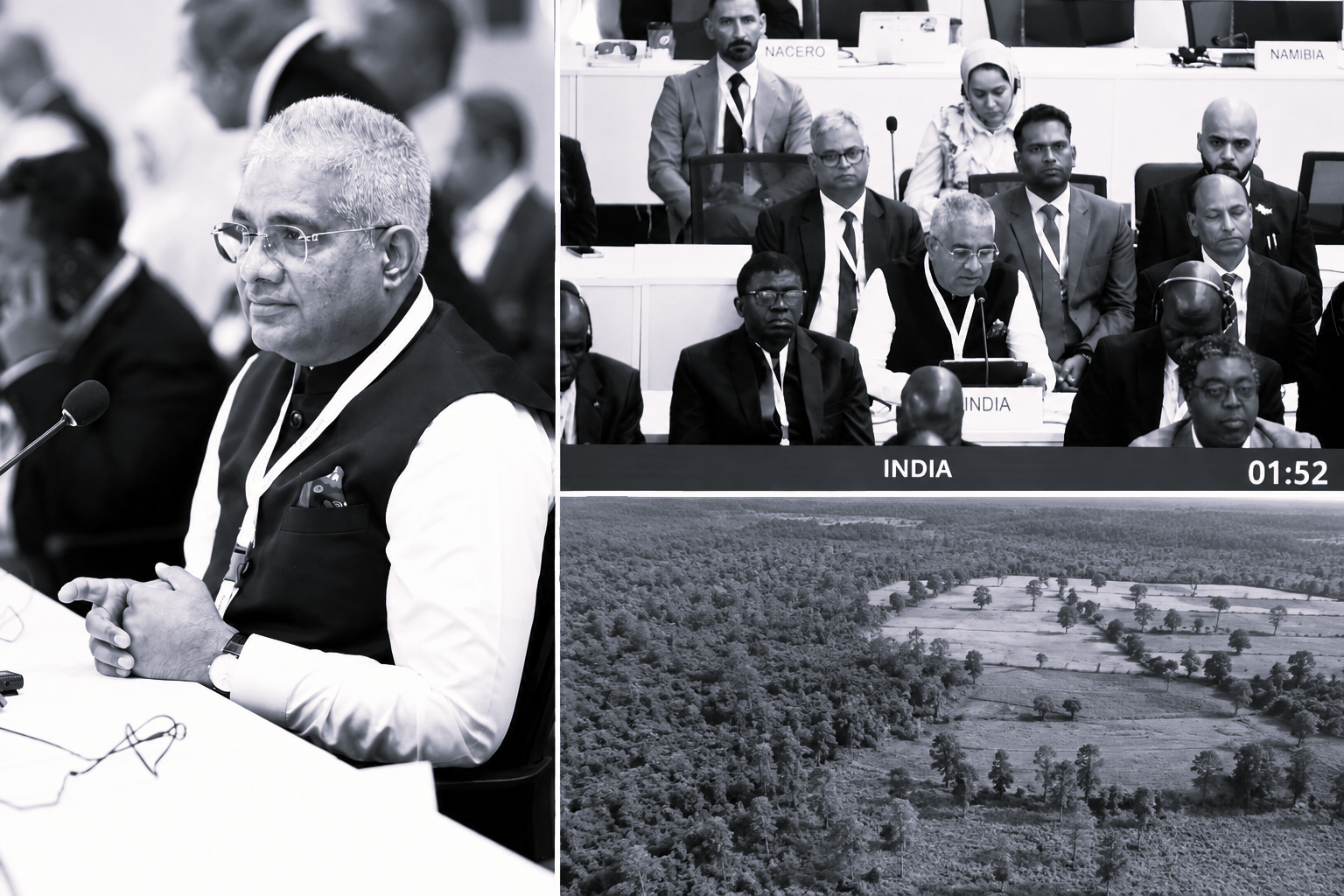
Union Environment, Forest and Climate Change Minister Bhupender Yadav, addressing the Ministerial Dialogue on innovative financial mechanisms, said land restoration should be treated not as a cost but as an investment in food, water, biodiversity, livelihoods and long-term resilience. His intervention comes as COP17 focuses on turning global restoration commitments into financing and measurable action.
The UNCCD estimates that achieving global land-restoration and drought-related targets requires about $355 billion annually between 2025 and 2030, compared with current annual investment of just $77 billion. This leaves a financing gap of approximately $278 billion a year, while investment needs to increase at least 3.5 times. The economic stakes are significant: the annual cost of inaction is estimated at $878 billion, while the required investment could generate around $1.8 trillion in annual benefits, an estimated eight-to-one return.
Yadav highlighted India's blended green-finance framework, which supports climate adaptation, sustainable land use, forestry, agriculture, afforestation and biodiversity conservation. He also cited Sovereign Green Bonds as a mechanism to mobilise capital for land restoration, drought resilience and sustainable forestry.
Another key instrument is India's Green Credit Programme, under which public and private entities can finance degraded forest-land restoration. Credits are issued after five years of restoration and once at least 40% canopy density is achieved, and can be used once for specified compensatory afforestation, statutory plantation or CSR obligations.
India also highlighted its compensatory conservation regime, through which payments linked to forest diversion support compensatory afforestation and ecosystem restoration. Yadav called for public and private finance to converge with citizen participation under a Whole-of-Government and Whole-of-Society approach, stressing that finance must be continuous, verifiable and connected to local communities.
India's domestic experience strengthens its case. The government says 21.76 million hectares were restored during 2011–2020, generating 1.22 billion person-days of employment, while India has committed to restoring 26 million hectares of degraded and deforested land by 2030.
Yet the global implementation gap remains substantial. UNCCD estimates that up to 1.5 billion hectares may require restoration or sustainable management, while countries have fallen behind their commitments. More than $12 billion was pledged for drought resilience at COP16, but the scale of need remains far greater.
At COP17, India is therefore pressing for finance that moves beyond pledges and reaches landscapes and communities. Yadav reaffirmed India's willingness to share its experience, safeguards and institutional arrangements, while stressing that domestic resources cannot replace additional international finance. Ultimately, India argues, innovative finance must be judged by whether it delivers lasting restoration and resilience on the ground.