
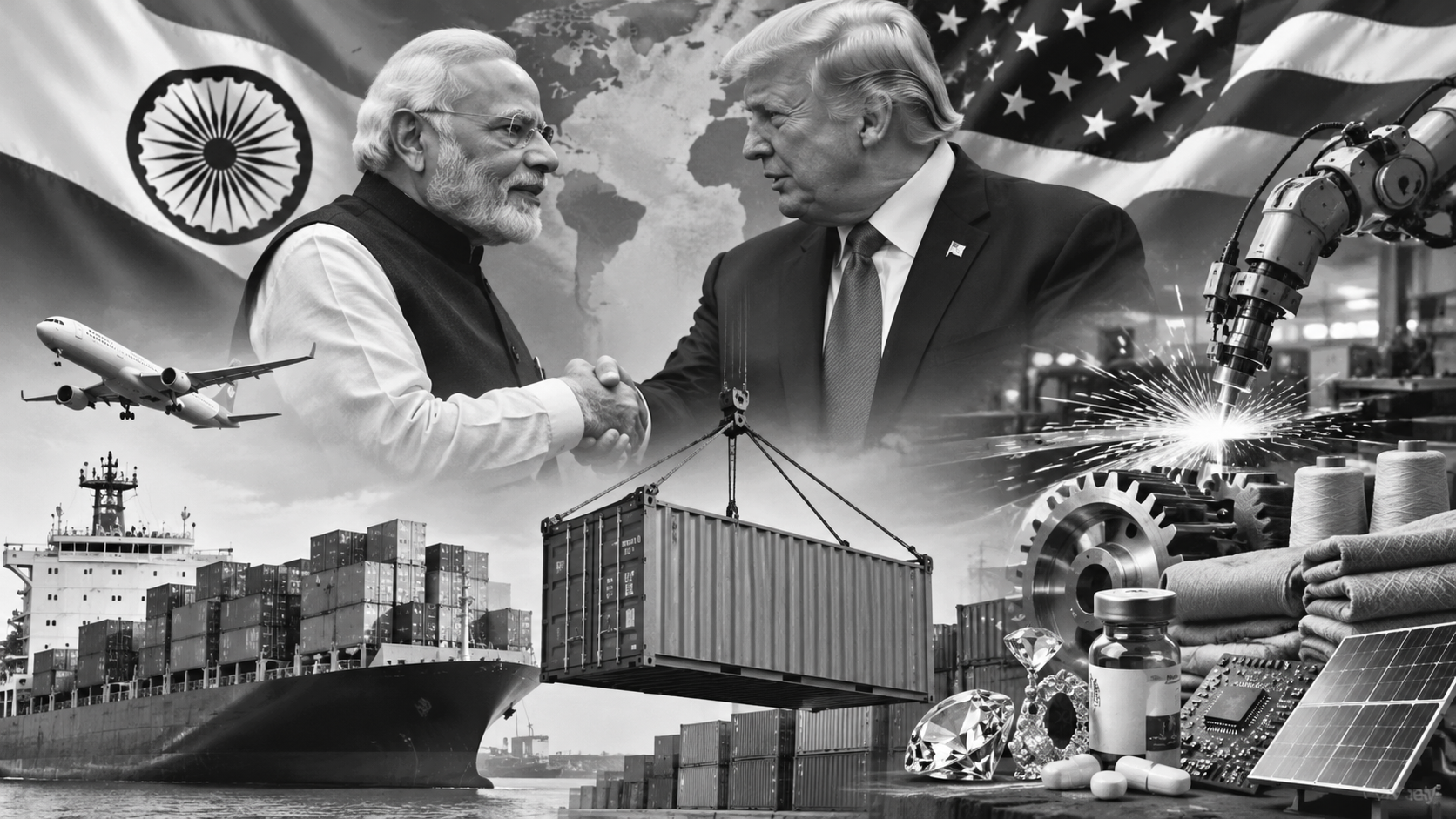
India Seeks 17% US Tariff Cap as Trade Deal Nears Completion
India and the United States are close to finalising a bilateral trade agreement, Commerce and Industry Minister Piyush Goyal said on Friday, even as Washington proposed tariffs of up to 25 per cent on Indian imports, warning that the latest move could put the country's export competitiveness under pressure. The proposed duties could be capped at 17 per cent if the two countries conclude a trade agreement addressing Washington's concerns, offering India an opportunity to secure a narrow tariff advantage over several Asian competitors.
Goyal said negotiations had progressed and the process for finalising the agreement was taking shape. The proposal follows a US investigation under Section 301 of the Trade Act of 1974, which examined alleged structural excess manufacturing capacity, industrial policies, government support and market-access restrictions in 14 economies, including India. New Delhi has rejected the allegation of excess manufacturing capacity and is examining the US findings.
The proposed 25 per cent tariff, net of existing Section 301 duties, includes exemptions for specified products such as patented pharmaceutical articles, semiconductor products and certain automobile components. Bangladesh, Cambodia, Indonesia, Malaysia and Thailand face proposed rates of around 18 per cent, while Vietnam faces 20 per cent. EEPC India Chairman Pankaj Chadha said India's potential 17 per cent rate might not provide a significant advantage over competing Asian exporters.
The engineering sector faces considerable uncertainty despite strong performance. India's engineering exports rose 36 per cent to USD 12.74 billion in October 2026, while shipments to the US surged approximately 62 per cent to USD 2.26 billion. April-October engineering exports increased 22 per cent to USD 83.62 billion, with the US remaining the largest destination.
Textiles, electrical equipment, furniture, plastics, footwear and gems and jewellery could also face pricing pressure. A sectoral assessment estimated that approximately USD 6.34 billion in Indian exports could face heightened competition, although this represents potential exposure rather than confirmed losses.
MSMEs remain particularly vulnerable because of limited capacity to absorb additional costs. Meanwhile, India's combined merchandise and services exports grew 16.66 per cent to USD 568.84 billion during April-October 2026-27.
The US has invited comments by January 5, 2027, with hearings scheduled from January 25. The final tariff structure remains uncertain as negotiations continue. India is also pursuing market diversification and stronger manufacturing capabilities to reduce dependence on individual export destinations.