
India secures six-month US sanctions exemption for Chabahar Port
India has been granted a six-month exemption from U.S. sanctions on Iran’s Chabahar Port, the Ministry of External Affairs (MEA) confirmed - a crucial reprieve for one of India’s most strategically significant overseas infrastructure projects.
During the weekly media briefing, MEA spokesperson Randhir Jaiswal stated, “I can confirm that we have been granted exemption for a six-month period on the American sanctions that were applicable on Chabahar.” He also noted that India is studying the implications of U.S. sanctions on Russian oil companies, reflecting the complex web of geopolitical and economic pressures India faces today.
Chabahar - India’s Gateway to Central Asia
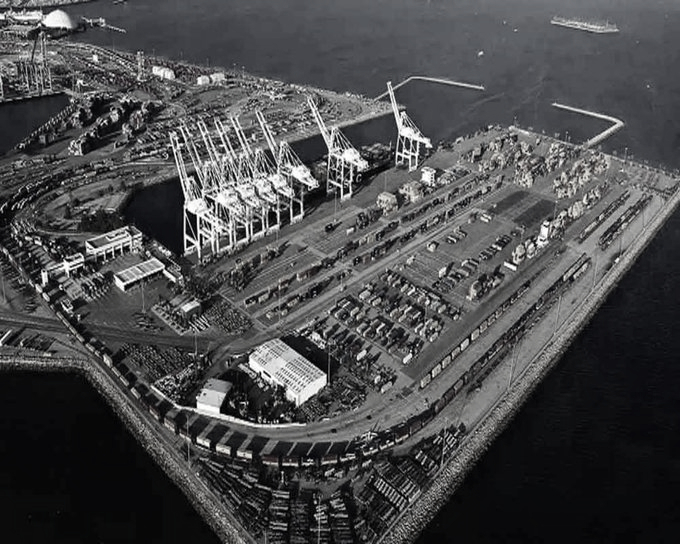
The Chabahar Port in Iran is a key element of India’s regional connectivity strategy, offering direct sea access to Afghanistan and Central Asia, bypassing Pakistan.
Developed jointly by Indian Ports Global Ltd. (IPGL) and Iran’s Port and Maritime Organisation (PMO), the port’s Shahid Beheshti terminal has been operational under India’s management since 2018, enabling vital trade and humanitarian shipments.
Last month, the United States revoked the sanctions waiver that previously protected the Chabahar project under the Iran Freedom and Counter-Proliferation Act (IFCA). The MEA had then said India was “examining the implications” of the decision. The Trump administration’s recent decision to reimpose sanctions, effective September 29, 2025, was part of its “maximum pressure” campaign against Iran’s financial and military networks.
According to U.S. State Department Principal Deputy Spokesperson Thomas Pigott, “Once the revocation is effective, persons who operate the Chabahar Port or engage in other activities described in IFCA may expose themselves to sanctions.”
India’s Next Move - Staying the Course on Chabahar
Despite renewed U.S. pressure, India has made it clear it will not exit the Chabahar project.
• New Delhi views Chabahar as a strategic and long-term investment, not a short-term trade venture.
• It continues to work closely with Tehran to expand port capacity, integrate rail links to Afghanistan’s Zaranj–Delaram corridor, and enhance regional transit routes through the International North–South Transport Corridor (INSTC) connecting India to Russia and Europe.
• Diplomatically, India is maintaining a delicate balance between its strategic partnership with the U.S. and its historic ties with Iran.
India is also expected to push for an extended or permanent exemption, arguing that Chabahar’s purpose is economic and humanitarian, not military - serving the interests of regional stability and Afghan reconstruction.
Can India Withstand the Pressure?
Economically, India can tolerate short-term costs because Chabahar’s investment size is manageable, and sanctions exposure is limited. However, if future U.S. actions target India’s port operators or financial institutions, private sector participation will dry up, making the project difficult to sustain.
Diplomatically, India continues to walk a tightrope - maintaining close cooperation with Washington in the Indo-Pacific while asserting strategic autonomy in its regional projects. The U.S. has so far respected this balance, recognizing Chabahar’s humanitarian significance for Afghanistan’s aid and trade supply routes.
Strategically, Chabahar is too important to abandon. It’s India’s only direct link to Central Asia and a counterweight to China’s Gwadar Port in Pakistan. Losing Chabahar would mean ceding crucial geopolitical space to Beijing and Islamabad, something India is determined to avoid.
Sanctions Ripple Effect - Impact Beyond India
The U.S. sanctions on Iran’s Chabahar Port extend far beyond India’s interests, affecting multiple nations and reshaping regional dynamics. Iran, the direct target, faces severe constraints on its port operations, banking, and trade expansion, jeopardising its plans for the Chabahar-Zahedan railway and the International North-South Transport Corridor (INSTC). Afghanistan, which relies on Chabahar as an independent trade route, would lose critical access to the sea and be forced back into dependence on Pakistan’s Karachi Port if India slows operations.
The sanctions also obstruct Central Asian nations such as Uzbekistan, Kazakhstan, and Turkmenistan, which were counting on Chabahar for Indian Ocean access, now compelled to rely on Chinese and Russian trade routes instead. Russia, too, faces a strategic setback as the sanctions slow its southern trade link through the INSTC, weakening its logistical network.
China, however, stands to gain. As India faces pressure, Iran may move closer to Beijing, which already operates Pakistan’s Gwadar Port and holds a $400 billion partnership with Tehran-tightening China’s grip on regional trade. Gulf nations like Oman and Qatar, once keen on connecting their ports with Chabahar, are also discouraged due to sanction risks. Moreover, international shipping firms and insurers tend to avoid sanctioned ports, increasing costs and reducing global trade confidence.
The sanctions ripple across the region-isolating Afghanistan, curbing Central Asian ambitions, slowing Russian connectivity, and pushing Iran further into China’s orbit-ultimately redefining the geopolitical balance in the Indian Ocean and West Asia.
Losing Ground - From Tajikistan to Chabahar
India’s withdrawal from its air base in Tajikistan earlier this year, its only overseas military facility - was already a major strategic setback. The Ayni (Farkhor) Air Base near Dushanbe had given India surveillance and logistical access to Afghanistan and Central Asia.
Its quiet pullback, influenced by Russian sensitivities and regional instability, meant India lost its northern military foothold just as China and Russia deepened their presence in Central Asia.
That makes Chabahar even more vital. It now stands as India’s last remaining physical anchor west of Pakistan, its only operational access to the Middle East and Central Asian markets. Any retreat from Chabahar would compound the Tajikistan loss and shrink India’s regional influence drastically.
If India were to scale back due to sanctions or political caution, it would create a strategic vacuum quickly filled by China, which already has deep economic and defense ties with Iran under a $400 billion long-term partnership.
A Balancing Act with High Stakes
India’s approach to Chabahar reflects its broader foreign policy philosophy, maintaining strategic autonomy while engaging all major powers.
By continuing operations under the U.S. exemption, India signals that it will neither defy nor surrender to Washington’s sanctions regime but instead navigate its own course to protect national interests.
For New Delhi, Chabahar is not just a port - it’s a geopolitical statement.
It represents India’s determination to stay connected to the Middle East, Central Asia, and Afghanistan, even amid global power rivalries.
India’s six-month exemption from U.S. sanctions is more than a temporary relief - it’s a strategic lifeline.
Having already lost its Tajik foothold, India cannot afford another retreat.
By holding on to Chabahar, New Delhi is defending not just an infrastructure project but its place in the evolving regional order between Washington, Tehran, Beijing, and Moscow.