
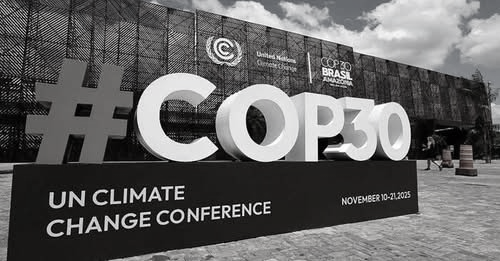
India secures key wins at COP30, Leads push for climate justice and finance
Union Environment Minister Bhupender Yadav termed the recently concluded UN COP30 climate summit in Brazil as a major milestone in advancing equity and climate justice, stating that India achieved all its major objectives at the global negotiations. He said India’s concerns were successfully reflected in the final decisions, particularly on climate finance, fair transition, technology transfer, and trade-related climate measures.
Yadav, who led the Indian delegation at COP30 held in Belem, Brazil from November 10 to 22, highlighted that India strongly positioned itself as a leader of the BASIC group (Brazil, South Africa, India and China) and the Like-Minded Developing Countries (LMDC). “COP30 is a significant milestone in advancing equity and climate justice. India took all its positions boldly, particularly on issues critical to developing countries. We are satisfied with the outcomes, especially the establishment of the Article 9.1 work programme,” he said.
He explained that the newly established work programme on Article 9.1 will focus on legally binding commitments of developed countries to provide grant-based, concessional and non-debt creating climate finance to developing nations. This is expected to help countries like India in implementing climate adaptation and mitigation projects without adding financial burden.
Other major gains for India included the establishment of a Just Transition Mechanism (JTM) to ensure fair and inclusive shifts to cleaner economies, and the approval of flexible and voluntary indicators under the Global Goal on Adaptation (GGA), allowing countries to choose their own adaptation strategies without additional reporting pressure.
India also ensured that future discussions on Unilateral Trade Measures (UTMs), such as the Carbon Border Adjustment Mechanism (CBAM), would continue, as such measures could adversely impact exports and industries of developing countries. Additionally, developed countries have agreed to make efforts to triple adaptation finance by 2035, while the creation of the Technology Implementation Programme (TIP) will help developing countries access climate-friendly technologies.
Yadav emphasised India’s leadership role in shaping decisions at COP30, saying, “India led the BASIC group, acted as spokesperson for the LMDC and worked closely with the Presidency. The 29 decisions adopted by consensus strongly reflect India's positions on key issues such as just transition, adaptation finance, trade-related climate measures, gender and technology.”
Calling COP30 a “clear success”, he said India upheld the principles of climate equity and multilateral cooperation. He also cited the adoption of the ‘Mutirao Decision’ a concept rooted in collective effort which reaffirmed that multilateralism remains central to global climate action.
The minister said India’s participation was guided by three core expectations: inclusivity, protecting the interests of developing nations, and reinforcing trust in climate multilateralism. “All of these expectations have been strongly reflected in the decisions,” he added.
He further explained that India co-moderated discussions on technology with Australia to ensure that key elements such as technology transfer, local innovation and support for mitigation and adaptation needs were fully addressed. On just transition, India pushed for an institutional mechanism to identify the financial and technological needs of developing nations moving towards clean energy.
With its strong diplomatic efforts and coalition-building, India emerged as a key voice for developing countries, ensuring that their concerns on finance, fairness, technology, and trade were fully captured in the COP30 outcomes.