
India Says Japan Joint Statement on Terrorism Is 'Self-Explanatory'
India on Friday firmly rejected Pakistan's objections to the reference to cross-border terrorism from Pakistan in the recent India-Japan Joint Statement , asserting that the document is "self-explanatory" and reflects the shared understanding of both countries on regional security and counter-terrorism. The response comes amid Islamabad's diplomatic protest to Japan over the explicit mention of Pakistan in the bilateral declaration.
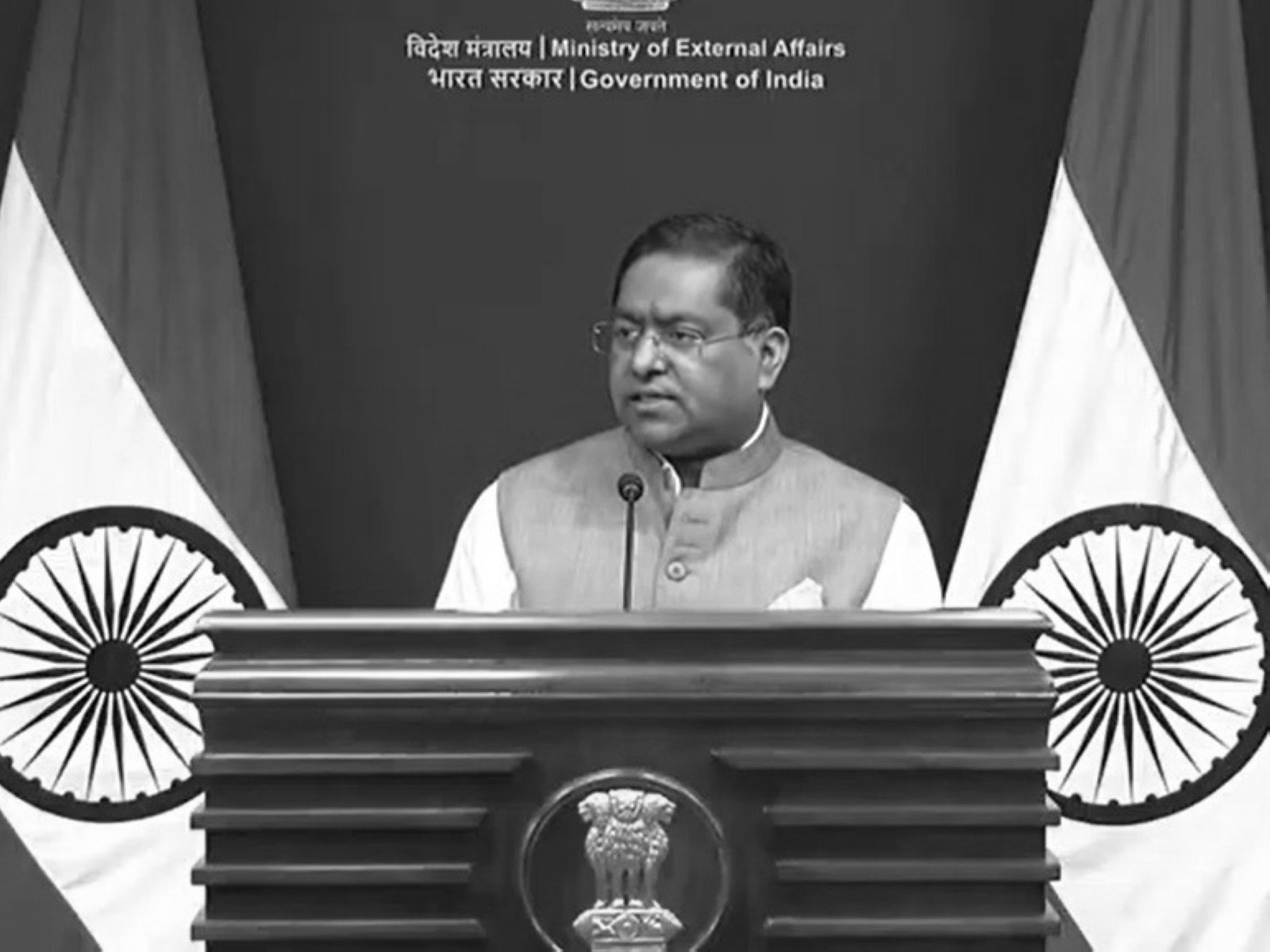
Addressing the weekly media briefing, Ministry of External Affairs (MEA) spokesperson Randhir Jaiswal said the joint statement adopted during the visit of Japanese Prime Minister Sanae Takaichi to India covered several bilateral and regional issues on which the two countries shared common perspectives. "The joint statement is self-explanatory," he said, indicating that New Delhi saw no reason to justify or revisit the language agreed upon by the two governments.
The statement was issued after talks between Prime Minister Narendra Modi and Prime Minister Sanae Takaichi during the 16th India-Japan Annual Summit in New Delhi on July 2 . In a notable diplomatic development, the two leaders unequivocally condemned terrorism and violent extremism in all its forms , including cross-border terrorism from Pakistan —a rare instance of a bilateral statement explicitly naming Pakistan. The wording reflects the growing strategic convergence between India and Japan on regional security and counter-terrorism.
The declaration also condemned the Pahalgam terror attack and took note of the UN Security Council Monitoring Team's findings linking The Resistance Front (TRF) to the Pakistan-based Lashkar-e-Taiba (LeT) . Both leaders further denounced the November 10, 2025 Delhi terror attack and called for the perpetrators, organisers and financiers of both attacks to be brought to justice without delay.
Reaffirming their commitment to combating global terrorism, the two Prime Ministers urged coordinated international action against UN-designated terrorist organisations , including Al Qaeda , ISIS/Daesh , Lashkar-e-Taiba (LeT) and Jaish-e-Mohammad (JeM) , while calling for the dismantling of terrorist safe havens and financial networks.
Pakistan responded by lodging a strong diplomatic demarche with Japan, alleging that India routinely persuades partner countries to include references to Pakistan in bilateral statements. Islamabad also described an Indian court's warrant against LeT founder Hafiz Saeed in connection with the Pahalgam attack as politically motivated.
Rejecting the criticism, Jaiswal reiterated that Pakistan has sponsored cross-border terrorism for decades and continues to use it as an instrument of state policy . Referring to the Pahalgam attack, he said investigations are underway and those responsible would be brought to justice. He also dismissed Pakistan's remarks on NIA charges against Kashmiri separatist leaders in connection with a 1996 case , stating that Pakistan has "no locus standi" to comment on India's internal affairs.
Diplomatic observers say the episode highlights India's post-Pahalgam strategy of securing stronger international backing against cross-border terrorism. Rather than relying on generic condemnations, New Delhi has increasingly sought explicit references to Pakistan-backed terrorism in engagements with key strategic partners. The India-Japan statement also reflects the expanding Special Strategic and Global Partnership between the two nations, which now encompasses defence, maritime security, intelligence sharing, cyber security and counter-terrorism, signalling a deeper alignment on addressing regional and global security challenges.