
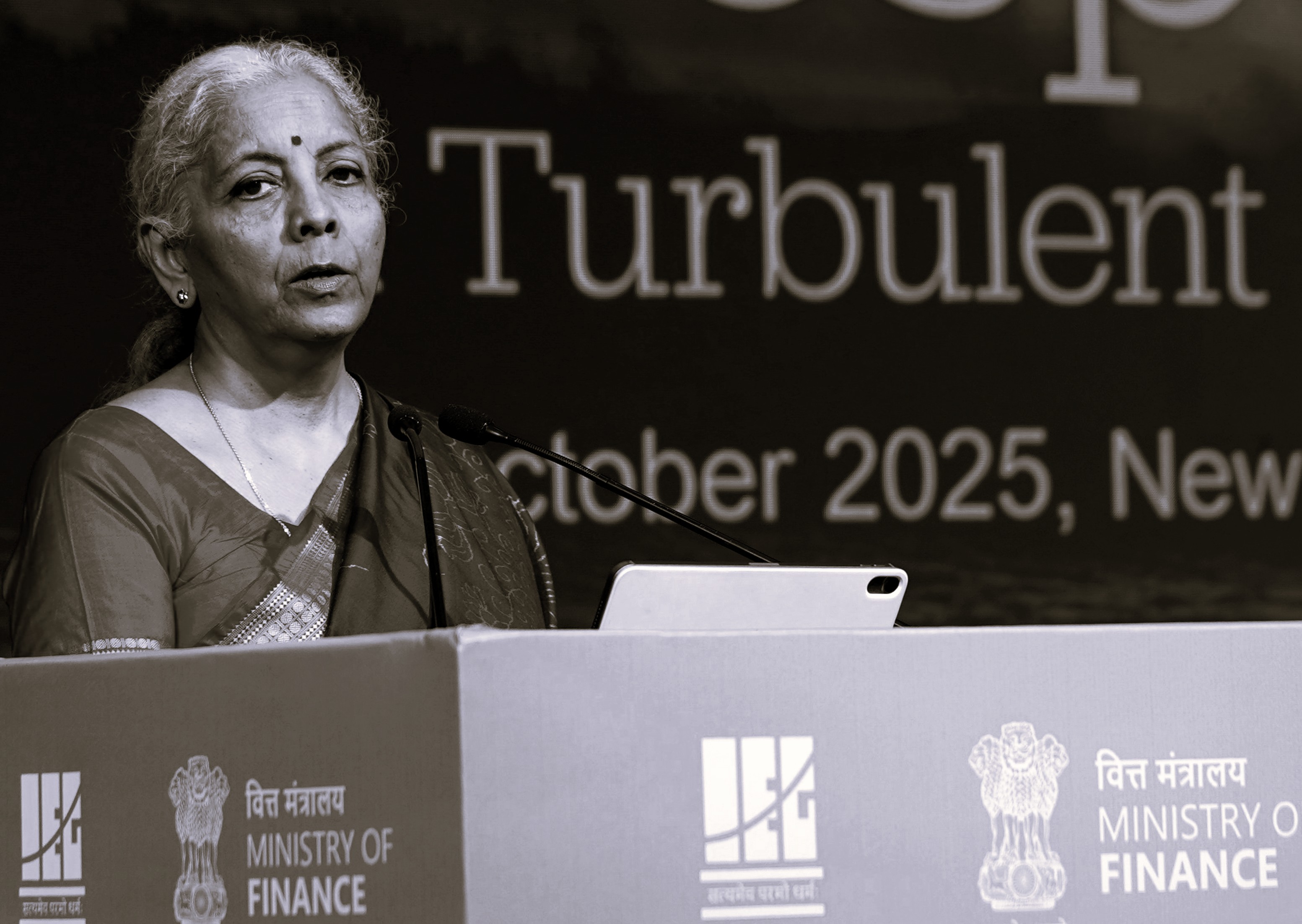
India rises as global stabiliser amid turbulent economy: FM Sitharaman
The fourth edition of the Kautilya Economic Conclave (KEC 2025), being held from October 3 to 5 at the Taj Palace in New Delhi, brought together over 75 global experts from more than 30 countries to deliberate on the theme "Seeking Prosperity in Turbulent Times." Organized jointly by the Institute of Economic Growth (IEG) and the Ministry of Finance, the conclave served as a platform to address contemporary national and global economic challenges.
Finance Minister Nirmala Sitharaman emphasized India’s ability to withstand external shocks, describing the nation as a “stabilising force” in the global economy. She attributed this resilience to strong domestic consumption and investment, which anchor India’s growth and minimize the impact of external uncertainties. Sitharaman underscored that the world is undergoing structural transformation, marked by intensifying geopolitical conflicts, shifting alliances, and sanctions and tariffs that are reshaping global supply chains.
The conclave also highlighted strategic infrastructure investments, with the government announcing a record ₹11.21 trillion ($126.3 billion) spending plan for the fiscal year ending March 2026. This initiative is aimed at stimulating economic activity and strengthening long-term growth prospects. Against the backdrop of escalating global trade tensions, including the U.S. decision to double tariffs on Indian imports, Sitharaman reaffirmed India’s commitment to strategic autonomy, urging prudent decision-making while emphasizing the country’s strong domestic economic foundation.
A significant focus of the conclave was the need to reform international institutions to reflect contemporary global realities. Sitharaman advocated for amplifying the voices of developing nations in global economic governance, ensuring that they play an integral role in shaping future policies. She stressed that India’s rise is neither accidental nor transient but the result of deliberate reforms, including fiscal consolidation, improved quality of capital expenditure, and measures to control inflation over the past decade.
The Kautilya Economic Conclave, held annually, has emerged as a crucial forum for dialogue among policymakers, economists, and global thought leaders. It allows India to articulate its economic vision, engage with international counterparts, and influence global economic discourse. By presenting India as a resilient and stabilizing force, Sitharaman positioned the country as a major player on the world stage, capable of absorbing global shocks while contributing to shaping the future of economic governance.
In conclusion, the conclave reaffirmed India’s commitment to sustainable growth, strategic autonomy, and proactive engagement in global economic policy, strengthening its position as a key stabilizer in an increasingly volatile international environment.