
India Retains Top Spot in Global Ship Recycling as Volume Surges 60%
India retained its position as the world’s leading ship recycling nation in 2025, with recycling volumes surging nearly 60 per cent, according to a government note released on Tuesday.
India’s global share of ship recycling rose to 35.4 per cent in 2025 from 30.1 per cent in 2024, while recycling volumes jumped from 1.86 million gross tonnes (GT) to 2.99 million GT. The rise underscores India’s expanding capacity and competitiveness.
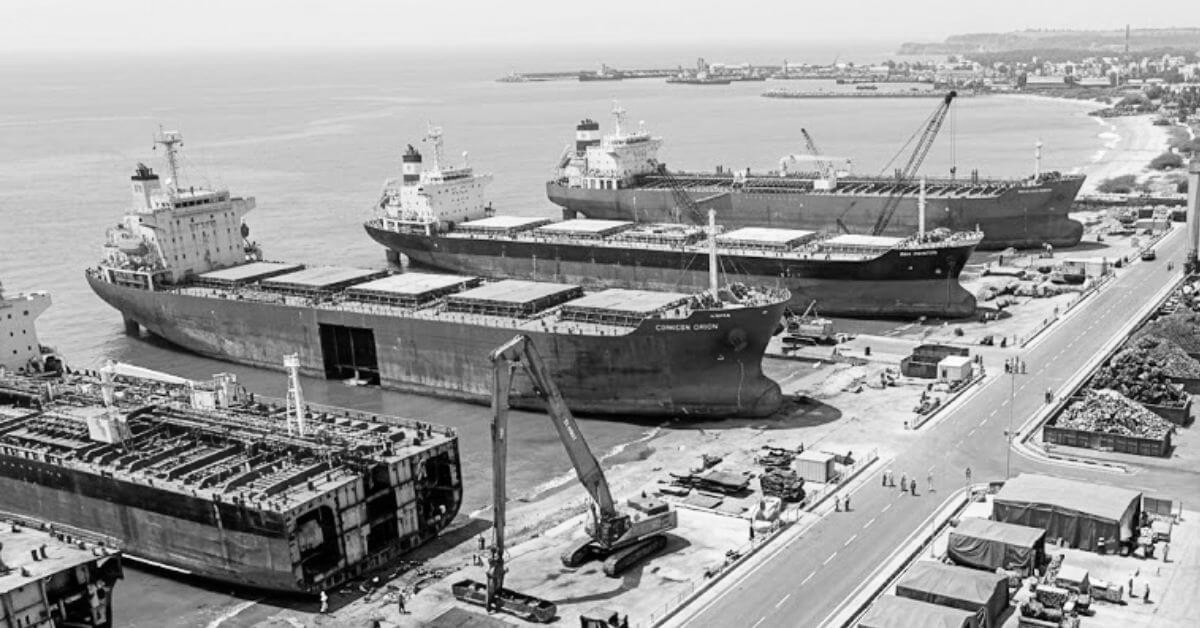
The achievement also means India has met the target under Maritime India Vision 2030 five years ahead of schedule. The Alang-Sosiya cluster in Gujarat remains the backbone of the industry, accounting for about 98 per cent of India’s ship recycling activity.
The world’s largest ship recycling hub, Alang has an annual capacity of around six million GT and produces nearly 3.5 million metric tonnes of steel each year through recycling. India plans to nearly double its ship recycling capacity to about nine million light displacement tonnes, with an expansion plan for the Alang yard.
The sector’s transformation has been driven by stronger regulation, modernised infrastructure and greater emphasis on worker safety and environmental protection. The Ship Recycling Act, 2019, Ship Recycling Rules, 2021 and Ship Recycling Regulations, 2026 provide a comprehensive framework covering yard authorisation, ship certification, hazardous-material management, safety and compliance.
India has also aligned its domestic system with the Hong Kong International Convention, which came into force in June 2025. Financial assistance of Rs 53.5 crore has supported the modernisation of recycling yards, helping 115 facilities achieve Convention compliance.
Ship recycling contributes to resource security by supplying ferrous scrap to the domestic steel industry while reducing dependence on imported raw materials. Recovering steel also consumes less energy than primary production, supporting circular-economy and decarbonisation goals.
The Alang-Sosiya cluster has trained more than 1.5 lakh workers through its safety and labour welfare institute. The sector supports employment and a broad network of ancillary industries, reinforcing India’s emergence as a modern, regulated and globally competitive ship recycling destination, and strengthens its position in the global recycling market.