
India Rejects UN Expert’s Youth Rights Report as ‘Hearsay’
India has rejected a report by United Nations Special Rapporteur Gina Romero, which noted that young Indians had reported retaliation or stigmatisation for discussing mental health and gender justice, describing the allegations as “hearsay” and questioning the credibility of the evidence cited.
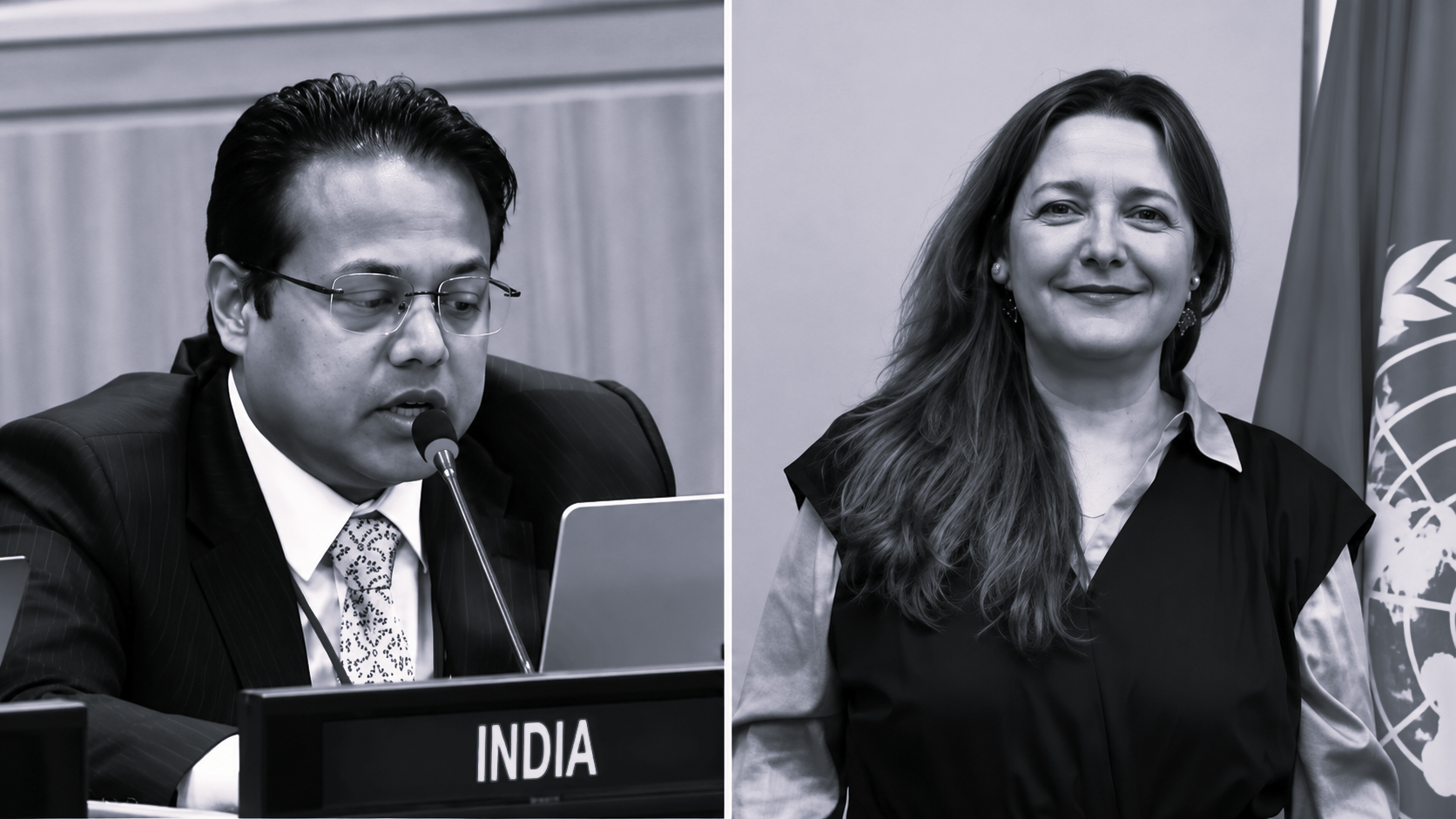
Anuj Swarup, First Secretary at India’s Permanent Mission to the UN, delivered the national statement during an interactive dialogue at the 81st session of the UN General Assembly’s Third Committee. He criticised the report’s reliance on unnamed submissions, arguing that unverified accounts could not justify sweeping conclusions about India’s 1.4 billion people.
“A sweeping charge against the world's largest youth population, resting on anonymous and unverified claims, is not evidence. It is hearsay dressed up as a UN report,” Swarup said, urging the expert to verify allegations before drawing conclusions.
Romero’s report referred to the Cockroach Janata Party (CJP), a youth-led satirical political movement that emerged online in May 2026 and subsequently gained attention through protests. The movement highlighted grievances concerning competitive examination irregularities, alleged paper leaks, recruitment delays and accountability in the education system.
India argued that the movement demonstrated young people’s ability to question the government, organise demonstrations and engage with senior leaders. Swarup also cited remarks by the UN High Commissioner for Human Rights supporting dialogue with youth leaders.
Defending India’s response to student grievances, Swarup said the government had engaged constructively with protesters over examination irregularities. He highlighted the Public Examinations (Prevention of Unfair Means) Act, 2024, subsequent efforts to strengthen penalties for examination fraud and proposed reforms aimed at speeding up prosecutions. He also cited the Viksit Bharat Young Leaders Dialogue, claiming that more than five million young people participated in 2026.
Swarup maintained that Article 19 of the Constitution guarantees freedom of speech and expression, peaceful assembly and association, supported by an independent judiciary, a free press and the National Human Rights Commission. He described youth participation as central to India’s democratic future.
However, anonymous submissions do not automatically invalidate human rights observations, as confidentiality can protect individuals from reprisals. The report’s underlying evidence would need examination to determine the extent of the alleged retaliation. India’s rejection alone does not establish that the reported experiences did not occur.
The dispute highlights broader questions about youth participation, civil liberties and evidence-based human rights reporting, with both the allegations and India’s rebuttal requiring careful scrutiny.