
India rejects Pakistan’s allegations on Taliban clashes, defends Uranium deal
India on Thursday firmly rejected Pakistan’s claims that it was involved in recent clashes between Pakistani forces and Taliban fighters along the Afghanistan border, calling the accusations “baseless” and politically motivated.
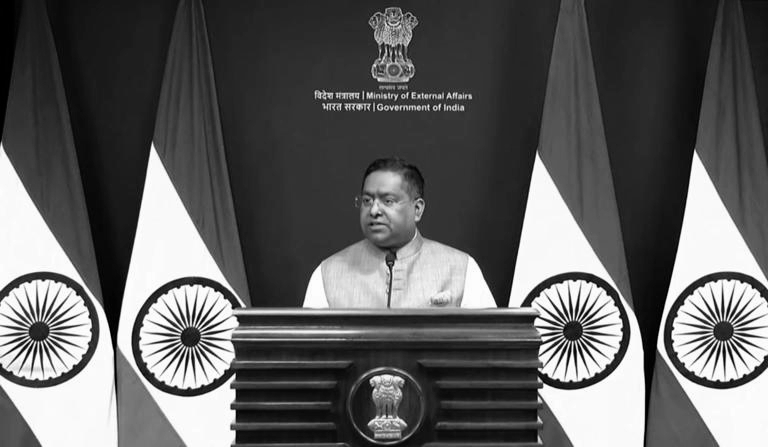
External Affairs Ministry spokesperson Randhir Jaiswal said it had become “second nature” for Pakistan to blame India for its internal security failures. He asserted that Pakistan’s credibility on terrorism issues was weak and that no amount of “storytelling” could change this perception.
The violence stems from escalating tensions along the Pakistan–Afghanistan border, particularly in Pakistan’s Khyber Pakhtunkhwa and Balochistan provinces and Afghanistan’s eastern regions such as Khost and Paktika , over the activities of the Tehrik-i-Taliban Pakistan (TTP), a militant group responsible for frequent attacks inside Pakistan. Islamabad accuses the Taliban government in Afghanistan of providing safe havens to the TTP, prompting cross-border strikes by Pakistani forces in these frontier areas. The Taliban denies the charge and has condemned the attacks as violations of Afghan sovereignty.
Amid the conflict, Pakistan alleged that the Taliban was acting as an Indian proxy, a claim New Delhi dismissed outright, saying Islamabad was attempting to deflect attention from its own security challenges .
India also rebuked Pakistan for criticizing its civilian nuclear agreement with Canada, signed during Prime Minister Mark Carney’s visit. Under the USD 2.6-billion deal, Canadian firm Cameco will supply 10,000 tons of uranium to India between 2027 and 2035 for civilian nuclear energy generation, strengthening India’s long-term fuel security and clean power capacity.
Pakistan argued the supplies could free India’s domestic uranium for weapons use, but New Delhi rejected the claim, emphasizing its “impeccable non-proliferation record” and calling Islamabad’s criticism an attempt to distract from its own past.