
India Records Strong Child Health Gains Through Multi-Pronged Public Health Strategy
India’s steady investment in vaccination, safe drinking water, nutrition and community healthcare is yielding measurable improvements in child health, with the latest National Family Health Survey (NFHS-6) showing a decline in severe diarrhoeal disease among young children and highlighting the broader social impact of sustained public health interventions.
According to data released by the Health Ministry , the prevalence of severe diarrhoea among children under five years of age fell from 0.7 per cent in NFHS-5 to 0.5 per cent in NFHS-6 . At the same time, coverage of all three doses of the Rotavirus vaccine among children aged 12-23 months surged from 36.4 per cent to 85.4 per cent , reflecting the success of immunisation efforts under the National Health Mission (NHM) and the Universal Immunisation Programme (UIP) .
Rotavirus is one of the leading causes of severe diarrhoea and dehydration among infants and young children. Public health experts note that wider vaccine coverage has played a critical role in reducing hospitalisations and preventing life-threatening complications. The survey also found that overall full vaccination coverage among children increased from 83.8 per cent to 87.1 per cent , while the second dose of the measles-containing vaccine rose from 58.6 per cent to 71.8 per cent .
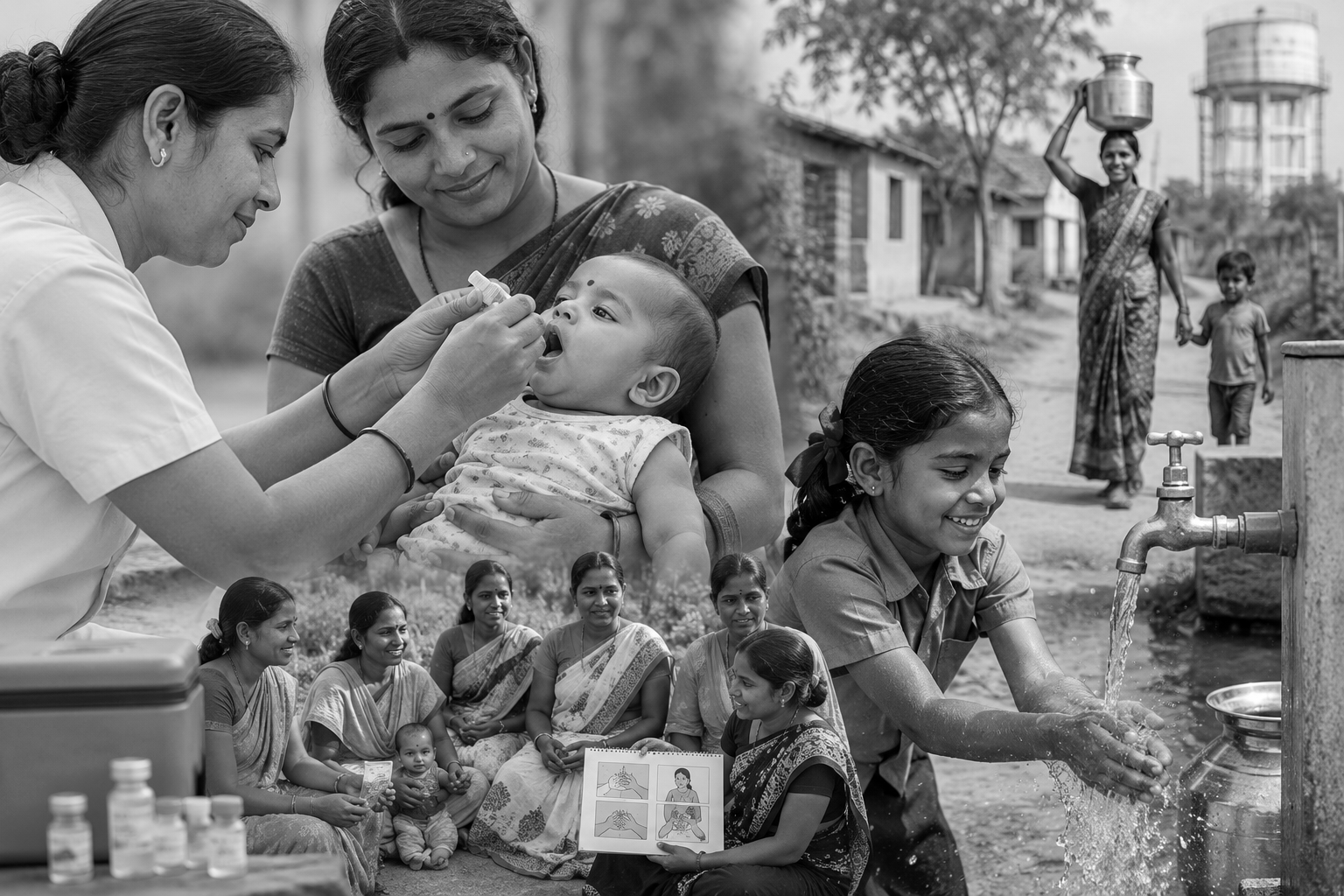
The government attributed these gains to a combination of immunisation drives and grassroots awareness campaigns. Under the STOP Diarrhoea Campaign , frontline workers including ASHAs, ANMs and Anganwadi Workers have promoted the use of Oral Rehydration Solution (ORS) , zinc supplementation, breastfeeding, handwashing with soap, nutrition awareness and timely treatment-seeking behaviour. Officials said these interventions have strengthened community-level management of diarrhoeal diseases, particularly in rural and underserved regions.
The survey findings also point to improvements in child nutrition and maternal healthcare. Stunting among children under five declined from 35.5 per cent to 29.3 per cent , while severe wasting dropped from 7.7 per cent to 5.2 per cent . The proportion of newborns breastfed within one hour of birth increased from 41.8 per cent to 50.1 per cent , and antenatal care during the first trimester rose from 70 per cent to 76.2 per cent . Institutional deliveries also improved from 88.6 per cent to 90.6 per cent .
A major contributor to the decline in waterborne diseases has been the Jal Jeevan Mission , which expanded rural household tap-water coverage from 17 per cent in 2019 to 81 per cent . The programme has provided functional household tap connections to 15.85 crore households across more than 5.91 lakh villages , significantly improving access to safe drinking water.
Health experts say the benefits of these interventions extend beyond disease prevention. Healthier children are more likely to attend school regularly, achieve better cognitive development and become productive adults. Reduced illness also lowers healthcare costs for families and eases pressure on public health systems.
The Health Ministry said the integrated strategy combining vaccination, sanitation, hygiene promotion, nutrition, maternal healthcare and safe drinking water is accelerating progress toward national health goals. These efforts have helped reduce under-five mortality by 38 per cent , from 45 deaths per 1,000 live births in 2014 to 28 per 1,000 in 2024 , reinforcing the role of sustained public health investment in shaping a healthier and more resilient society.