
India Reaffirms Indus Treaty Stand As Pakistani Minister Attends SCO Forum
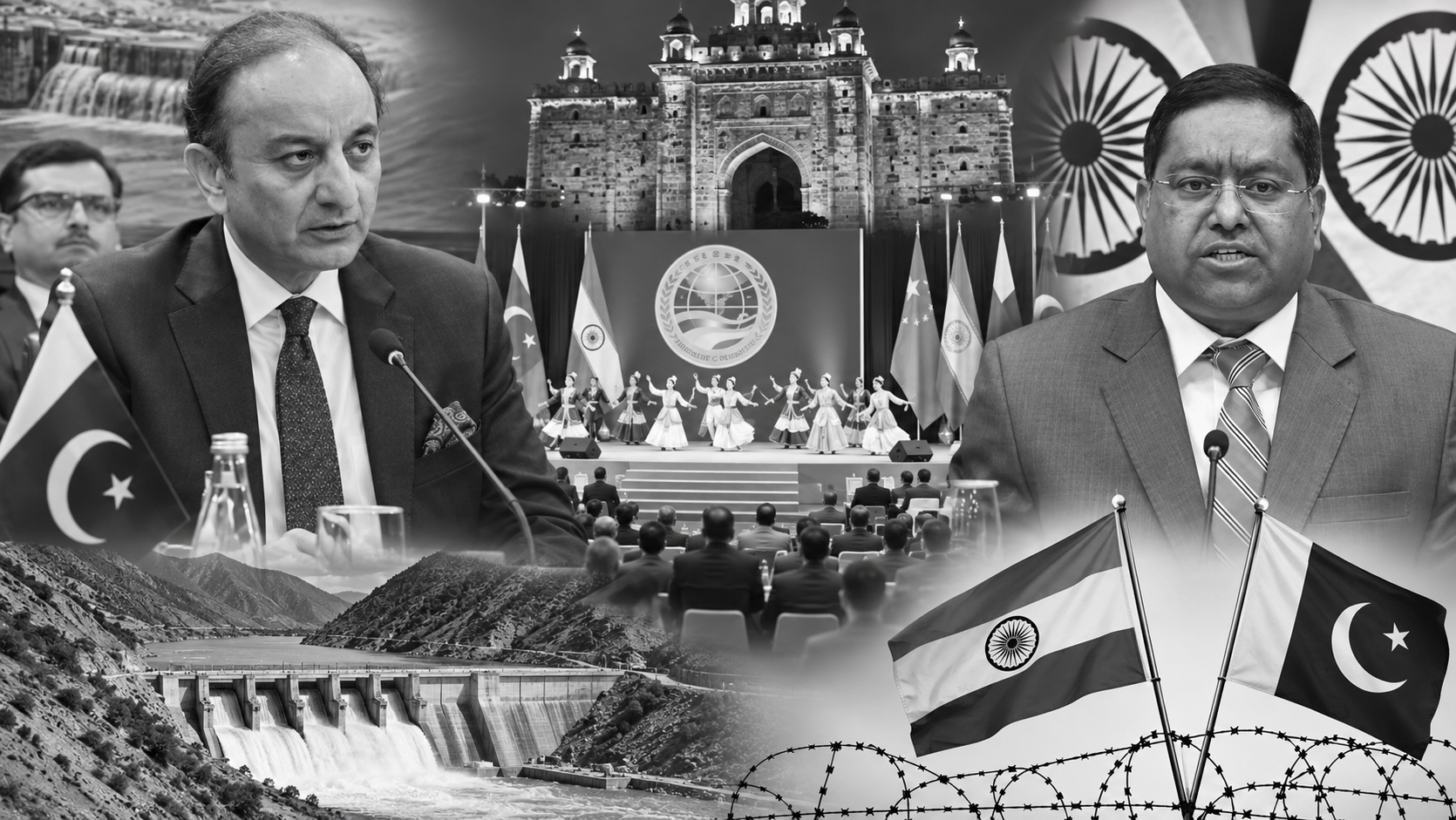
India on Friday reiterated that there was no change in its position on the Indus Waters Treaty (IWT) as Pakistan's Climate Change Minister Musadik Malik attended the first Shanghai Cooperation Organisation (SCO) Civilisational Dialogue Forum in New Delhi, advocating cultural engagement and broader regional cooperation to address differences between the two neighbouring countries.
Ministry of External Affairs (MEA) spokesperson Randhir Jaiswal reaffirmed India's position, saying there was "absolutely no change" in New Delhi's stand on the treaty. India placed the 1960 Indus Waters Treaty in abeyance in April 2025, following the April 22 Pahalgam terror attack that killed 26 people. New Delhi has maintained that the agreement will remain in abeyance until Pakistan credibly and irrevocably ends its support for cross-border terrorism, reiterating that talks and terror cannot go together.
Signed on September 19, 1960, with the World Bank playing a facilitating role, the treaty governs six rivers, allocating the eastern rivers - Ravi, Beas and Sutlej - primarily to India and the western rivers - Indus, Jhelum and Chenab - primarily to Pakistan. The dispute has also entered international arbitration, with India rejecting the jurisdiction of the arbitration panel at The Hague.
Malik's participation marks a rare ministerial-level engagement since the May 2025 military confrontation following Operation Sindoor. It is the first visit by a Pakistani minister to India since former Foreign Minister Bilawal Bhutto Zardari attended the SCO meeting in Goa in May 2023.
Speaking at the historic Purana Quila, Malik said culture had a "very key role" in fostering dialogue and mutual understanding. He described his visit as part of a multilateral engagement and called for transparency, evidence-sharing and a mutually acceptable mechanism to address terrorism. He also suggested involving a mutually trusted third country to facilitate discussions, while acknowledging that previous efforts had not progressed.
India had invited all SCO members, including Pakistan, on October 28, following established practice. Pakistan confirmed Malik's participation on November 14.
The November 20-22 forum, inaugurated by Prime Minister Narendra Modi, is jointly organised by the Ministries of Culture and External Affairs. Proposed by Modi at the 2025 SCO Summit in Tianjin, the initiative promotes civilisational cooperation through discussions on art, music, architecture, languages, manuscripts and philosophical traditions. Exhibitions include ASTITVA – The Essence of Our Existence, featuring archaeological evidence from 1200 BCE to 1200 CE, and a rare 18th-century illustrated Mahabharata scroll.
The SCO, established in 2001 by six Eurasian countries, admitted India and Pakistan as permanent members in 2017. Malik expressed hope that cultural exchanges would strengthen people-to-people connections, although India's reaffirmation of its treaty position underscored that the multilateral engagement does not signal a change in bilateral policy.