
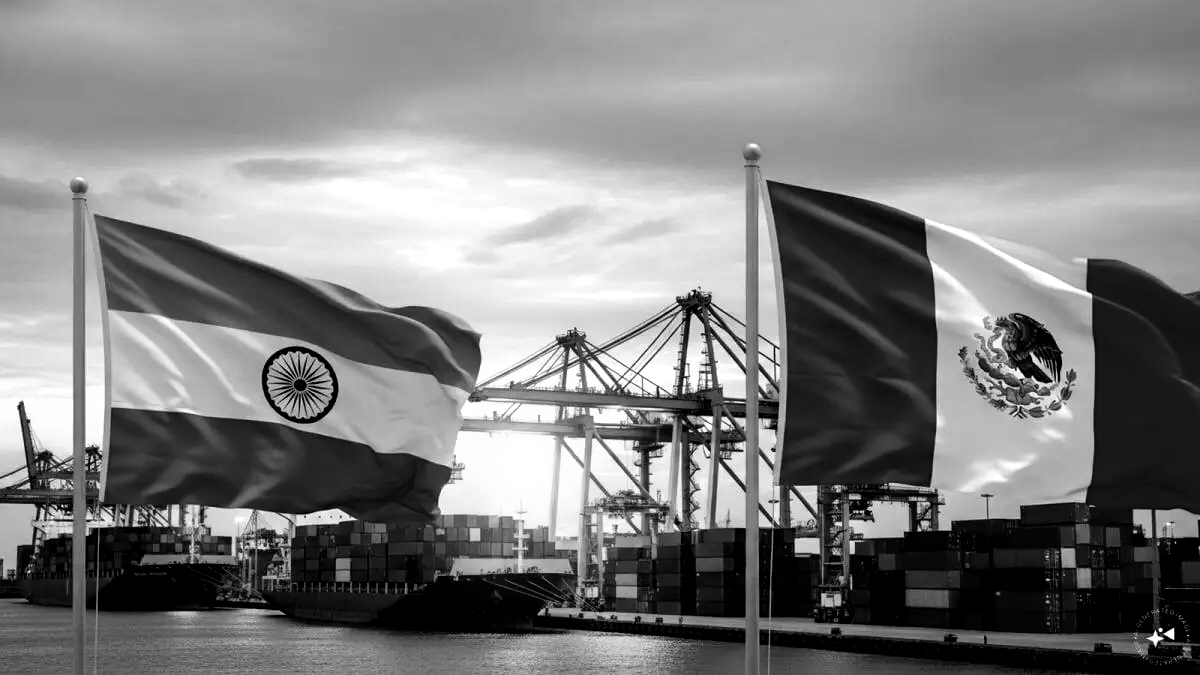
India proposes preferential trade agreement with Mexico to counter high tariffs
India has proposed a preferential trade agreement (PTA) with Mexico to help domestic exporters navigate steep import tariffs recently announced by the South American nation, according to a senior government official.
Mexico has decided to impose import duties ranging from 5% to 50% on around 1,463 product categories from countries that do not have a free trade agreement ( FTA ) with it, including India, China, South Korea, Thailand, and Indonesia . The move, effective from January 1, 2026, is aimed at supporting local production and correcting trade imbalances, while curbing Chinese imports.
Speaking to reporters, Commerce Secretary Rajesh Agrawal said, “Technical-level talks are ongoing. The only fast way forward is to pursue a PTA because an FTA would take a lot of time. Through a PTA, we can secure concessions for Indian supply chains while offering Mexico concessions where it has export interests in India.”
Unlike an FTA, where import duties are broadly reduced or eliminated, a PTA allows tariff reductions on a limited number of products. Agrawal added that Mexico’s decision is WTO-compatible, and therefore trading partners cannot challenge the imposition of higher duties.
Preliminary estimates indicate that Mexico’s tariff hike could impact Indian exports worth around USD 2 billion , including automobiles, two-wheelers, auto parts, textiles, iron and steel, plastics, leather, and footwear. India-Mexico merchandise trade totalled USD 8.74 billion in 2024, with exports at USD 5.73 billion and imports at USD 3.01 billion, resulting in a trade surplus of USD 2.72 billion in India’s favor.
Industry bodies have expressed concern over the move. Federation of Indian Export Organisations (FIEO) Director General Ajay Sahai highlighted that the sectors most affected include automobiles, auto components, machinery, electrical and electronics, pharmaceuticals, textiles, and plastics. “Such steep duties will erode competitiveness and disrupt supply chains that have taken years to develop,” he said.
The Automotive Component Manufacturers Association (ACMA) also warned that domestic manufacturers could face rising costs due to the higher import duties on Indian goods.
The Indian government has been closely monitoring Mexico’s tariff revisions and engaging stakeholders to safeguard exporters’ interests. Officials emphasise that ongoing discussions aim to ensure a stable trade environment, benefiting businesses and consumers in both countries.