
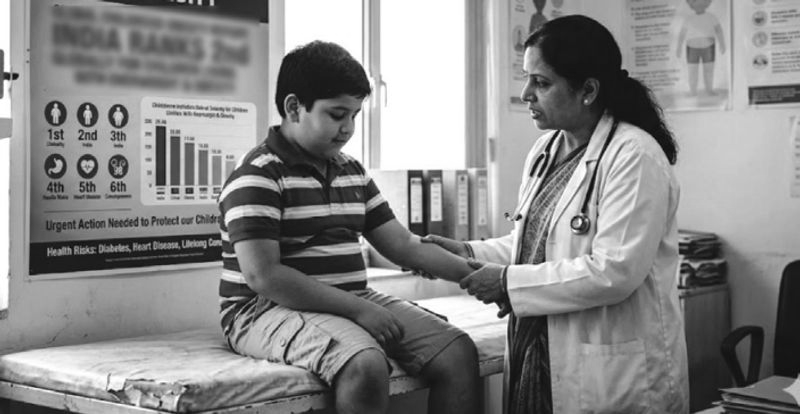
India off track to meet 2030 childhood obesity target: World Obesity Federation
A new report by the World Obesity Federation has warned that most countries, including India, are unlikely to meet the global target of halting the rise in childhood obesity by 2030 , raising concerns about a looming public health challenge.
The warning comes in the World Obesity Atlas 2026 , released on World Obesity Day , which noted that the original 2025 target had to be extended to 2030 after countries failed to achieve it.
The report projects that by 2040 , nearly 20 million children in India could be living with obesity , while 56 million may be overweight or obese . In 2025 , about 14.9 million children aged 5–9 years and over 26.4 million adolescents aged 10–19 years in India were already affected.
Experts attribute the surge to increasing junk food consumption, sedentary lifestyles and rising screen time among children, which reduce physical activity and encourage unhealthy eating habits. In absolute numbers, China , India and the United States report the highest number of children with high body mass index (BMI), largely reflecting their large populations, with China topping the list. However, when measured as a percentage of the child population, several smaller or middle-income countries show higher prevalence rates of childhood overweight and obesity, highlighting that the problem is not limited to the world’s most populous nations but is becoming a widespread global health concern.
In India, the government has introduced programmes such as POSHAN Abhiyaan , PM POSHAN Scheme , and the Fit India Movement to improve nutrition and encourage physical activity among children.
Health experts recommend that schools ensure regular sports, nutrition education and healthier meal options , while parents should limit screen time, encourage outdoor play and promote balanced diets .
According to Johanna Ralston , chief executive officer of the World Obesity Federation, failure to address childhood obesity could lead to rising long-term health costs, with increasing cases of diseases such as Type 2 Diabetes , Hypertension and Cardiovascular Disease . She stressed that preventive strategies, including creating healthier food environments and strengthening early monitoring through primary healthcare systems, are essential to protect future generations and reduce the long-term burden on health systems.