
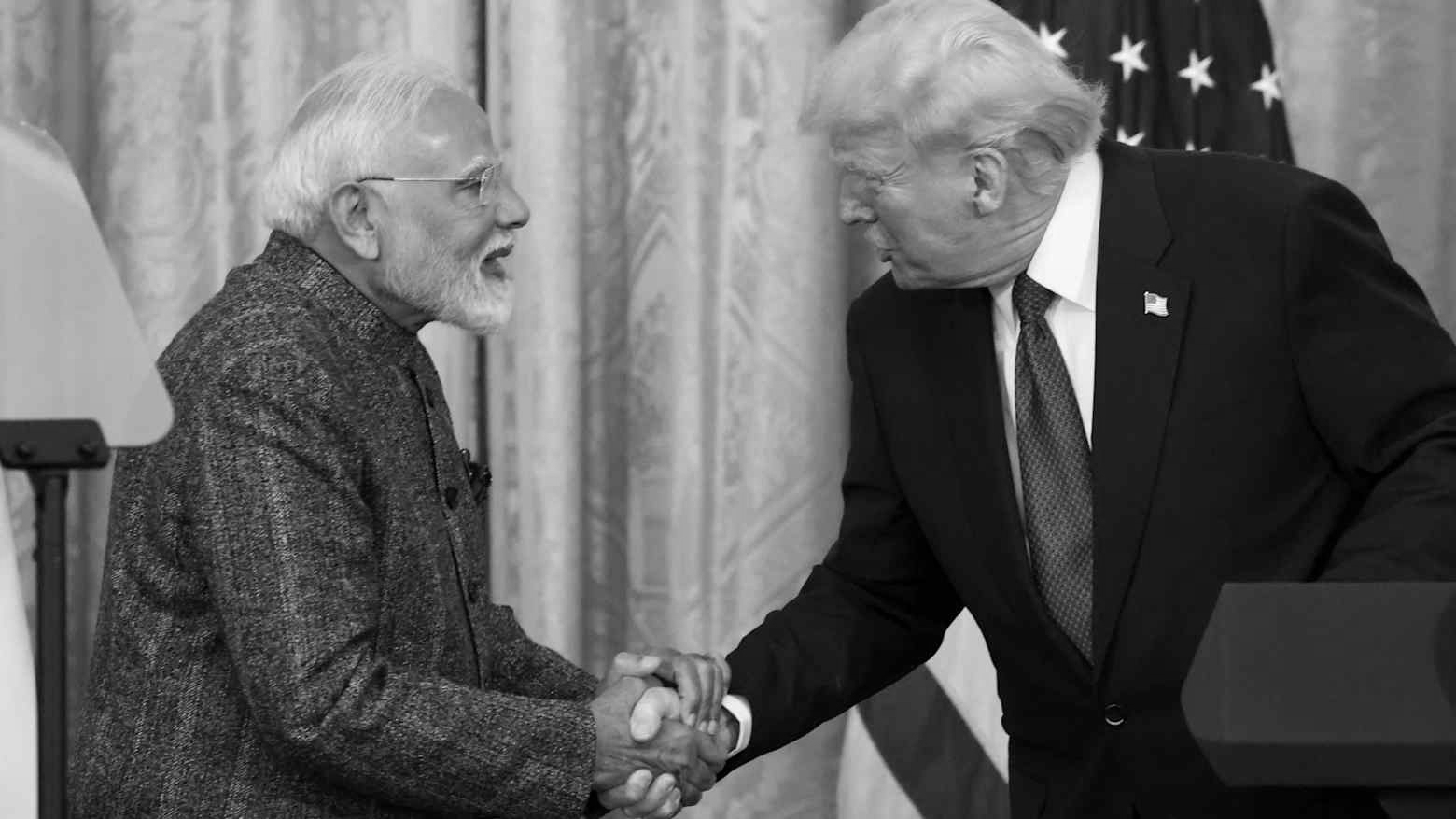
India No Longer Sovereign! Modi Bends the Knee, Gets the Trade Deal
The India–US trade deal has delivered instant market euphoria, but it has also reopened an uncomfortable question: at what cost? A reduced tariff regime is undeniably good news for export-oriented industries struggling under high duties and global uncertainty. For textiles, leather, gems, chemicals and MSMEs, this agreement offers immediate relief. In purely commercial terms, the Prime Minister’s decision is understandable and perhaps even necessary.
Yet trade cannot be divorced from sovereignty.
What troubles many is not the deal itself, but the terms, tone, and theatre surrounding it. The announcement did not come from Parliament, nor through a formal government statement, but via a late-night social media post by the US President framed as a favour granted “at Modi’s request.” The Indian government followed, not led. For a Parliament in session, this was a serious breach of democratic convention. The Opposition was right to question why elected representatives learnt of a major strategic decision from Washington rather than New Delhi.
More worrying is the suggestion still officially unclarified that India has agreed to alter its energy sourcing at America’s behest. Russian oil has cushioned India against inflation and volatility, and Russia remains an all-weather strategic partner. Equally telling is the silence on Iran: New Delhi has quietly accepted its inability to buy Iranian oil or invest meaningfully in Chabahar port, once touted as a geopolitical counterweight in the region. Sovereignty is not surrendered in one dramatic moment; it erodes through such accumulated silences.
This is where the contrast with past rhetoric is stark. India was told often emphatically that only India would decide its energy needs , that no external power could dictate terms. Today, that voice is absent. The External Affairs Minister, once the most articulate defender of strategic autonomy, has gone conspicuously quiet. Russia, for its part, says it has received no formal communication from India about stopping oil purchases suggesting either diplomatic ambiguity or unfinished negotiations. Either way, clarity is missing.
At the same time, the Opposition has not covered itself in glory. Walking out of Parliament when the government promised a statement and debate weakened its own argument. Scrutiny is essential, but so is staying in the room where answers are demanded. This deal, unlike the EU–India agreement whose voluminous text was largely public, remains opaque. The correct response is sustained pressure for disclosure, not theatrical exits.
There is also the undeniable reality of power asymmetry. This is how Donald Trump operates—transactional, public, and patronising. The Prime Minister may well have felt boxed in: industries hurting, markets anxious, tariffs punitive. A deal was preferable to continued uncertainty. But acknowledging Trump’s style does not require accepting a posture of subordination.
India needs trade. India needs markets. But India also needs to speak for itself , announce its decisions on its own terms, and explain them first to its Parliament and people. A trade deal that boosts exports but dents autonomy is not an unqualified win.
For now, the markets cheer, the rupee rises, and headlines celebrate. But until the full text is laid bare on agriculture, energy, tariffs, and strategic commitments the larger question will linger: did India negotiate as a sovereign equal, or did it bend the knee to get relief?