
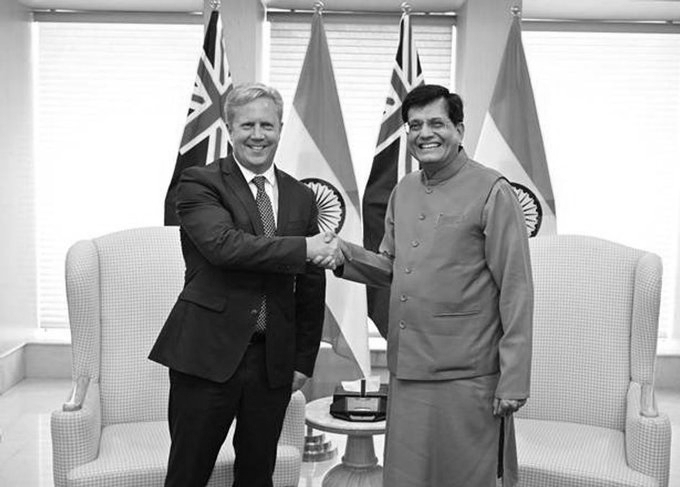
India New Zealand FTA: A New Chapter of Trade, Talent and Transformation
India and New Zealand are set to sign a landmark Free Trade Agreement (FTA) , marking a major step in strengthening economic ties and opening new opportunities across trade, services and investment. The agreement, years in the making, is expected to reshape how the two countries engage in an increasingly uncertain global trade environment.
An FTA, at its core, is an arrangement where countries agree to reduce or eliminate customs duties and ease barriers that restrict trade and investment. The India New Zealand pact goes beyond this basic idea, emerging as a comprehensive framework covering 20 chapters , including goods, services, dispute settlement, customs facilitation and regulatory standards.
The journey of this agreement reflects persistence. Negotiations first began in 2010, stalled in 2015, and were revived in March 2025. Within nine months, both sides concluded talks, setting the stage for its formal signing in April 2026.
For India, the gains are significant. Nearly all Indian exports will enter New Zealand at zero duty , giving a strong push to sectors like textiles, leather, plastics and engineering goods. Alongside goods, India has secured access in high value services sectors such as IT, education, finance, tourism and professional services.
One of the standout features is the opening of skilled employment pathways . A new visa route will allow up to 5,000 Indian professionals to work in New Zealand at any given time for up to three years, strengthening mobility and global exposure for skilled workers.
Investment is another key pillar. New Zealand has committed to facilitating up to USD 20 billion in foreign direct investment into India over 15 years, a sharp rise compared to the modest inflows seen so far. This signals growing confidence in India’s expanding economy.
For New Zealand, the agreement ensures deeper access to one of the world’s fastest growing large markets. India will offer market access across a large share of tariff lines, with over 54 percent of New Zealand exports gaining duty free entry from day one. Products such as wool, forestry goods and select agricultural items are expected to become more competitive in the Indian market.
At the same time, India has taken care to protect its domestic interests. Sensitive sectors like dairy, certain farm products, metals and some industrial goods have been kept out of duty concessions. For other agricultural imports, safeguards such as tariff rate quotas and minimum import prices have been introduced to balance market access with farmer protection.
The agreement also reflects a broader strategic vision. For India, it strengthens access to a high income Pacific market and aligns with its Indo Pacific economic ambitions. For New Zealand, it offers stability and long term engagement with a rapidly growing economy.
Bilateral trade between the two countries, currently modest at around USD 2.4 billion in goods and services , is expected to expand significantly under the new framework. With strong diaspora links and growing cooperation in education and services, the partnership is likely to deepen beyond traditional trade.
As the deal moves towards implementation, it signals a shift in how modern trade agreements are shaped. It is no longer just about goods crossing borders, but about people, skills, investment and opportunity moving together in a connected global economy.