
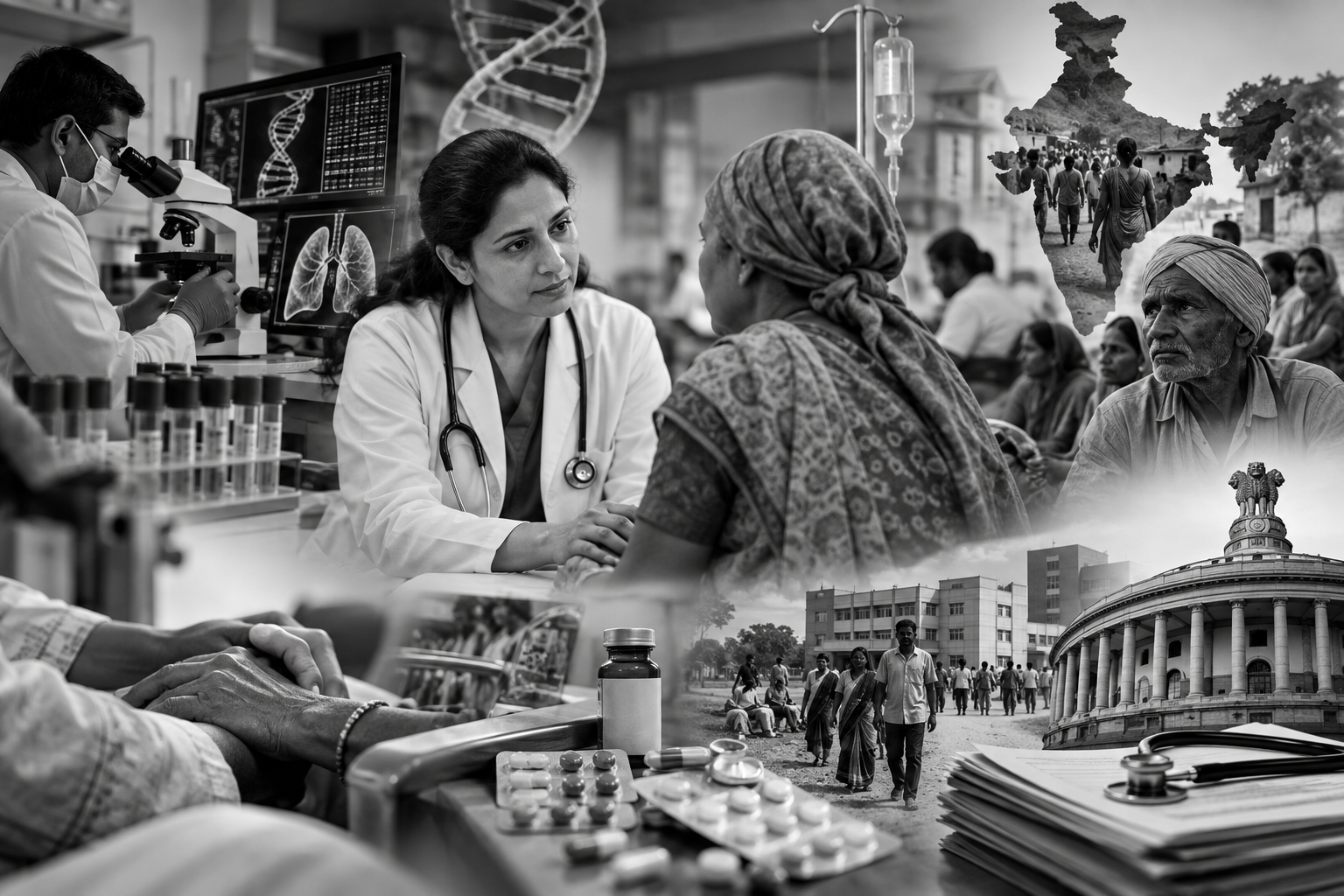
India Needs Five-Year Plan to Make Precision Cancer Care Affordable, Says Expert
India needs a five-year national policy agenda to make advanced genomic testing and targeted cancer therapies accessible to lower-income patients, leading oncologist Dr Bhawna Sirohi has said, warning that rapid advances in precision oncology could otherwise widen the existing divide in cancer care.
Sirohi, consultant medical oncologist and medical director at Vedanta Medical Research Foundation-BALCO Medical Centre, Raipur, is the only Indian cancer specialist on the newly constituted Lancet Oncology Commission on Cancer Genomics and Precision Oncology, launched at the World Cancer Congress in Hong Kong. She said high testing costs, limited access to advanced genomic diagnostics and expensive targeted medicines remain major barriers, particularly for low- and middle-income patients.
Precision oncology identifies specific molecular alterations or biomarkers driving a cancer and matches them with targeted medicines, potentially improving outcomes while reducing unnecessary side effects. Its impact is particularly evident in lung cancer, where patients with mutations such as EGFR can receive targeted tablets instead of conventional chemotherapy. Sirohi said targeted treatment is available under Ayushman Bharat, although newer therapies remain largely constrained by cost.
India's cancer burden makes the affordability challenge particularly significant. A JAMA Network Open study estimated 15.62 lakh new cancer cases and 8.74 lakh deaths in 2024. Meanwhile, an Indian study of 12,148 cancer patients across seven centres estimated average annual direct out-of-pocket expenditure at ₹3.31 lakh. Diagnostics accounted for 36.4% of outpatient expenditure, while medicines represented 45% of hospitalisation costs.
Sirohi warned that genomic testing without access to the recommended medicine could impose additional financial pressure. She called for genomic diagnostic panels to be integrated into Ayushman Bharat and other public healthcare schemes. The government-backed DIAMOnDS programme, operating through 25 centres, is already providing free advanced molecular diagnostics to economically disadvantaged lung and breast cancer patients.
She also advocated regular health technology assessments, evidence-based guidelines, pooled procurement and greater investment in geneticists, molecular pathologists and bioinformaticians. India could use price negotiations and value-based purchasing to improve access to newer targeted drugs, while existing price controls already cover 131 anti-cancer medicines, with estimated annual patient savings of ₹294 crore.
The global research gap is another concern. Only about 2% of biomarker-based cancer trials are conducted in low- and middle-income countries, compared with nearly 81% in high-income countries. Sirohi called for greater Indian cancer research and biobanking of tumour, tissue, blood, saliva and stool samples.
In Chhattisgarh, she highlighted poverty, long travel distances, stigma and limited specialist care among rural and tribal populations. She backed cancer notification, chemotherapy daycare centres and BALCO Medical Centre's HPV vaccination and cervical screening programme, aligned with WHO's 2030 goals.
The proposed five-year roadmap, she said, should ensure validated technologies meet national and global standards and that precision cancer care becomes more accessible without deepening healthcare inequality.