
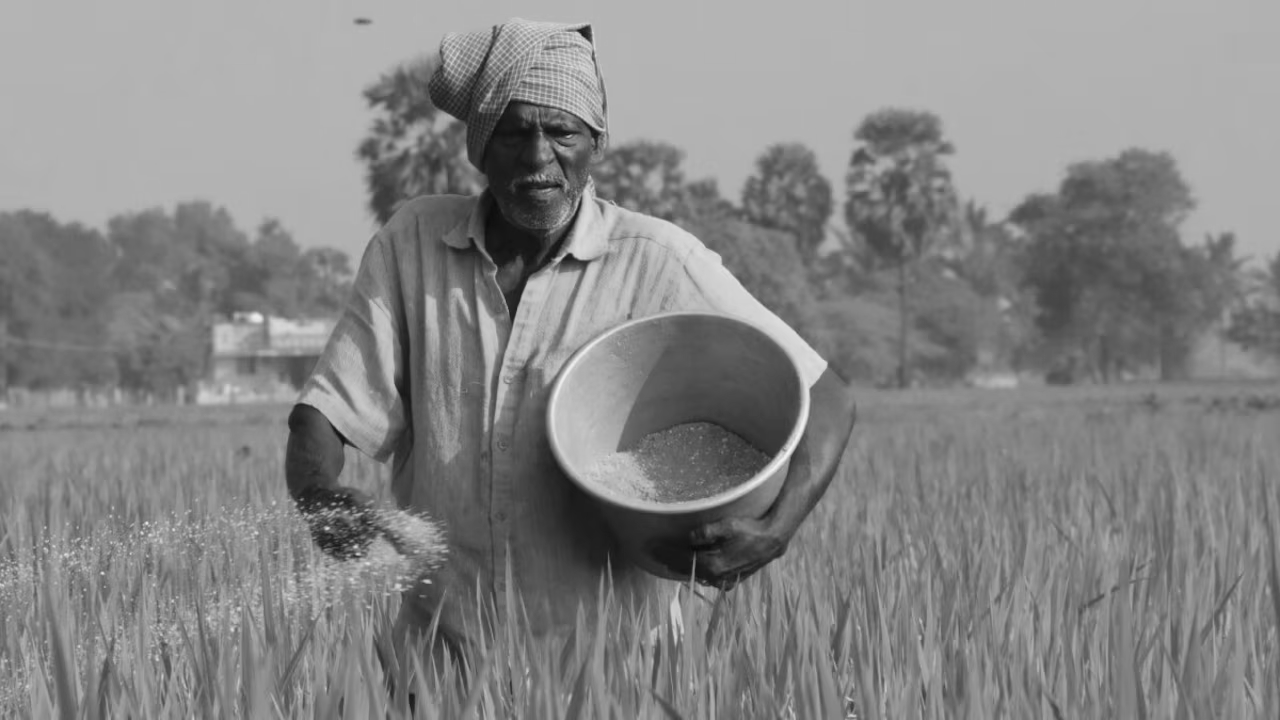
India meets 73% of Fertiliser demand through Domestic production in 2025
India has substantially reduced its dependence on fertiliser imports, with domestic production meeting nearly 73 per cent of the country’s total fertiliser requirement in 2025, according to data released by the Ministry of Chemicals and Fertilisers.
The milestone reflects a sustained rise in domestic output over the past five years, supported by policy-led capacity expansion and supply-chain stabilisation measures. Total fertiliser production including urea, di-ammonium phosphate (DAP), NPKs and single super phosphate (SSP) increased from 433.29 lakh tonnes in 2021 to 467.87 lakh tonnes in 2022, rising further to 507.93 lakh tonnes in 2023. Production remained steady at 509.57 lakh tonnes in 2024 before climbing to an all-time high of 524.62 lakh tonnes in 2025.
Officials said the improvement was driven by a combination of structural reforms and targeted government interventions. Key among them was the revival of closed urea units under the public sector revival programme, including plants at Ramagundam, Gorakhpur, Sindri, Barauni and Talcher, which added significant domestic capacity.
The implementation of the New Urea Policy (NUP) 2015 incentivised higher plant efficiency, reduced energy consumption and improved capacity utilisation, while the Nutrient-Based Subsidy (NBS) scheme encouraged balanced fertiliser use and supported domestic production of phosphatic and potassic fertilisers.
To address raw material vulnerability, the government entered into long-term import agreements for critical inputs such as rock phosphate, ammonia and phosphoric acid, while adopting a strategy of source diversification to mitigate geopolitical and global supply risks. Increased domestic availability of natural gas for urea production also played a key role in stabilising output.
In parallel, the government promoted indigenous manufacturing and strengthened logistics and distribution to ensure timely fertiliser availability to farmers during peak sowing seasons. Policy initiatives were complemented by investments in modernising plants and improving supply-chain coordination between producers and state agencies.
The ministry said the sustained rise in output underscores the growing resilience of India’s fertiliser manufacturing ecosystem and aligns with the broader Atmanirbhar Bharat agenda aimed at reducing import dependence in strategic sectors.
Going forward, the government said it would continue to focus on fertiliser security, affordable pricing for farmers, and sustainable agricultural growth, even as global fertiliser markets remain volatile.