
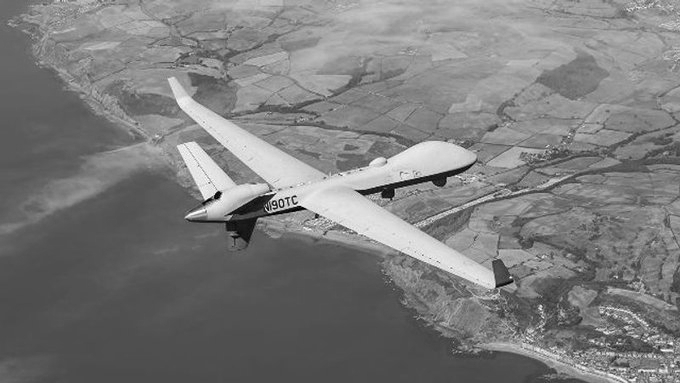
India Leases Two SeaGuardians As Navy Boosts Its Indian Ocean Watch
India is adding a powerful new layer to its maritime surveillance network as the Indian Navy leases two MQ-9B SeaGuardian remotely piloted aircraft for 30 months, giving it persistent aerial eyes over the vast Indian Ocean Region while its larger long-term drone fleet takes shape.
The ₹1,943-crore agreement with General Atomics Aeronautical Systems is more than a routine equipment lease. It gives the Navy access to a mature, high-altitude, long-endurance platform capable of remaining airborne for extended periods and monitoring enormous stretches of ocean.
The SeaGuardian's biggest strength is its persistence. Equipped with advanced maritime sensors, surveillance radar, electro-optical and infrared systems and other specialised payloads, it can help identify and track vessels, monitor maritime activity and build a continuous picture of what is happening at sea. Its ability to operate at high altitude and stay airborne for long periods makes it particularly valuable for the Indian Ocean, where monitoring every area with manned aircraft or warships would be costly and difficult.
The platform also offers a degree of flexibility beyond surveillance, with the MQ-9B family capable of carrying weapons in appropriate configurations. This means the system can potentially move from finding and tracking targets to supporting precision operations, subject to mission requirements and authorisation.
But India's decision does not mean it has abandoned its indigenous drone ambitions. DRDO's TAPAS-BH-201 represents India's effort to develop its own long-endurance unmanned surveillance capability, with an endurance of roughly 24-30 hours and a range of indigenous intelligence and surveillance payloads. The difference is that SeaGuardian is a mature, specialised maritime platform available now, while India's indigenous ecosystem continues to evolve.
The Navy is also not relying on these two leased aircraft forever. India has already signed a separate agreement for 31 MQ-9B drones, including 15 SeaGuardians for the Navy. The 30-month lease therefore serves as a capability bridge, helping maintain and strengthen surveillance while the larger fleet moves toward induction.