
India launches national red list assessment to map species extinction risk
In a race against time, India has launched the National Red List Assessment (NRLA), an ambitious initiative to identify and protect the country’s most vulnerable plants and animals. Home to a staggering 8% of the world’s plant species and 7.5% of animal species, many found nowhere else, India is stepping up to map extinction risks and strengthen conservation efforts like never before. Iconic animals such as the Bengal tiger, Asiatic lion, Indian elephant, Ganges river dolphin, and Great Indian bustard are among those whose survival will benefit from this initiative. On the plant side, rare species like the Shorea robusta (Sal tree), Madhuca longifolia (Mahua), and Dendrobium nobile (a threatened orchid) are being closely monitored.
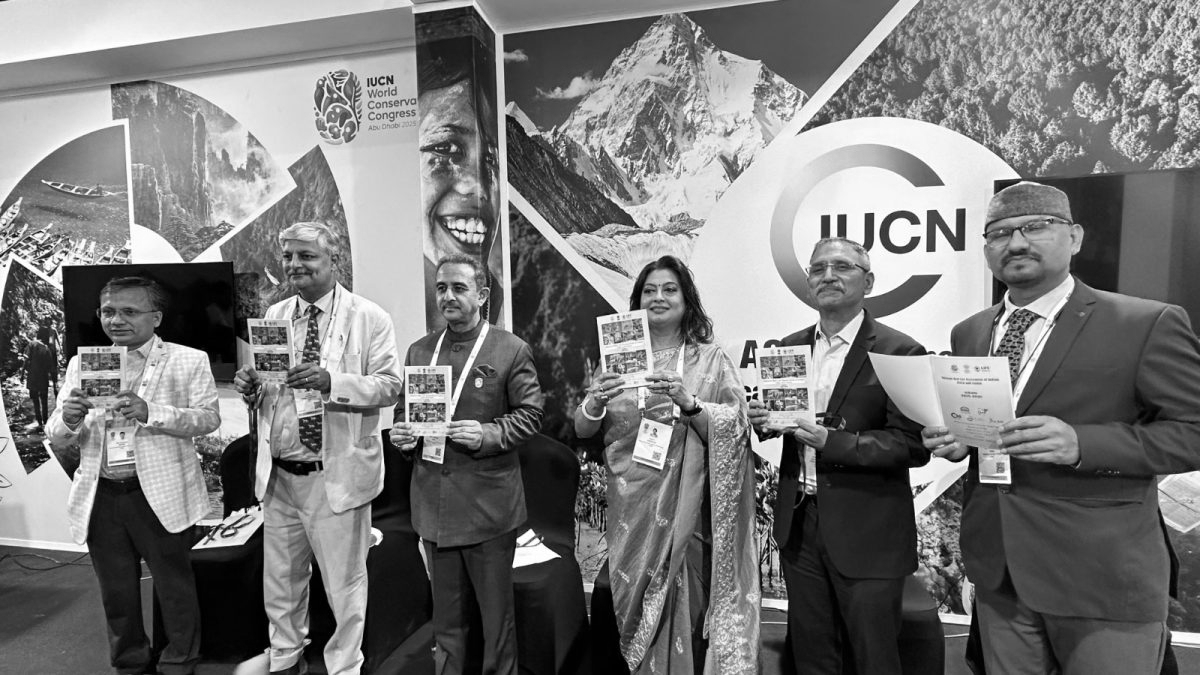
The initiative was unveiled by Union Minister of State for Environment, Forest and Climate Change, Kirti Vardhan Singh, at the Asia Pavilion of the IUCN World Conservation Congress 2025, alongside the National Red List Roadmap and Vision 2025–2030. Singh highlighted that the program reinforces India’s commitment to biodiversity documentation, threat assessment, and evidence-based conservation planning. “Our government is collaborating closely with IUCN, and various departments are working together to prepare this Red List,” he said.
India, one of the world’s 17 megadiverse countries, hosts four of the 36 global biodiversity hotspots: the Himalayas, Western Ghats, Indo-Burma, and Sundaland. Despite covering only 2.4% of the world’s land area, India harbors nearly 8% of global flora and 7.5% of global fauna, with over 28% of plants and 30% of animals being endemic.
Singh also presented India’s Vision 2025-2030, prepared jointly by the Zoological Survey of India (ZSI), the Botanical Survey of India (BSI), IUCN India, and the Centre for Species Survival. By 2030, the government aims to publish National Red Data Books for both flora and fauna, following globally recognized IUCN scientific standards.
Globally, the IUCN Red List remains the gold standard for assessing extinction risk. Of the 163,000 species assessed so far, nearly 28% are threatened with extinction, a stark reminder of the urgent need for stronger conservation action.
The NRLA will bring together taxonomists, conservation biologists, and subject experts to ensure accurate species identification and data-driven conservation strategies. Singh also emphasized documenting traditional knowledge, acknowledging the role of local communities in ecosystem preservation.
As the world faces accelerating species extinction, India’s National Red List Assessment stands as both a scientific compass and a conservation promise, aiming to safeguard the country’s natural treasures, from the mighty tiger and rare river dolphin to the endangered Sal tree and fragile orchid, for generations to come.