
India Identifies AI, Maritime Security as Key Priorities for UNSC Bid
India has identified Artificial Intelligence (AI) and maritime security as key priorities for its candidature for a non-permanent seat on the UN Security Council for the 2028-29 term, its Permanent Representative to the United Nations, Ambassador Harish Parvathaneni, has said.
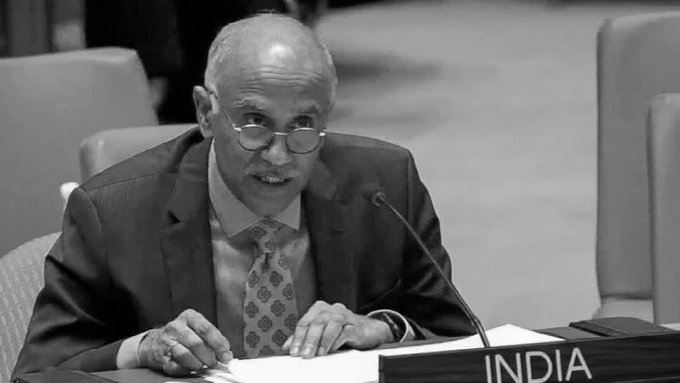
Addressing a high-level open debate on emerging technologies and maritime security at the Security Council on Thursday, Parvathaneni said technological advancements must strengthen security and cooperation rather than create new divisions.
“Oceans are the arteries of global commerce, connecting economies, sustaining livelihoods and ensuring food and energy security,” he said, emphasising that maritime safety was essential for international peace and prosperity.
Parvathaneni said AI, autonomous systems, satellite-based surveillance and advanced cyber capabilities offered significant opportunities to improve maritime security, but their misuse posed emerging challenges. He stressed that developing countries needed access to technology, training and institutional capabilities to protect maritime infrastructure and participate meaningfully in shaping technological governance.
Highlighting threats to commercial shipping, the Indian envoy said attacks on vessels and disruptions at critical maritime chokepoints endangered seafarers, disrupted supply chains and disproportionately affected developing economies through higher costs and uncertainty. India reiterated its commitment to freedom of navigation and unimpeded lawful maritime commerce in accordance with international law.
Parvathaneni said AI-enabled analysis of satellite imagery, radar and vessel-tracking data could improve maritime domain awareness, identify suspicious activities and support search-and-rescue operations. He cited India's Information Fusion Centre-Indian Ocean Region as an example of the benefits of information-sharing and international cooperation.
He also cautioned that increasing digitalisation exposed ports, vessels, communication networks and undersea infrastructure to cyber threats. The deployment of autonomous systems, he added, required appropriate safeguards, human oversight and clear accountability.
India emphasised that the UN Charter and international law, including the UN Convention on the Law of the Sea (UNCLOS), must guide state conduct.
India and Tajikistan will contest the sole Asia-Pacific Group seat in the June 2027 elections for the 2028-29 term.