
India Highlights UN Peacekeeping Legacy as World Marks International Peacekeepers Day
India reaffirmed its unflinching commitment to UN peacekeeping while paying tribute to fallen personnel on the International Day of United Nations Peacekeepers , as the United Nations announced major honours for Indian peacekeepers serving across global missions.
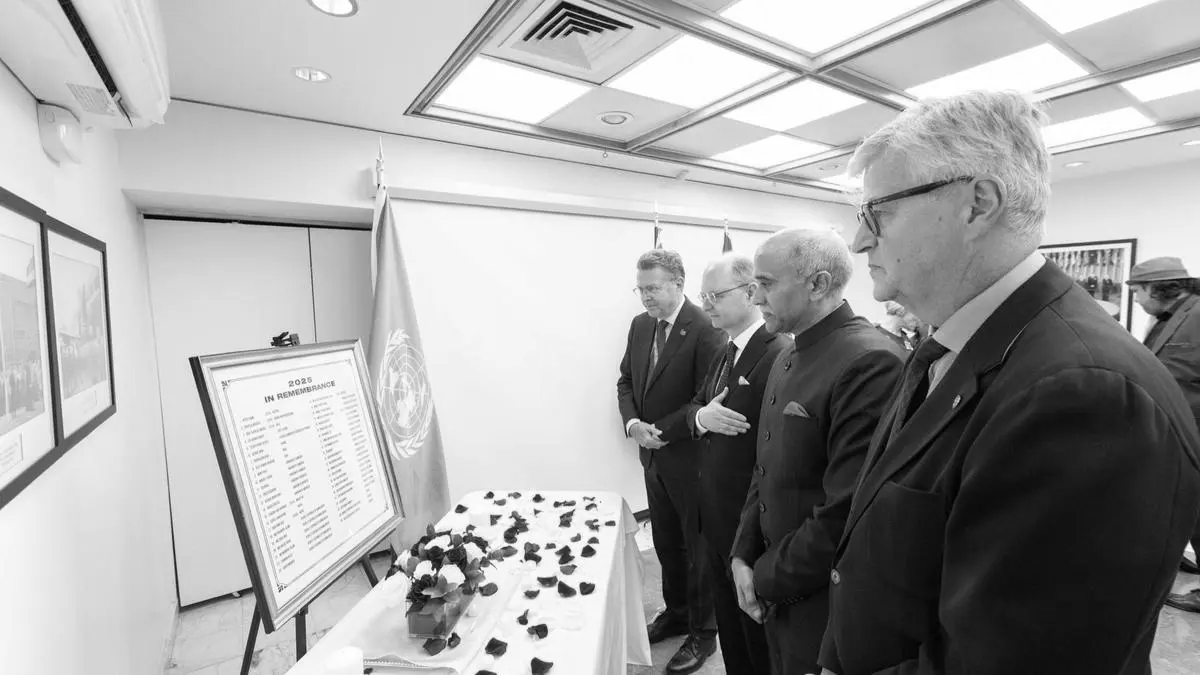
At a ceremony organised by the permanent missions of India and Austria to the UN, India’s Permanent Representative Harish Parvathaneni said the Blue Helmets continue to represent the United Nations in some of the world’s most dangerous conflict zones and remain vital to international peace and stability.
India, one of the largest contributors to UN peacekeeping operations, has deployed nearly three lakh troops in over 50 missions since 1948. More than 180 Indian peacekeepers have lost their lives in the line of duty, the highest number among troop-contributing nations. India currently deploys over 4,200 military and police personnel , including 155 women, across missions in Africa, the Middle East and other regions.
On June 5, UN Secretary-General António Guterres will posthumously award the Dag Hammarskjöld Medal to 68 military, police and civilian peacekeepers, including Lance Havildar Harbhajan Singh of MONUSCO and Naib Subedar Sujit Kumar Pradhan of UNMISS, for their sacrifice in service.
In a major recognition for India, Major Abhilasha Barak , serving with UNIFIL in Lebanon, will receive the 2025 UN Military Gender Advocate of the Year Award for her outreach work with women and girls and gender-sensitisation initiatives. The Indian Army’s first woman combat helicopter pilot becomes the third Indian officer to receive the honour after Major Suman Gawani and Major Radhika Sen.
This year’s theme, “Invest in Peace,” comes as the UN warns of rising conflicts, misinformation threats and funding constraints. More than 50,000 peacekeepers from 118 countries are currently serving in 11 UN missions worldwide. Guterres said peacekeeping remains one of the most effective and cost-efficient tools for maintaining global stability and protecting civilians in conflict zones.