
India Finally Condoles Iran Leader’s Assassination After Social Media Backlash
After days of conspicuous silence and mounting criticism across political circles and social media, India has finally conveyed condolences over the killing of Ali Khamenei , Iran’s most powerful leader for nearly four decades. Yet the manner in which the response was delivered has raised fresh questions about New Delhi’s diplomatic posture.
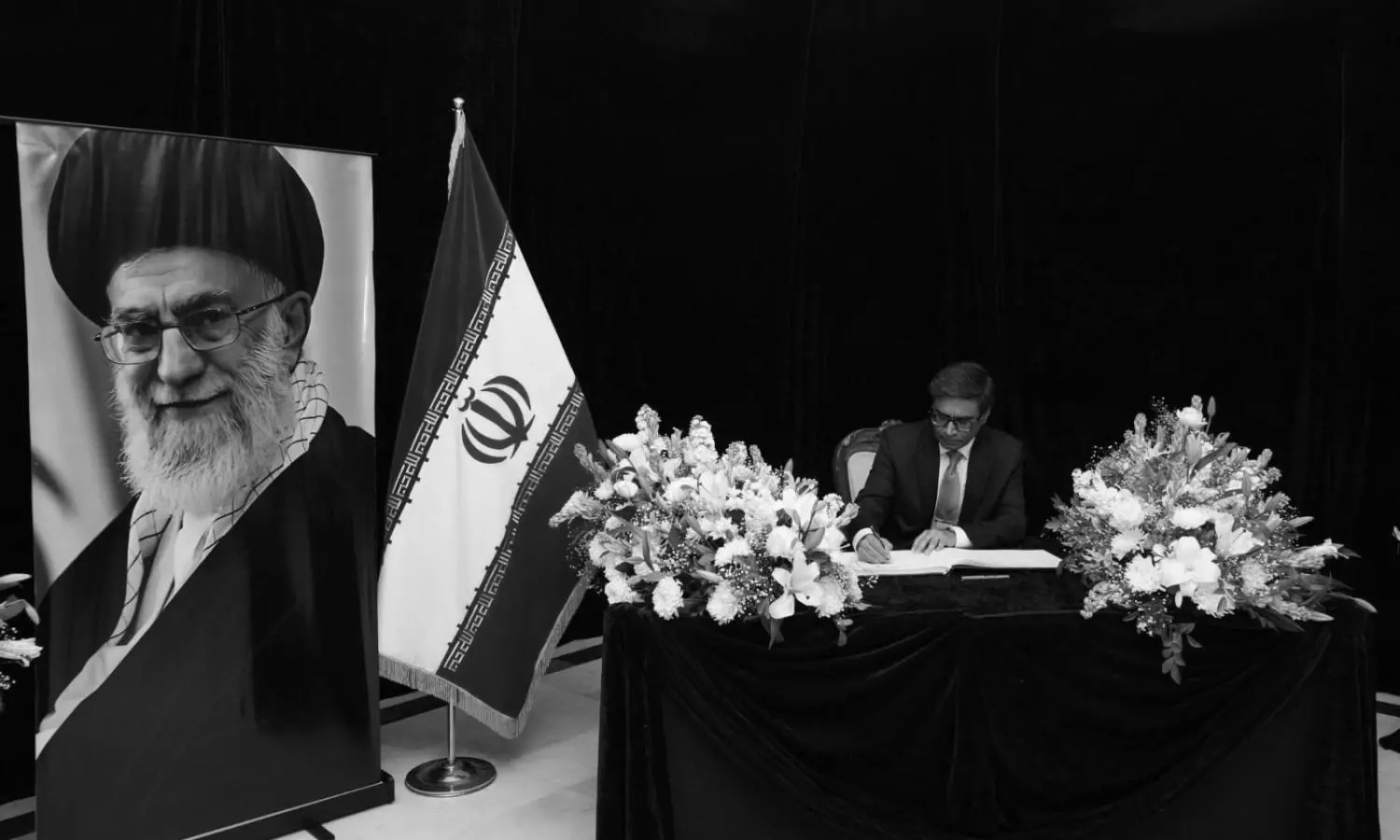
Instead of a formal statement from Narendra Modi or a public message from S. Jaishankar , the task of conveying India’s sympathy was left to Vikram Misri, Foreign Secretary of India , who visited the Iranian embassy in New Delhi and signed the condolence book on behalf of the Government of India.
The understated gesture came several days after Khamenei was killed in airstrikes reportedly carried out by Israel and the United States , an event that dramatically escalated tensions across West Asia. During those crucial days, New Delhi maintained a studied silence even as governments around the world reacted to the killing of a sitting head of state.
Criticism intensified online, with many pointing out that India has in the past issued prompt condolences following major international tragedies. The absence of any immediate message following the assassination of the leader who had ruled Iran since 1989 therefore stood out.
Political criticism soon followed. In a strongly worded opinion article, Sonia Gandhi argued that India’s silence on the assassination represented not neutrality but a troubling departure from the country’s long-held diplomatic principles. Writing in The Indian Express , she said the killing of a head of state during military strikes raised serious questions about international law and sovereignty, and warned that New Delhi’s silence risked weakening India’s credibility as an independent voice in global affairs.
Her criticism added to a growing chorus of voices questioning the government’s response. Observers noted that even when the government eventually conveyed condolences, it did so through a quiet bureaucratic gesture rather than a visible political statement. The decision to send the Foreign Secretary , instead of at least the External Affairs Minister , was viewed by critics as an attempt to acknowledge the event without drawing wider diplomatic attention.
Notably, Prime Minister Modi has still not issued a direct public condolence message on Khamenei’s assassination. The continuing silence from the country’s top political leadership has become a central point in the debate over India’s response.
For now, India’s position appears carefully calibrated a condolence conveyed through diplomatic channels, but without the political visibility that such a moment might ordinarily command. In a region already gripped by escalating tensions, New Delhi’s restrained approach has triggered a wider discussion about the balance between strategic caution and moral clarity in India’s foreign policy.