
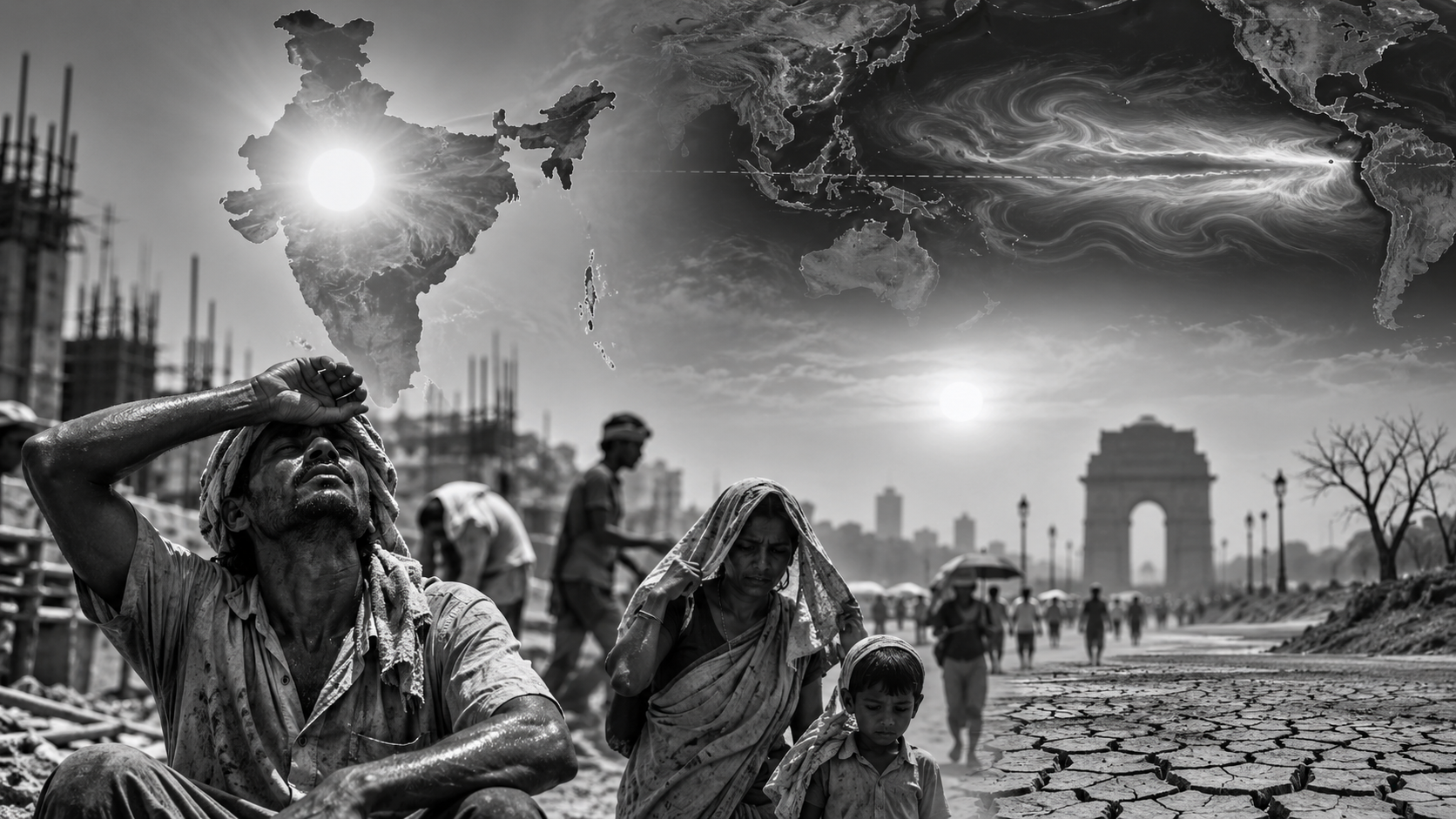
India Faces Risk of 15,800 Extra Heat Deaths From El Niño
India's heat-health burden could rise significantly in the months ahead, with a new Climate Impact Lab assessment projecting 15,800 additional heat-related deaths amid an El Niño event expected to intensify into a very strong phase.
The projected deaths are expected between September 2026 and February 2027, compared with mortality during a normal year. The warning comes as the World Meteorological Organization (WMO) says El Niño is firmly established and likely to intensify, increasing risks from extreme heat, drought and other weather disruptions through early 2027.
India's projected toll forms part of an estimated 239,000 additional heat-related deaths worldwide during the same six-month period. For the broader period from June 2026 to February 2027, the Climate Impact Lab estimates around 451,000 additional deaths globally. Nearly 7,400 of India's 15,800 projected deaths could occur between December and February, suggesting that heat-related risks could extend beyond the traditional summer season.
The assessment is a modelled projection, not a confirmed death toll. Researchers examined temperature-mortality relationships across 24,378 regions, accounting for differences in climate, vulnerability and adaptation, before applying them to seasonal forecasts. The study estimates global land temperatures could reach 1.2°C above normal, with about 44% more extremely hot days. Researchers describe the conditions as a “postcard from the future”, resembling temperatures climate projections suggest could become more common within two decades.
The global impact could be particularly severe across vulnerable regions. The Sahel is projected to see 66,800 additional deaths, including 31,400 in Nigeria, 17,500 in Sudan, 10,000 in Niger and 8,000 in Chad. Southeast Asia could record 19,400 deaths across the Philippines, Vietnam, Thailand and Cambodia, while Indonesia could see 19,300 and Brazil 13,300.
For India, El Niño does not automatically mean a failed monsoon. Its influence interacts with the Indian Ocean Dipole, Madden-Julian Oscillation and other atmospheric factors. Recent research indicates that greenhouse warming can intensify El Niño-related monsoon droughts.
India already has heat-health surveillance and Heat Action Plans through the National Centre for Disease Control. Researchers recommend early-warning systems, cooling centres, drinking-water access, targeted outreach and protection for outdoor workers.
While “Super El Niño” is widely used, the WMO formally describes the event as a “very strong” El Niño. The projected 15,800 deaths therefore represent a warning of potential excess mortality and highlight the importance of timely preparedness.