
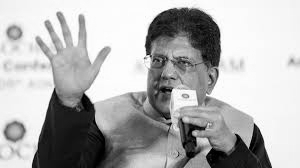
India expands rare earth strategy with trade pacts and startup push: Piyush Goyal
The Indian government is stepping up efforts to secure a steady supply of critical minerals essential for clean energy and high-tech industries. Commerce and Industry Minister Piyush Goyal on Friday said New Delhi is actively working on trade agreements with Chile and Peru, boosting domestic exploration, and encouraging startups to enter the recycling and processing of rare earth materials.
Rare earth and critical minerals such as lithium, nickel, copper, and cobalt are vital to industries spanning electronics, defence, and renewable energy, from electric vehicles and batteries to fighter jets. While countries like Chile, Peru, and Australia hold significant reserves, global supply chains have been strained due to China’s export restrictions.
“Look at Chile and Peru, why am I pursuing free trade agreements with them? That’s where the answer lies,” Goyal said, explaining India’s strategy to diversify its import sources and reduce dependence on a single geography. India already has an active trade pact with Australia and has sent a delegation to South America for the next round of talks with Chile and Peru.
At an Assocham event in New Delhi, Goyal emphasised that the government is encouraging domestic exploration and collaborating with startups to develop recycling methods and processing facilities within India. “We are in talks with startups to set up processing capacities here. Currently, most of it is concentrated in one region globally,” he said.
He urged industries to make their supply chains more resilient, cautioning against over-dependence on any one country. “We’ve seen the weaponisation of trade and supply chains. It’s important to be self-reliant and ensure we have multiple sources,” he noted.
Goyal also revealed that guidelines are being finalised for the recently announced ₹10,000 crore Fund of Funds Scheme (FFS) for startups, focusing on manufacturing and high-tech sectors that require long-term capital support.
Taking aim at past governments, he said that earlier free trade agreements with ASEAN, Japan, and South Korea were poorly negotiated, resulting in higher imports without boosting India’s exports. In contrast, the FTAs signed under the current government, with the UAE, Mauritius, the EFTA bloc, and Australia, have been structured to enhance India’s export competitiveness.
Through these measures, the government aims to secure critical mineral supplies, empower local industries, and strengthen India’s position in the evolving global energy and technology landscape.