
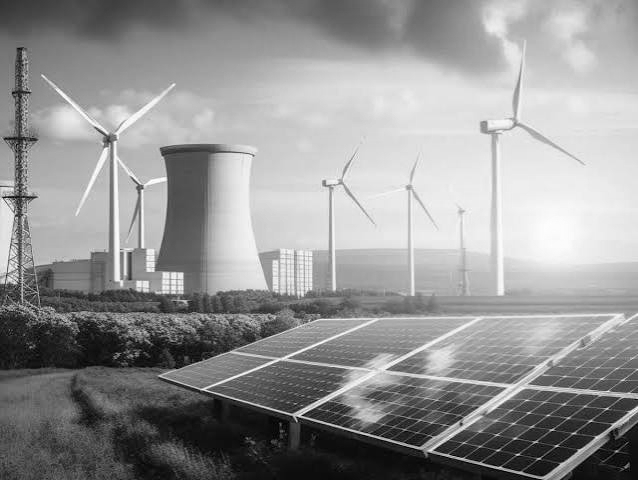
India Crosses 300 GW Clean Power Mark: Is the 500 GW Goal by 2030 Now Within Reach?
India has crossed a major milestone in its clean-energy transition, with non-fossil fuel-based installed power capacity reaching 300.50 GW as of July 31, 2026. But the bigger question is whether India can add another 199.5 GW and reach its 500 GW target by 2030.
At first glance, adding nearly 200 GW in about four years sounds challenging. However, India's recent pace suggests the target is increasingly within reach. During 2025-26, India added a record 55.29 GW of non-fossil capacity, including 44.6 GW of solar and 6 GW of wind.
India needs to add roughly 46-47 GW a year from here to reach 500 GW by 2030. That means its latest annual addition has already exceeded the average pace required. If India can broadly sustain additions of around 50-55 GW annually, it could potentially cross 500 GW before 2030 and even move beyond the target.
The transformation becomes even more striking when viewed over the past decade. India's solar capacity stood at just 2.8 GW in 2014 and has now reached 164.59 GW. Wind capacity has risen from around 21 GW to 58.14 GW over the same period. Hydropower, bio-power and nuclear energy make up the remaining non-fossil capacity.
Solar has become the biggest engine of India's clean-energy expansion because of falling technology costs, faster project construction, strong government support, competitive bidding and India's large solar potential. Solar can also be deployed across massive solar parks, rooftops, factories and agricultural installations.
Major companies including Adani Green Energy, Tata Power, NTPC and JSW Energy are expanding renewable portfolios, while companies such as Waaree Energies, Premier Energies and Vikram Solar are strengthening domestic solar manufacturing.
But reaching 500 GW will require more than building solar panels and wind turbines. The next challenge is making this capacity reliable and usable.
Solar generation falls after sunset, while wind output fluctuates with weather. India therefore needs much greater investment in battery storage, pumped-storage hydropower, transmission infrastructure and flexible power generation.
Transmission could become one of the biggest tests. The government estimates that about 51,000 circuit km of transmission lines and 4,33,500 MVA of transformation capacity will be required to support the 500 GW target, involving around ₹2.44 lakh crore of investment.
There is also an important distinction between installed capacity and actual electricity generation. 500 GW of capacity does not mean 500 GW of electricity will be available at every moment. Solar and wind plants cannot operate at maximum output continuously.
India must also tackle land acquisition, project execution, financing and equipment supply-chain challenges while expanding domestic manufacturing.
Yet the momentum is undeniable. India has moved from building its renewable-energy foundation to adding capacity at unprecedented speed.
The debate is therefore changing. The question is no longer simply whether India can reach 500 GW. It is whether India can build the grid, storage and industrial ecosystem needed to make that capacity work effectively.
If the current pace continues, 500 GW by 2030 could become a milestone rather than a ceiling —with India's clean-energy ambitions potentially extending far beyond it.