
India catches up on drone warfare - Army Chief Visits Kharga Corps
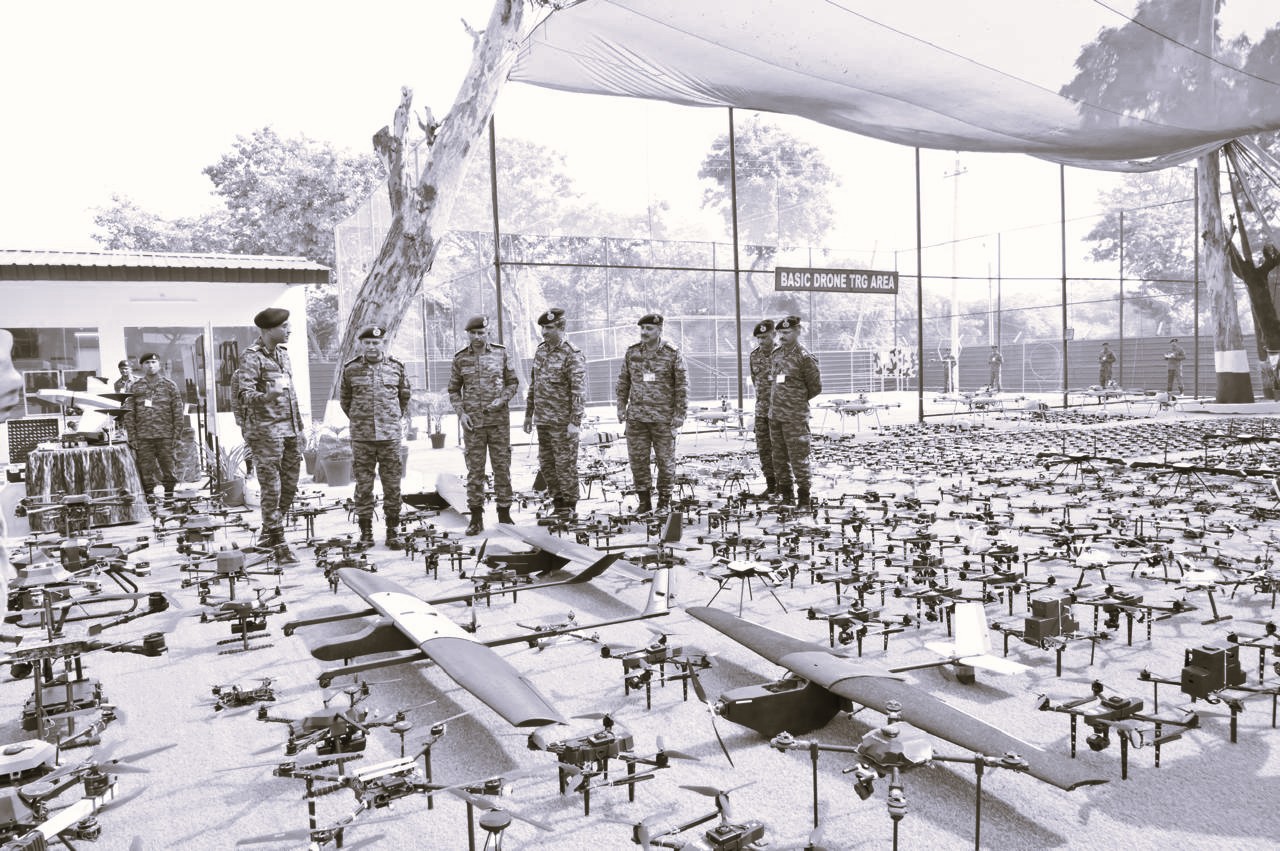
In a move reflecting India’s accelerated transition toward modern warfare, Chief of Army Staff General Upendra Dwivedi visited the Kharga Corps at Mathura to assess its operational preparedness and breakthroughs in drone-based technologies. The visit, conducted under the Indian Army’s #DecadeofTransformation initiative, highlights the growing importance of unmanned and AI-integrated systems in strengthening national defence.
The Kharga Corps, one of India’s premier strike formations, has assumed a pivotal role in spearheading this technological transformation. Following its decisive role in Operation Sindoor earlier this year, the formation has become central to the Indian Army’s modern warfare vision. Operation Sindoor, conducted in May 2025, involved precision drone-assisted missile strikes targeting terror camps across Pakistan-administered Azad Kashmir and Punjab province. The operation came in response to the Pahalgam terrorist attack that claimed 26 innocent lives, and it showcased India’s ability to combine traditional firepower with cutting-edge drone intelligence.
During the Mathura visit, General Dwivedi reviewed the Corps’ advancements in drone warfare and was briefed on indigenous innovations driving its evolving combat doctrine. The formation’s newly developed “Rooster” hybrid drone system capable of both aerial and ground missions stood out as an example of India’s push toward self-reliance under the Atmanirbhar Bharat initiative. The system represents a step forward in reducing dependence on imported weapon technologies and enhancing battlefield versatility.
The review featured an extensive display of unmanned aerial vehicles (UAVs) from light tactical quadcopters to advanced long-range platforms. Among the systems showcased were imported models such as the Heron TP and Harop loitering munitions, alongside domestically developed drones including Rustom-II and Switch UAVs. With several indigenous systems now entering large-scale production, the Indian Army’s drone fleet increasingly rivals those of global powers like the United States, Israel, and China.
A significant focus of the visit was the Indian Army’s commitment to “Military Civil Fusion”, an initiative fostering collaboration between defence personnel, civilian industries, and academic institutions. The Kharga Corps has been an active participant in this model through projects like Converge Capsule-II, a joint platform exploring AI surveillance, renewable energy integration, and disaster response mechanisms. This engagement not only enhances operational capability but also aligns military preparedness with broader national development goals.
The Corps’ contributions extend beyond the battlefield. Its humanitarian operations, such as the landmark Operation Rahat in 2015, which rescued over 4,600 Indian citizens from war-torn Yemen, underscore the unit’s balanced commitment to both national security and global humanitarian responsibility. Under the #DecadeofTransformation initiative, the Indian Army aims to modernize its combat structure through technology absorption, digital warfare capabilities, and policy-driven innovation. The growing role of drones underscores a worldwide shift to autonomous and precision-based warfare that minimizes human risk while maximizing impact. India’s focus on this domain, reinforced through participation in international exercises like Vayu Samanvay-II, highlights its readiness to operate and neutralize drone threats in real-world scenarios.
As General Dwivedi interacted with officers and troops, he praised their professionalism, adaptability, and relentless drive toward excellence. The Kharga Corps, strategically positioned to defend India’s western fronts, continues to play a decisive role in maintaining rapid response capabilities against any external threat. Its ongoing integration of indigenous technology signals India’s steady march toward self-reliance and future-ready defence. General Dwivedi’s review not only reaffirmed the Indian Army’s operational readiness but also symbolized India’s evolving defence doctrine where innovation, indigenous capability, and strategic foresight define the battlefield of tomorrow.