
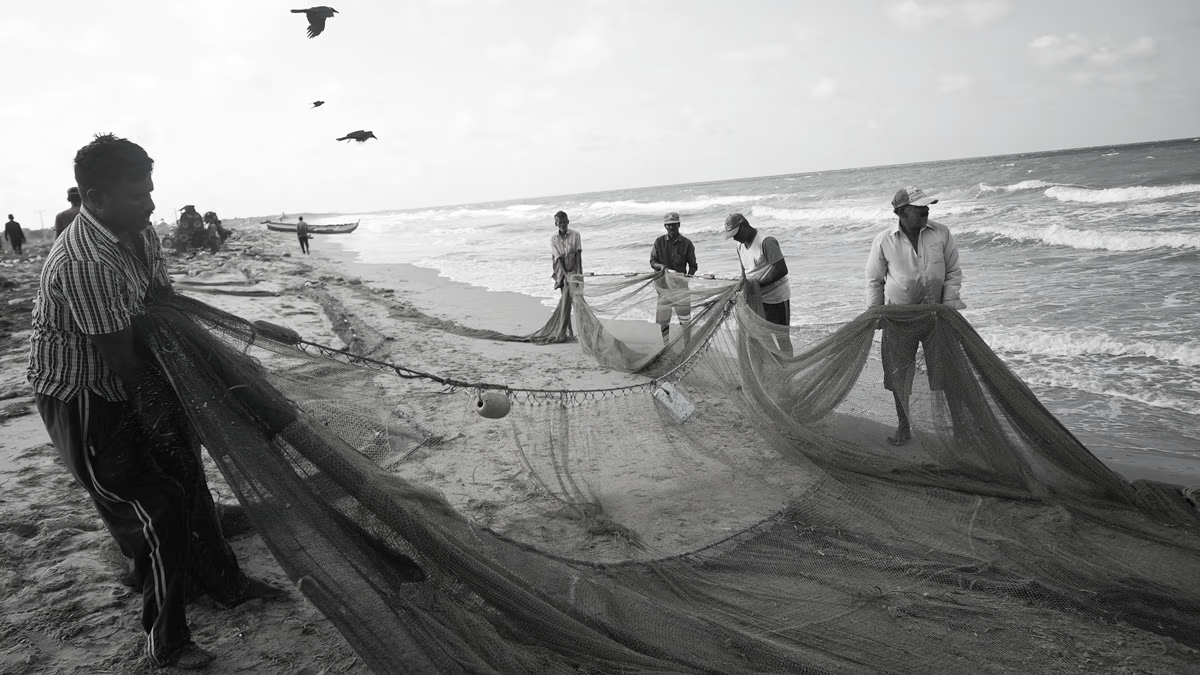
India casts big net for global seafood market
• India targets Rs one lakh crore in seafood exports, despite US tariffs.
• Alternative markets in the UK, EU, Japan, and New Zealand offer new opportunities.
• Focus on value addition, quality standards, and supply chain strengthening is critical.
• Sector modernization and small-scale fisheries support are essential for achieving targets.
India is casting its ambitions wider in the global seafood industry, aiming for a whopping Rs one lakh crore in exports, even as a new tariff by the United States threatens to slow momentum. Union Fisheries Minister Rajiv Ranjan Singh said the government sees the tariff not as a setback, but as an opportunity to diversify markets and strengthen India’s position internationally.
Speaking after a consultative meeting with fisheries agencies in Lakshadweep, Singh emphasized that alternative markets are already open. “The UK market is fully accessible after our Prime Minister signed a Free Trade Agreement. Agreements with Japan, New Zealand, and soon the European Union, provide multiple avenues for growth,” he said. The government’s strategy hinges on tapping these markets with higher-quality, value-added seafood products.
The plan is ambitious but pragmatic. India’s seafood exports currently contribute around Rs 60,000 crore to the economy. Scaling this to Rs one lakh crore will require more than just expansion,it demands modernization across the sector. Singh highlighted key areas of focus: improving packaging, standardizing certification, enhancing the value chain, and encouraging technological adoption among exporters and fisheries cooperatives.
Critically, the move reflects India’s broader economic strategy: leveraging trade agreements and regional partnerships to mitigate risks while pushing for long-term competitiveness. While the US tariff poses short-term pressure, Singh’s approach signals confidence that India can not only absorb the shock but also emerge stronger in global seafood trade.
However, challenges remain. Exporters must quickly adapt to the stricter quality and certification standards required in international markets. Small-scale fisheries, which form the backbone of India’s seafood industry, need support and investment to meet global compliance standards. Without these measures, ambitious export targets risk remaining aspirational.
Singh underlined the ministry’s commitment to providing this support and expressed optimism: “This is a sector with enormous untapped potential. By focusing on innovation, value addition, and strategic market expansion, India can redefine its presence in global seafood trade.”