
India, Canada poised for major Uranium supply deal as bilateral ties thaw
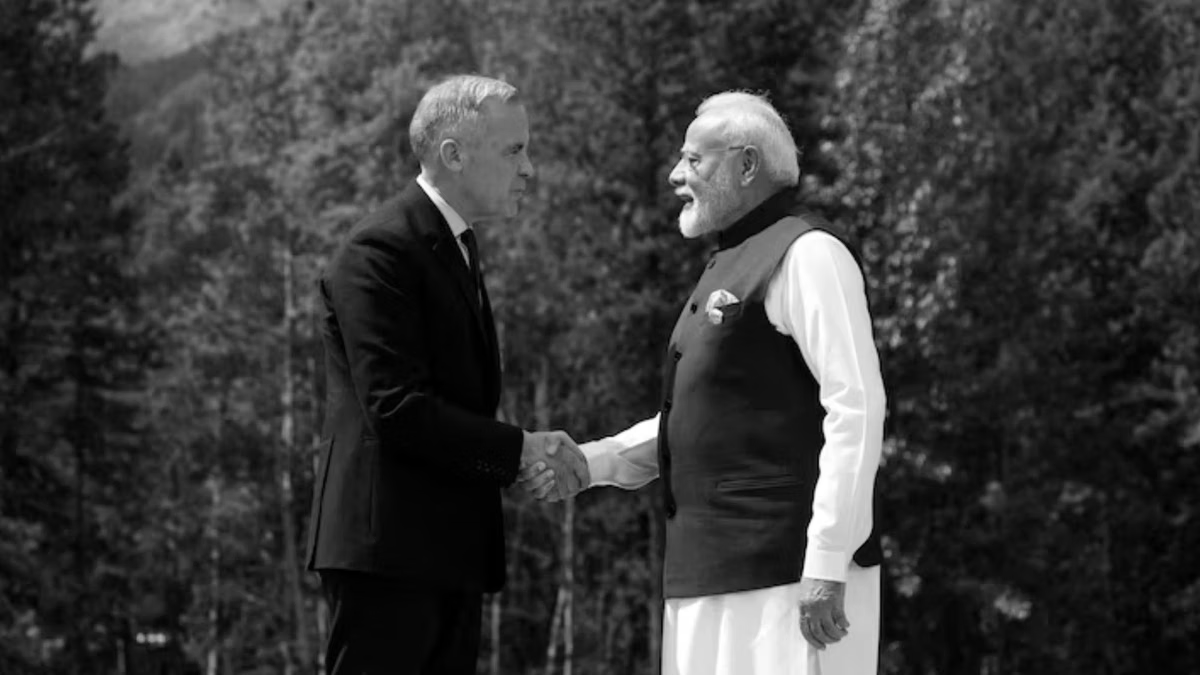
Days after Prime Minister Narendra Modi met his Canadian counterpart Mark Carney on the sidelines of the G20 Summit in Johannesburg, Ottawa is moving toward finalising a decade-long uranium supply agreement with New Delhi, The Globe and Mail has reported. The proposed pact, valued at around $2.8 billion, is expected to draw on fuel from Cameco Corp, Canada’s leading uranium producer, and would form part of a wider framework for strengthened civil nuclear cooperation.
According to the report, the final terms of the agreement may undergo modifications before its formal announcement. The prospective deal marks a significant shift in relations between the two countries, whose ties deteriorated nearly two years ago after Ottawa accused India of involvement in the killing of Hardeep Singh Nijjar, a proscribed Khalistani militant, an allegation New Delhi firmly rejected.
The uranium negotiation comes alongside a broader reset in economic engagement. Following the Modi-Carney meeting, both sides agreed to restart negotiations on a Comprehensive Economic Partnership Agreement (CEPA) aimed at doubling bilateral trade to $50 billion by 2030.
A statement from the Indian Prime Minister’s Office said the leaders “reaffirmed their longstanding civil nuclear cooperation” and acknowledged “ongoing discussions on expanding collaboration, including through long-term uranium supply arrangements.”
The diplomatic rapprochement also dovetails with Canada’s effort to diversify trade partnerships beyond the United States.
India currently operates about 25 nuclear reactors and has six more under construction, according to the World Nuclear Association, and many of these are pressurised heavy-water reactors (PHWRs) based on Canadian CANDU technology making uranium supply from Canada directly compatible with India’s fuel needs. If finalised, the deal would support India’s push for energy security by ensuring a stable, long-term supply of nuclear fuel for its expanding reactor fleet, while also helping the country boost low-carbon electricity generation essential for meeting climate goals and reducing reliance on coal. Beyond fuel supply, the agreement could also open avenues for collaboration on advanced nuclear technologies, including Canadian small modular reactors (SMRs), which Ottawa is currently developing for commercial deployment.
While India maintains an independent strategic nuclear weapons programme, any cooperation with Canada including uranium supply is strictly governed by the 2013 Canada-India Nuclear Cooperation Agreement, which requires that all transferred nuclear material be used solely for peaceful purposes and remain under International Atomic Energy Agency (IAEA) safeguards. Under these conditions, Canadian uranium cannot be diverted for weapons production, and India’s strategic programme continues to operate entirely outside safeguarded civilian facilities. The arrangement strengthens transparency and reinforces India’s long-standing separation between its civilian and military nuclear activities. As a result, the prospective pact would bolster India’s civilian nuclear energy sector without altering the status or trajectory of its nuclear weapons capabilities.
Canada halted nuclear shipments to India in the 1970s after Canadian-supplied technology was used in India’s early nuclear weapons development. Relations normalised slowly over the decades, culminating in the 2013 pact that restored civilian nuclear trade under international oversight.
Canada previously supplied uranium to India under a five-year, $350-million agreement in 2015. The pending contract would be a new agreement rather than a renewal, and significantly larger in scale.
Despite the renewed momentum, bilateral trade remains modest. In 2024, Canada exported $5.3 billion in goods to India, while imports from India stood at $8 billion far smaller than Canada’s trade with the U.S. or China.
If the uranium pact and CEPA negotiations advance as expected, India-Canada economic ties may enter their strongest phase in over a decade, signalling a pragmatic recalibration driven by energy, security, and strategic diversification.