
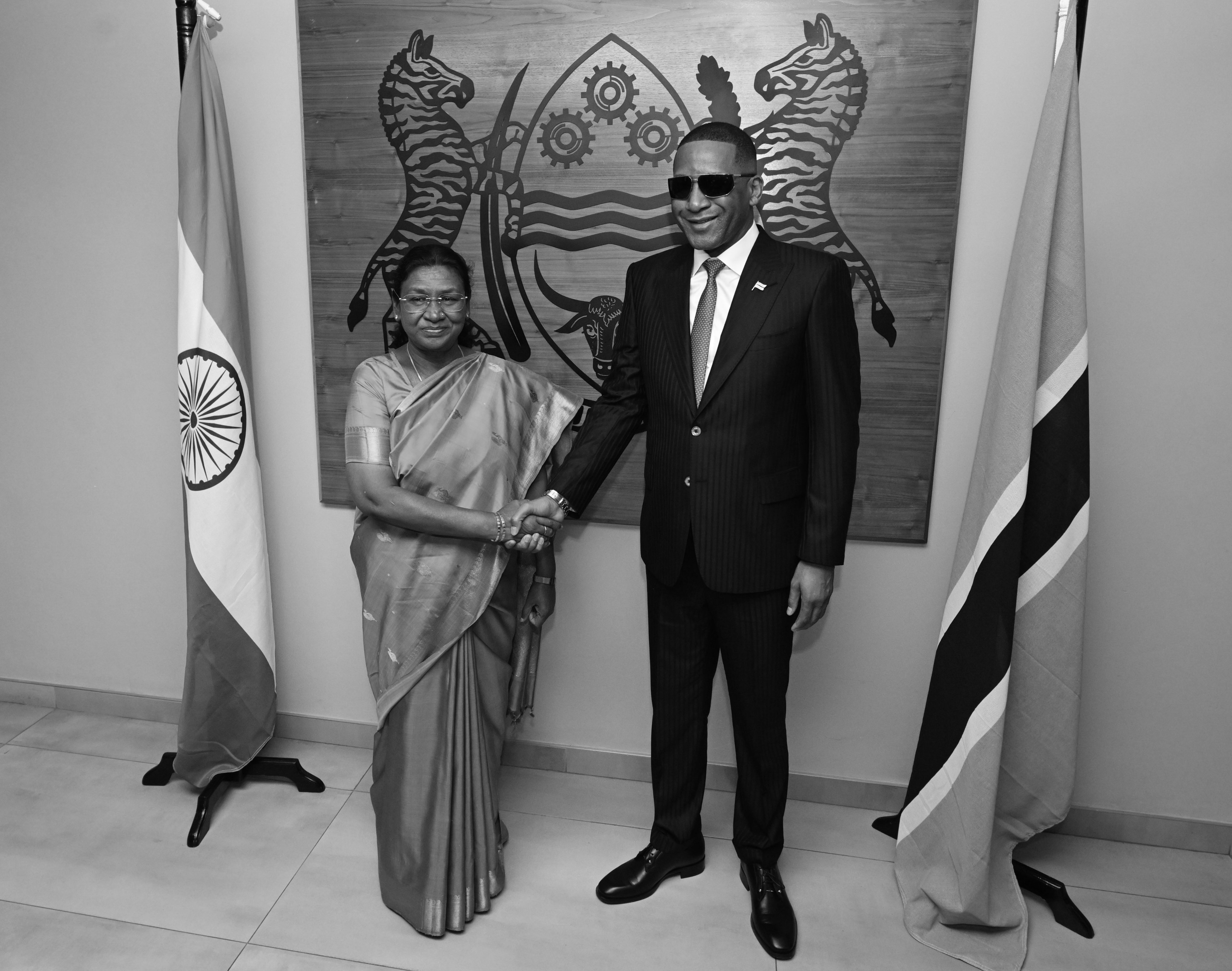
India, Botswana sign historic Cheetah translocation pact as Prez Murmu assures care
India and Botswana on Wednesday formalised an agreement to translocate eight cheetahs from the African nation to India, as part of a major wildlife conservation effort under Project Cheetah. The announcement came during the state visit of Indian President Droupadi Murmu, who highlighted the importance of protecting and nurturing the big cats.
Speaking at a press briefing, President Murmu expressed gratitude to her counterpart, Botswana President Duma Gideon Boko, and the people of Botswana, one of the world’s leading diamond-producing countries, for the gesture. She assured that India “will take good care of them” and emphasised the broader significance of reviving the species in its native habitat.
President Boko said that the donation of the cheetahs would symbolically assist India in regenerating the population of these majestic predators and serve as a milestone in biodiversity cooperation between the two countries. He added that Botswana will formally hand over the cheetahs to India on Thursday during a ceremony at the Mokolodi Nature Reserve, located 10 kilometres south of Gaborone.
The cheetahs were transported from Ghanzi town in Botswana’s Kalahari Desert to the nature reserve, where they will initially be housed in a quarantine facility. The move forms part of a bilateral initiative aimed at wildlife conservation and scientific collaboration under Project Cheetah.
Project Cheetah is India’s ambitious programme to reintroduce cheetahs, which became extinct in the country over 70 years ago. The project not only aims to restore the species but also to maintain ecological balance, support grassland biodiversity, and establish a model for large predator conservation. India began the effort with the import of eight cheetahs from Namibia in September 2022, followed by 12 more from South Africa in February 2023. Three years into the project, India now has 27 cheetahs including 16 born on Indian soil primarily housed at Kuno National Park and a few at Gandhi Sagar Wildlife Sanctuary in Madhya Pradesh. While 19 cheetahs have died since the beginning of the programme, 26 cubs have been successfully born, marking a net population gain of seven.
During her three-day visit, the first ever by an Indian President to Botswana, Murmu also participated in delegation-level talks that led to the exchange of a Memorandum of Understanding (MoU) in the health sector. The agreement focuses on cooperation in pharmaceuticals, including generic drug production and quality assurance, an area Botswana identified as a pressing concern. President Boko noted that India’s assistance would also help strengthen local skills and capacity building.
The visit marks a historic milestone, coming 60 years after the establishment of diplomatic relations between India and Botswana. Both leaders described the engagement as “historic, significant, and remarkable,” and expressed optimism about deepening cooperation in multiple sectors, including wildlife conservation, healthcare, and economic development.
While the translocation is a significant step, experts note that India faces challenges in ensuring the survival and growth of the cheetah population. These include limited grassland habitats, potential human-wildlife conflict, competition with other predators, genetic diversity issues, disease risks, and high cub mortality. Long-term success will depend on careful habitat management, veterinary monitoring, anti-poaching measures, and engagement with local communities.
President Murmu underlined that the cheetah project represents India’s commitment to global conservation and sustainable biodiversity. “It gives me special pleasure to see Botswana contributing to India’s Project Cheetah,” she said. President Boko added that the initiative reinforces bilateral ties and highlights the countries’ shared commitment to ecological preservation and socio-economic development.
The translocation of cheetahs from Botswana marks a historic chapter in international wildlife cooperation, combining conservation science, diplomacy, and shared ecological responsibility, and signals India’s determination to restore a species once lost from its landscape.