
INDIA Bloc Sets Three Demands Ahead of Parliament's Special Session
Opposition INDIA bloc leaders on Saturday announced three key demands, including maintaining the existing strength of the Lok Sabha, implementing women's reservation within the current House framework and protecting the allocation of parliamentary seats among states for another 25 years, as they prepared a joint strategy to challenge the Centre's proposed delimitation exercise ahead of the special session of Parliament beginning November 30.
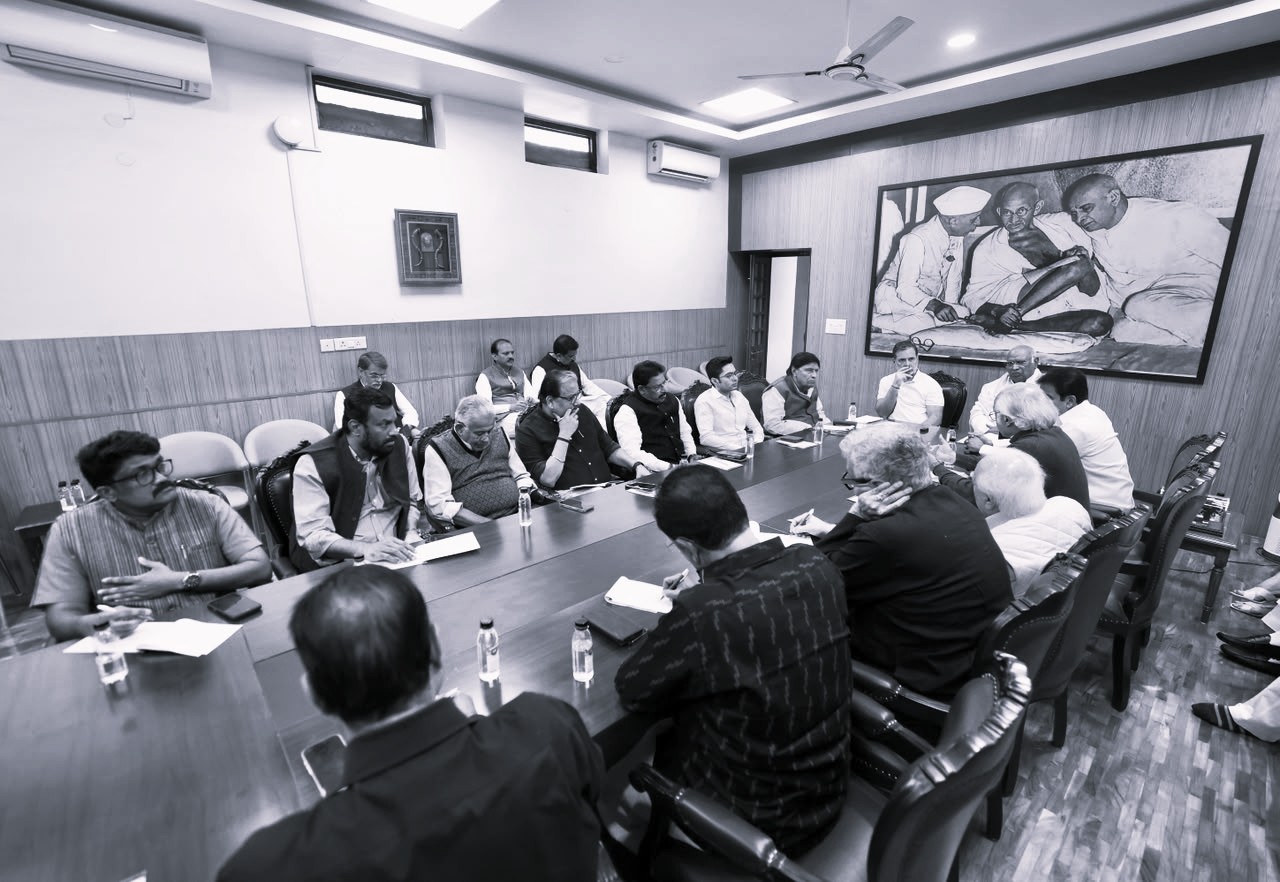
The demands emerged from a meeting at Congress president Mallikarjun Kharge's residence, attended by Rahul Gandhi, Abhishek Banerjee, Kapil Sibal, Manoj Jha, Jairam Ramesh, Priyanka Gandhi Vadra and K C Venugopal, among others. The DMK, AAP and BJD were invited but stayed away. The opposition argued that one-third reservation for women could be implemented within the existing 543-seat Lok Sabha without linking it to constituency restructuring.
Kapil Sibal questioned whether an 850-member Lok Sabha could function efficiently and alleged that the proposed delimitation mechanism could facilitate gerrymandering, or politically motivated constituency boundary changes. He cited Uttar Pradesh, Haryana and Maharashtra while questioning the independence of the proposed commission. Kharge also raised concerns about SC/ST representation, demanding safeguards to ensure reserved constituencies reflect population proportions.
The government's revised Constitution (132nd Amendment) Bill, 2026, proposes increasing Lok Sabha strength to 850, comprising up to 815 members from states and 35 from Union territories. It also raises the maximum strength of state assemblies from 500 to 650 and provides for a uniform 50 per cent increase in seats. The existing inter-state allocation ratio based on the 1971 Census would remain protected until 2051, while constituency demarcation would use the latest published Census available when the amendment commences.
The revised proposal follows the defeat of an earlier Bill on April 17, which received 298 votes in favour and 230 against, falling 54 votes short of the required two-thirds majority.
Meanwhile, the DMK, led by M K Stalin, announced support for the revised proposal, citing safeguards for southern states. The NCP (Sharadchandra Pawar), with eight MPs, also indicated conditional support. Their positions have complicated Congress's efforts to maintain opposition unity. The Lok Sabha Secretariat also revised seating arrangements for 97 MPs, including 22 DMK members moving towards the Treasury benches.
President Droupadi Murmu recommended consideration of the Delimitation (Second) Bill under Article 117(3). The legislative package also includes amendments concerning Union Territories. The TMC's departure of 20 MPs to the NDA-supporting NCPI has further altered parliamentary arithmetic, while disqualification proceedings remain pending. The Samajwadi Party, with 37 MPs, has directed its members to attend and oppose the proposal.
The special session runs from November 30 to December 3, with the Rajya Sabha reconvening on December 2. The government needs a constitutional special majority, with 359 votes required if all 538 members other than the Speaker vote. The proposed framework seeks to implement women's reservation before the 2029 Lok Sabha elections, but opposition objections over delimitation, federal representation and institutional independence remain unresolved.