
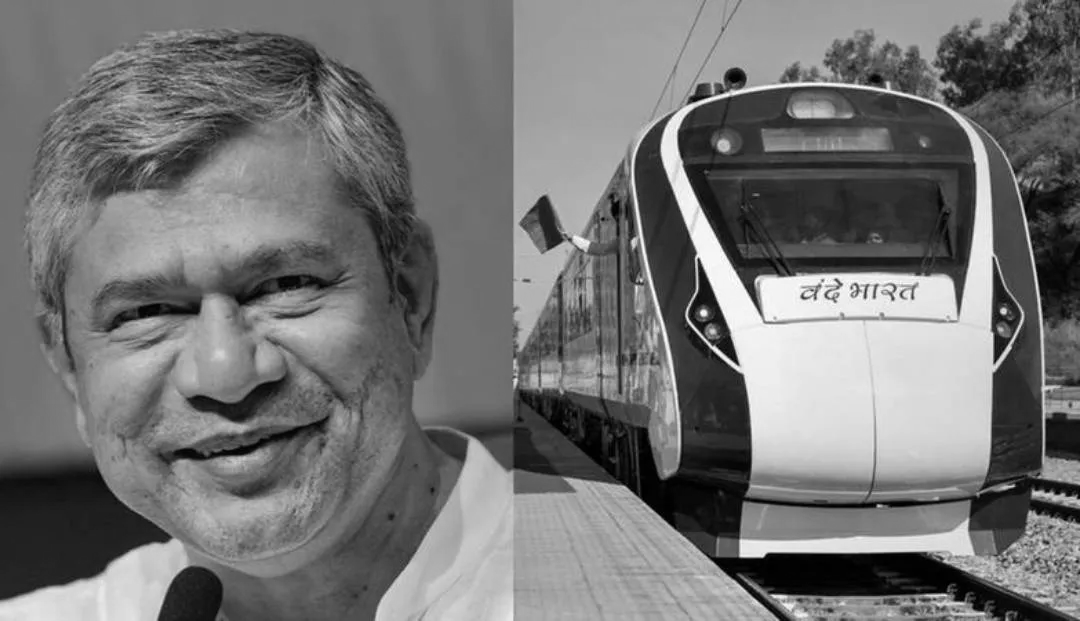
India begins work on Vande Bharat 4.0 and Amrit Bharat 4.0 to transform rail travel
India is embarking on a transformative journey in rail transportation with the upcoming launches of Vande Bharat 4.0 and Amrit Bharat 4.0. These next-generation trains aim to redefine passenger experience, safety, and sustainability, positioning India as a global leader in rail innovation. The Vande Bharat 4.0 is expected to roll out within 18 months, while Amrit Bharat 4.0 is targeted for 36 months, with full deployment expected by 2028.
Union Minister of Railways, Ashwini Vaishnaw, announced that Vande Bharat 4.0 will be developed to benchmark against the best in the world. Key enhancements include upgraded toilets, improved seating, and superior coach workmanship. The train will feature Kavach 5.0, India’s indigenous automatic train protection system, which prevents collisions and ensures automatic braking. This makes it one of the most advanced rail safety systems in the world. In addition, a 2,400-horsepower hydrogen-powered train is under development, marking a significant step toward green rail technology. The first Vande Bharat 4.0 train is expected to roll out within the next 18 months, operating on dedicated passenger corridors spanning approximately 7,000 kilometers by 2047 under the government’s Viksit Bharat vision.
Dedicated passenger corridors are specially designed tracks built only for high-speed passenger trains. By separating these trains from slower freight and local services, they allow faster, smoother, and safer travel, reducing delays and increasing capacity for India’s growing population.
Both Vande Bharat 4.0 and Amrit Bharat 4.0 are largely “Made in India”. Factories like Titagarh Rail Systems (West Bengal), Medha Servo Drives (Hyderabad), BHEL, BEML (Madhya Pradesh), Rail Coach Factory (Kapurthala), and Integral Coach Factory (Chennai) are producing the trains, with designs, interiors, propulsion, and safety systems developed indigenously. Even the hydrogen-powered train is being built without relying on foreign technology, reflecting India’s push for self-reliance in rail innovation.
Parallel to this, the Amrit Bharat 4.0 initiative is set to revolutionize regional connectivity, focusing on affordable and efficient travel across states. Unlike Vande Bharat trains, which are designed for high-speed intercity travel with premium amenities, Amrit Bharat trains aim to enhance regional and semi-urban connectivity, catering to daily and long-distance passengers with comfort and reliability. The initiative will introduce new-generation coaches and locomotives using push-pull technology for better acceleration and energy efficiency. Modern amenities will include modular washrooms, improved berths, charging points, pantry cars, and fire detection systems. The new routes will connect cities such as Muzaffarpur in Bihar to Charlapalli in Telangana and Brahmapur in Odisha to Udhna in Gujarat, ensuring smooth, affordable, and efficient travel across regions.
These next-generation trains are designed to compete on the global stage. By achieving operational speeds up to 350 km/h, implementing advanced safety systems like Kavach 5.0, offering world-class passenger amenities, and incorporating green technologies, India aims not only to meet international standards but potentially to set new benchmarks in rail transportation.
The initial launches will focus on dedicated corridors for Vande Bharat 4.0 connecting major cities, while Amrit Bharat 4.0 will enhance regional connectivity through routes such as Muzaffarpur in Bihar to Charlapalli in Telangana and Brahmapur in Odisha to Udhna in Gujarat,. These services are expected to cater to the growing demand for efficient, comfortable, and sustainable rail travel.
With these advancements, India is poised to revolutionize rail travel. Successful implementation of Vande Bharat 4.0 and Amrit Bharat 4.0 will not only improve domestic connectivity but also strengthen India’s position as a leader in the global rail industry.