
India approves indigenous runway-independent drone for IAF rescue missions
The government has granted in-principle approval for the design and development of an indigenous unmanned Combat Search and Rescue (CSAR) aircraft for the Indian Air Force, aiming to rescue stranded aircrew without risking manned missions, officials said.
Envisioned under the Defence Acquisition Procedure (DAP) 2020 , the project will be executed under the ‘Make-I’ category , where the government will fund 70% of the development cost , while Indian industry partners will bear the remaining 30%. However, the total budget outlay has not yet been publicly disclosed .
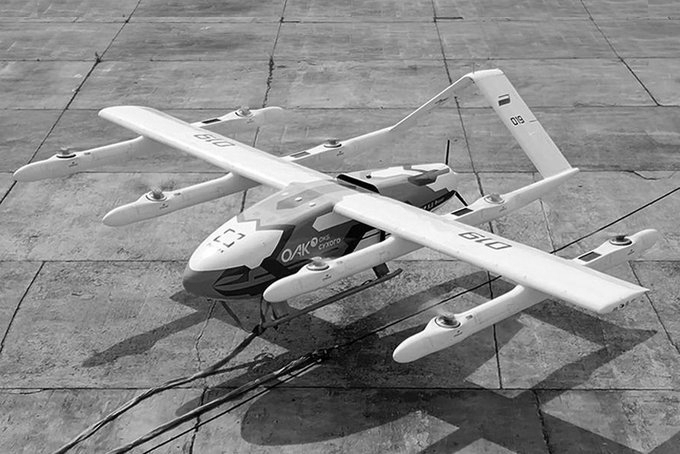
The proposed platform will be a runway-independent unmanned aerial vehicle (UAV) capable of autonomous take-off, navigation, and landing, even in environments where satellite-based navigation systems are unavailable or disrupted. It will also be equipped to locate and recover personnel using Emergency Locator Transmitters.
According to specifications, the drone will operate from sea level up to 16,000 feet extendable to 20,000 feet and offer a minimum 200 km operational radius with 45 minutes of loiter time . It is expected to carry a payload of at least 400 kg, including four passengers or stretchers , making it suitable for both rescue missions and logistics support.
Officials said the UAV would be particularly useful in forward areas, high-altitude zones, and snow-bound terrains, where conventional helicopters face operational limitations. Its ability to launch from unprepared surfaces further enhances deployment flexibility.
Following successful development and validation, procurement will be carried out under the ‘Buy (Indian-IDDM)’ route , ensuring at least 50% indigenous content . While no official timeline has been announced , defence sources indicate that projects under the Make-I framework typically span several years of development, testing, and certification, given the requirement of rigorous military airworthiness validation.
Experts say the CSAR drone could significantly enhance IAF’s combat readiness, enable faster casualty evacuation, and reduce risks in hostile environments, marking a major step in India’s evolving autonomous defence ecosystem.