
India and Brazil lead climate commitments as COP30 opens in Belém
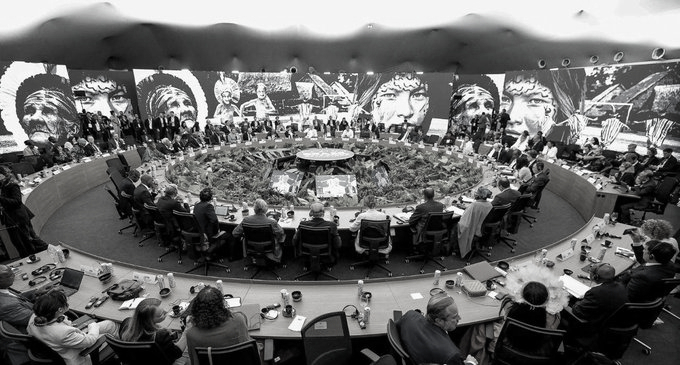
T he 30th United Nations Climate Change Conference (UNFCCC COP30) officially begins on November 10, 2025, in Belém, Brazil, following the Leaders’ Summit held on November 7, where world leaders, including India’s representative, laid out their countries’ climate visions. The conference, running until November 21, gathers heads of state, ministers, and negotiators to accelerate action on renewable energy, forest preservation, and equitable climate finance. Hosting COP30 in Belém, the gateway to the Amazon rainforest, carries powerful symbolism, it highlights the urgency of protecting one of the planet’s most vital ecosystems, which regulates global climate, sustains biodiversity, and supports millions of lives.
Delivering India’s National Statement at the Leaders’ Summit, India’s Ambassador to Brazil Dinesh Bhatia reaffirmed India’s long-standing commitment to climate action based on equity, national circumstances, and the principle of Common but Differentiated Responsibilities and Respective Capabilities (CBDR-RC). He emphasized that while developing nations are showing leadership in meeting climate goals, global ambition remains inadequate, and developed countries must accelerate emission reductions and provide adequate, predictable, and concessional finance to enable equitable progress.
India welcomed Brazil’s new initiative, the Tropical Forests Forever Facility (TFFF) and formally joined it as an Observer. The initiative, led by President Luiz Inácio Lula da Silva, aims to create a permanent financial mechanism to reward nations for conserving tropical forests. Brazil has pledged US $1 billion to launch the TFFF, which will mobilize resources globally to protect forests and support Indigenous and local communities. Lula stated, “Protecting tropical forests is not charity, it is an investment in humanity’s survival.”
Highlighting India’s achievements, the statement noted that between 2005 and 2020, India reduced the emission intensity of its GDP by 36%, with non-fossil sources now accounting for over 50% of its power capacity, achieving its revised Nationally Determined Contribution (NDC) five years ahead of schedule. India has also created an additional carbon sink of 2.29 billion tonnes of CO₂ equivalent through expanded forest and tree cover and now ranks as the third-largest producer of renewable energy, with nearly 200 GW of installed capacity. Initiatives such as the International Solar Alliance, bringing together over 120 countries, reflect India’s drive for affordable clean energy and South–South cooperation.
In his opening remarks, President Lula underlined Brazil’s deep responsibility as custodian of the Amazon, reaffirming his government’s commitment to large-scale environmental restoration. He highlighted that 80% of Brazil’s electricity now comes from renewable sources, and the nation continues to pioneer biofuel and ethanol blending in petrol, reducing fossil fuel dependence and emissions. Lula noted that Brazil’s comprehensive environmental policies have led to a marked decline in Amazon deforestation, setting an example for the world.
India’s statement also underscored that the next decade of climate action must focus not just on setting targets but on implementation, resilience, and trust. It called for strengthening multilateral cooperation under the Paris Agreement and maintaining the spirit of CBDR-RC as the guiding principle for global climate governance.
As COP30 unfolds in the heart of the Amazon, both India and Brazil have emerged as pivotal voices for developing nations, championing a vision of climate justice grounded in equity, shared responsibility, and sustainable development for all