
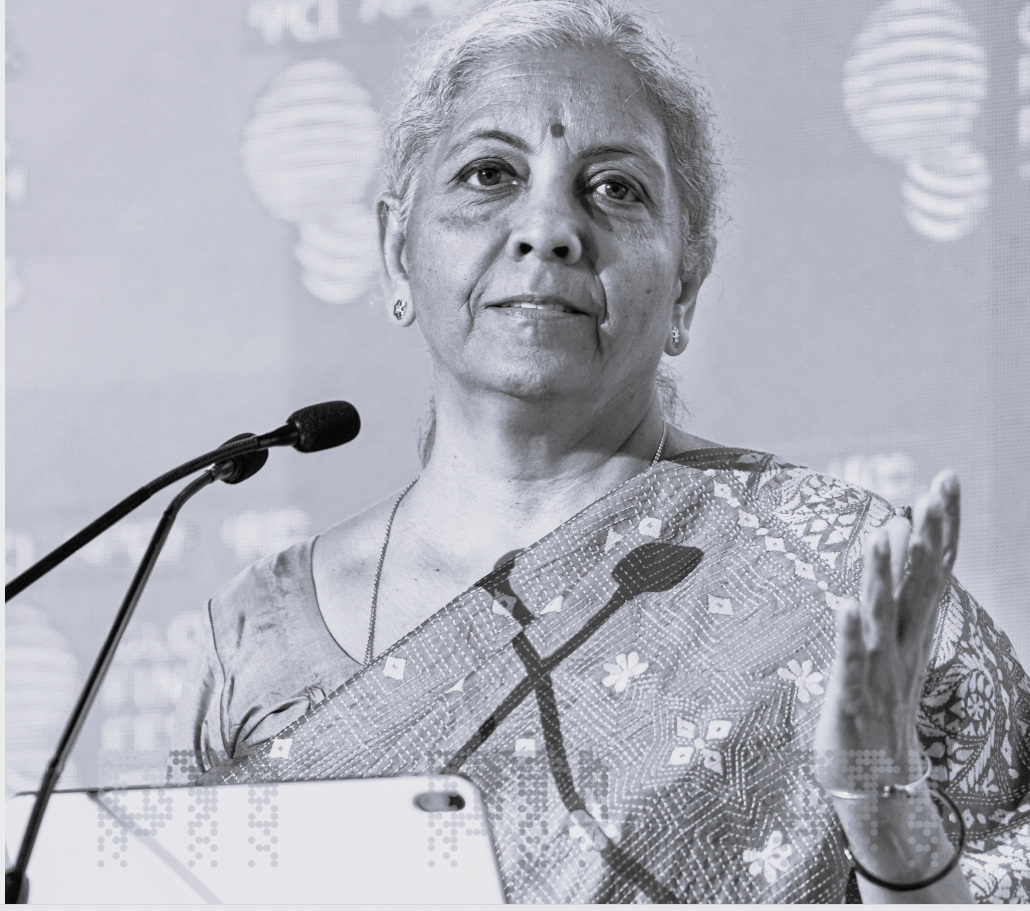
India advances in digital finance, urges responsible AI use
Finance Minister Nirmala Sitharaman has emphasized the need for responsible development of artificial intelligence (AI) and robust risk management frameworks for fintech companies amid growing concerns over AI misuse. Speaking at the 6th edition of the Global Fintech Fest 2025 in Mumbai, a world-class platform that brings together finance, technology, startups, and policy-making stakeholders, she cautioned that while AI offers unprecedented opportunities, its “dark side” cannot be ignored. Criminals are increasingly using AI to mimic voices of prominent individuals, clone personalities, and create realistic deepfake videos, she noted. Minister Sitharaman revealed that deepfake videos using her own identity have circulated, aimed at misleading the public. “This underscores the urgent need to strengthen our defense systems. Criminals are now targeting trust itself, rather than just bypassing firewalls,” she said.
Launch of foreign currency settlement system at GIFT IFSC
During the event, Minister Sitharaman inaugurated the Foreign Currency Settlement System (FCSS) at the GIFT International Financial Services Centre (IFSC) in Gujarat. The new system enables real-time or near-real-time settlement of foreign currency transactions, reducing the processing time from 36–48 hours to immediate settlement. This initiative positions India alongside global financial hubs such as Hong Kong, Tokyo, and Manila, enhancing the country’s stature in international finance. Minister Sitharaman remarked, “India has the potential to become a global hub for AI products and services.” She outlined several strategies to foster AI development in the country, including tailoring AI systems to Indian languages and local contexts, making AI accessible to all through multimodal interfaces such as text, voice, and visuals, and using India as a laboratory for AI experimentation while guiding other Global South nations as a torchbearer in responsible AI adoption.
Responsible development in Fintech
The Finance Minister stressed that fintech companies must focus not only on rapid growth but also on responsible and ethical development. She noted that revenue growth, innovative products, profitability, and risk and compliance must be balanced. “Responsible regulation is not a brake on progress; it is a seatbelt for safe acceleration,” she added, emphasizing that regulation is meant to enable safe growth rather than limit innovation.
India’s leadership in digital finance
Minister Sitharaman highlighted India’s significant achievements in digital finance over the past decade. The country now boasts 560 million Jan Dhan bank accounts, roughly equivalent to the population of the European Union. The Unified Payments Interface (UPI) and Digital Public Infrastructure (DPI) have integrated digital payments into daily life, making India a global leader in this sector. India ranks third globally in fintech company numbers and first in digital payments. In the 2024–25 fiscal year, UPI processed 18,580 crore transactions valued at ₹261 lakh crore. Nearly 50% of the world’s real-time digital transactions occur in India. Additionally, India’s digital adoption rate of 87% far exceeds the global average of 67%, reflecting widespread acceptance of digital finance across the country.
Success of direct benefit transfer (DBT)
The Minister also highlighted the Direct Benefit Transfer (DBT) scheme, which has streamlined subsidy distribution and improved transparency. Between 2014 and 2024, the program saved the government up to ₹4.31 lakh crore, while the number of beneficiaries increased sixteenfold. By replacing paper-based systems with digital transfers, citizens receive benefits directly and efficiently, minimizing leakages and ensuring the intended impact reaches the population.
Key takeaways from the Speech
Through her speech, Minister Sitharaman conveyed two key messages: first, India continues to serve as a global model in digital finance, achieving remarkable progress in financial inclusion and digital payment systems. Second, the risks posed by AI misuse are real and require timely interventions and stronger safeguards. She concluded by emphasizing that while technological development is vital, responsible and ethical deployment is even more important to secure India’s position as a global leader in digital finance and AI.
With over 650 million smartphone users in India, fintech models can now expand into sectors such as healthcare, education, agriculture, MSMEs, and exports. Minister Sitharaman emphasized that while technological innovation is critical, responsible use of AI and fintech solutions is equally essential to ensure safety, transparency, and public trust.