
India advances defence Tech with Titanium plant in Lucknow
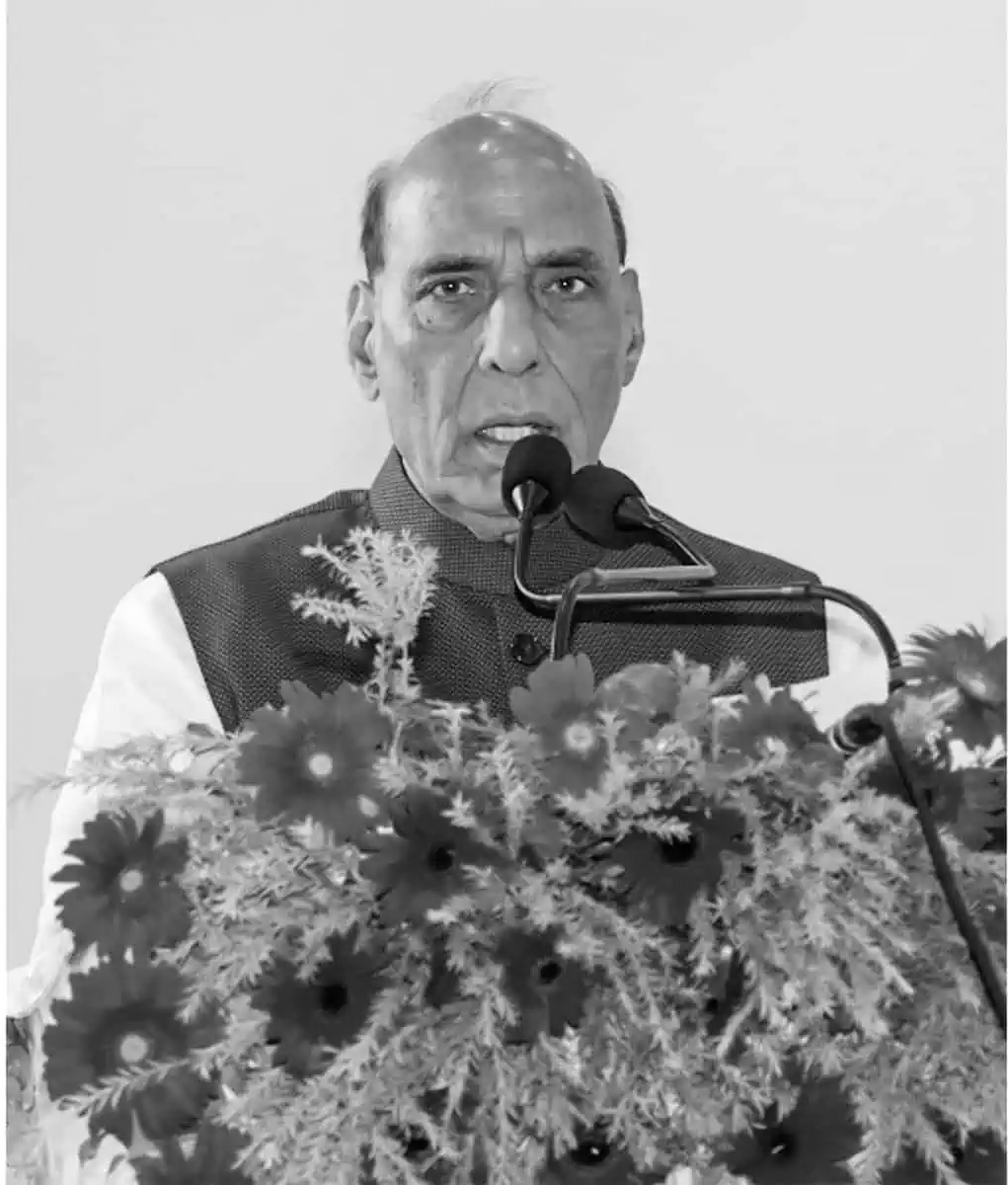
Defence Minister Rajnath Singh on Saturday dedicated to the nation a Titanium and Superalloy Materials Plant at PTC Industries' Strategic Materials Technology Complex in Lucknow, Uttar Pradesh, marking a significant step toward India’s self-reliance in defence and aerospace materials.
Spread over 50 acres, the Strategic Materials Technology Complex has been established with an investment of Rs 1,000 crore. The plant has an annual production capacity of over 6,000 tonnes, enabling India to manufacture aviation-grade Titanium and Superalloys from both domestic and recycled sources. The initiative represents a decisive move toward strategic materials independence.
The Defence Minister explained that the plant positions India among a select group of nations capable of producing critical defence and aerospace materials independently. "With this capability, we will be able to manufacture parts used in fighter jets, missiles, naval systems, and satellites," he added. Singh stressed that while technology is important, material is the real strength, noting that components such as semiconductor chips, engine turbine parts, or bullet materials cannot be produced without strategic materials.
Addressing the importance of rare earth and advanced materials used in defence, space, electronics, and other sectors, Singh highlighted that only a few countries globally possess the capability to refine these materials and produce high-end components. He noted that the new plant, one of the first in the private sector to manufacture aero-engine components and superalloy components, will significantly bolster India’s ability to produce these strategic materials domestically.
"India must produce rare materials used in defence and aerospace to become a technology creator and safeguard its technological sovereignty," said Singh. He emphasised that in the past, India had been dependent on foreign countries for advanced materials and critical technologies, which had constrained the growth of the defence sector. The commissioning of this plant reflects a strategic shift, enabling India to manufacture its own materials, components, chips, and alloys.
The plant is also described as a living example of Aatmanirbhar Bharat, benefiting not only industry but society at large. It establishes an innovation chain in the defence sector and is expected to boost the state economy, particularly through the UP Defence Industrial Corridor, which integrates start-ups, MSMEs, and ancillary industries, providing direct and indirect employment and technical training opportunities for youth.
Highlighting Uttar Pradesh’s industrial growth, Singh applauded Chief Minister Yogi Adityanath for the strides made over the past decade, citing improved law and order, increased investor confidence, and the establishment of factories, IT hubs, and research centres. He noted that the state has emerged as a key driver of India’s industrial development.
Singh underlined that India has moved beyond Make-in-India to Design, Develop, and Deliver in India, reflecting a changed national mindset in defence production. He also acknowledged the prominent role of the private sector in manufacturing and research, expressing confidence that collaboration between industry and government can achieve any strategic goal.
The Defence Minister urged youth, innovators, MSMEs, and start-ups to engage in the defence sector not only as business opportunities but also as a responsibility to the nation. He emphasised that current initiatives will inspire a new generation of innovators. Singh also acknowledged progress in public-private partnerships in defence manufacturing, assuring continued government policy support and cooperation to stakeholders. He called upon all entities to pursue the goal of making India a global defence manufacturing hub through innovation, dedication, and technical expertise.
During his visit, Singh was accompanied by UP Chief Minister Yogi Adityanath, Deputy Chief Minister Brajesh Pathak, Secretary, Department of Defence R&D and Chairman DRDO, Samir V. Kamat, and DG (BrahMos), Jaytirth R. Joshi. They were briefed on the complex facilities by PTC Industries’ Chairman and Managing Director, Sachin Agarwal.
As part of the initiative, PTC Industries Limited signed a Memorandum of Understanding (MoU) with Bharat Dynamics Limited (BDL) to establish a joint venture for the design, development, and manufacture of propulsion systems, guided bombs, and small aeroengines for missiles, UAVs, and loitering munitions. This collaboration aims to leverage the complementary strengths of both organisations, accelerate the indigenisation of advanced propulsion technologies, reduce import dependence, and strengthen India’s defence manufacturing base.
Additionally, PTC Industries received a Letter of Technical Acceptance (LoTA) from the Centre for Military Airworthiness and Certification (CEMILAC), under DRDO, for the indigenous development and manufacture of the Titanium Rear Fin Root Casting for the Advanced Medium Combat Aircraft (AMCA) program. Developed in collaboration with the Defence Metallurgical Research Laboratory (DMRL) and the Aeronautical Development Agency (ADA), this milestone marks a critical advancement in India’s capability to produce structural castings for next-generation fighter aircraft.
PTC Industries also received a LoTA from CEMILAC for the Oil Tank Assembly Titanium Castings for the Kaveri Derivative Engine (KDE-2), in partnership with the Gas Turbine Research Establishment (GTRE). Further, the company received a purchase order for post-cast operations to manufacture Single Crystal ‘Ready-to-Fit’ Turbine Blades for the KDE-2, marking a significant step in India’s ability to produce complex, high-value jet engine components.
The Strategic Materials Technology Complex is expected to strengthen India’s technological sovereignty, create jobs, and foster industrial growth in Uttar Pradesh while supporting the broader objective of making the country self-reliant in defence and aerospace materials.