
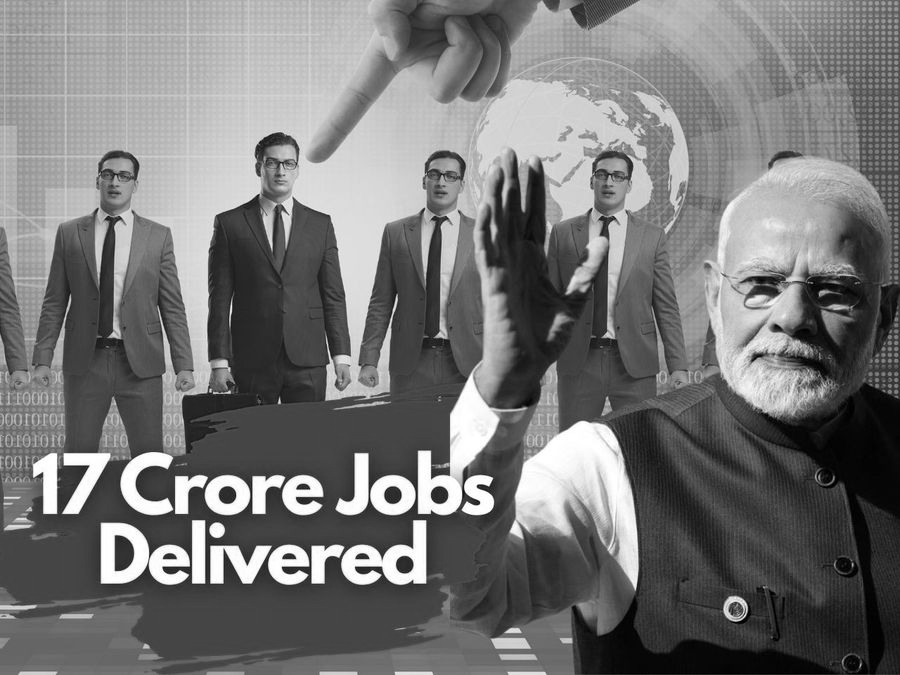
India adds 17 crore jobs, but unemployment remains a challenge
The Indian government has asserted that the country added 17 crore jobs between 2017-18 and 2023-24, marking a significant surge in employment under its youth-focused Viksit Bharat vision. This milestone highlights India’s ambition to harness its demographic dividend and position the workforce at the center of its economic growth story.
According to the Ministry of Labour and Employment, total employment rose from 47.5 crore in 2017-18 to 64.33 crore in 2023-24. Sectoral trends reveal rural employment remains largely driven by agriculture, while urban areas see the tertiary sector as the primary job provider. Formal employment has expanded, with EPFO net subscribers reaching 1.29 crore in 2024-25, reflecting growing formalisation of the workforce.
Women’s participation in the workforce has nearly doubled over six years, with the Labour Force Participation Rate (LFPR) rising from 23.3% to 41.7% and the Worker Population Ratio (WPR) from 22% to 40.3%. Casual labour has declined, and average wages for both casual and salaried workers have increased, indicating rising job stability and income.
Emerging sectors such as healthcare tech, fintech, e-commerce logistics, ed-tech, renewable energy, and the gig economy are driving new employment opportunities. Government initiatives like Skill India, ITI upgradation, Rozgar Melas, and women-focused schemes such as Namo Drone Didi and Mission Shakti aim to prepare the workforce for future-ready jobs.
However, opinions differ and according to the Periodic Labour Force Survey (PLFS) 2024, opinions differ on the ground realities. India’s overall unemployment rate stood at 4.9% for individuals aged 15+, representing roughly 66.9 million unemployed people. While youth unemployment has been declining, it remains a significant concern, reflecting ongoing challenges in absorbing young workers into the economy.
Questions also arise regarding job quality. Some jobs reported in surveys may include minimal economic activity,such as unpaid family work or roles involving only one hour of work per week,raising doubts about the sustainability and real impact of the reported employment gains.
Technological disruption is another factor shaping the employment landscape. AI and automation are increasingly replacing traditional roles, while creating new opportunities in digital and tech-driven industries. These emerging roles require specialized skills, underscoring the importance of upskilling and reskilling initiatives to ensure that the workforce can meet the demands of a rapidly evolving job market.
At the same time, emerging opportunities are expanding across sectors such as startups, global capability centres (GCCs), the gig economy, and the broader digital economy. Women’s participation is on the rise, and the growing formalisation of jobs is improving wages and job stability, contributing to a more inclusive workforce.
While the creation of 17 crore jobs is a notable achievement, the true measure of employment growth lies in quality, inclusivity, and sustainability. The key challenge remains: if these jobs truly exist, why does India still grapple with unemployment? Addressing structural gaps, investing in skill development, and ensuring equitable access to opportunities will be crucial for translating these headline numbers into meaningful and lasting employment.