
India Accounts for 129 Space Debris Objects, Sets Sights on Zero by 2030
India currently has 129 trackable space debris objects in orbit, a relatively small share of the global space junk problem, but one that policymakers are now actively working to eliminate.
According to a written reply in Parliament by Union Minister Jitendra Singh , the debris includes 23 defunct satellites in Low Earth Orbit (LEO) and 26 in Geostationary Orbit (GEO) . In addition, there are rocket bodies from PSLV (40), GSLV (4) and LVM3 (3) , along with 33 debris fragments generated from the in-orbit break-up of a PSLV-C3 rocket stage.
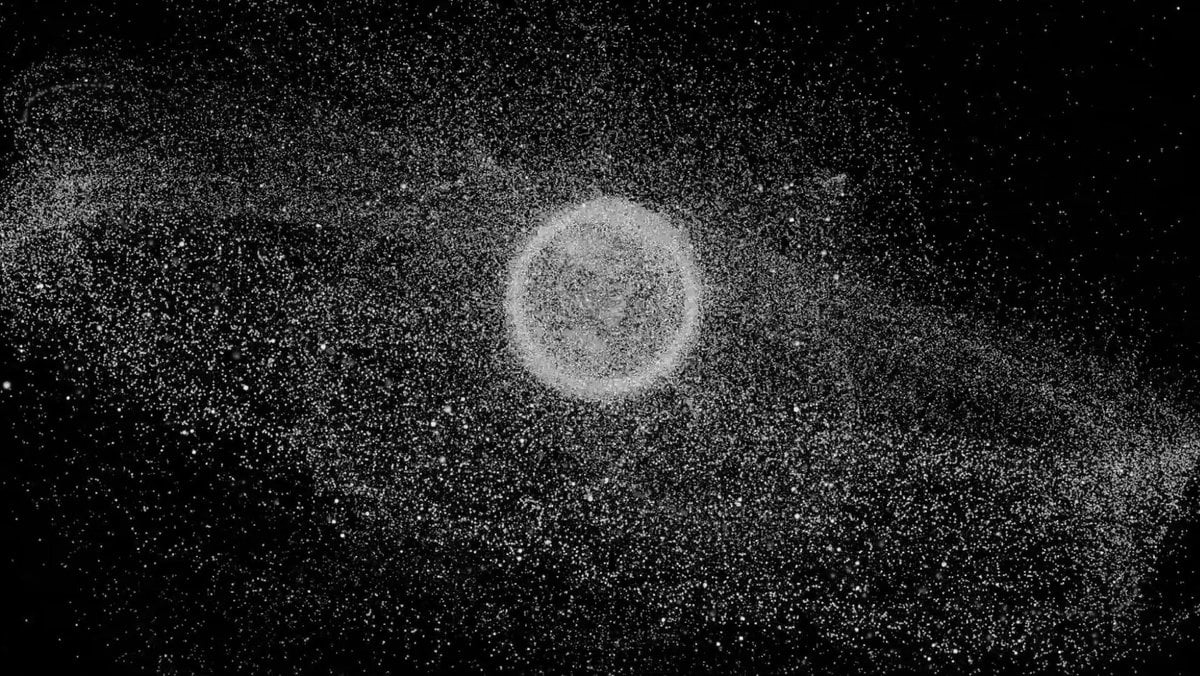
While India’s numbers appear modest, the broader global context is far more alarming. Worldwide, there are over 35,000 trackable debris objects , alongside millions of smaller fragments , largely originating from decades of space activity by major powers, satellite collisions, and anti-satellite tests. Even tiny fragments, travelling at speeds exceeding 28,000 kmph , pose serious risks to operational satellites and crewed missions.
Against this backdrop, India has launched the Debris Free Space Mission (DFSM) in 2024, with an ambitious target of zero debris creation by 2030 . The approach focuses not only on preventing new debris but also laying the groundwork for future removal of existing objects.
Key measures already underway include designing missions with extra fuel margins to enable post-mission de-orbiting, ensuring satellites re-enter Earth’s atmosphere safely. India is also investing in advanced capabilities such as robotic arms, rendezvous, and proximity operations , which are essential for active debris removal.
A significant milestone was achieved in 2025 with the SpaDeX mission , demonstrating autonomous docking technologies, alongside robotic manipulation experiments on the POEM-4 platform .
India’s footprint in space debris remains limited for now, but with increasing launch activity, the emphasis is clearly shifting from expansion to responsible and sustainable space operations —a necessity in an increasingly crowded orbit.