
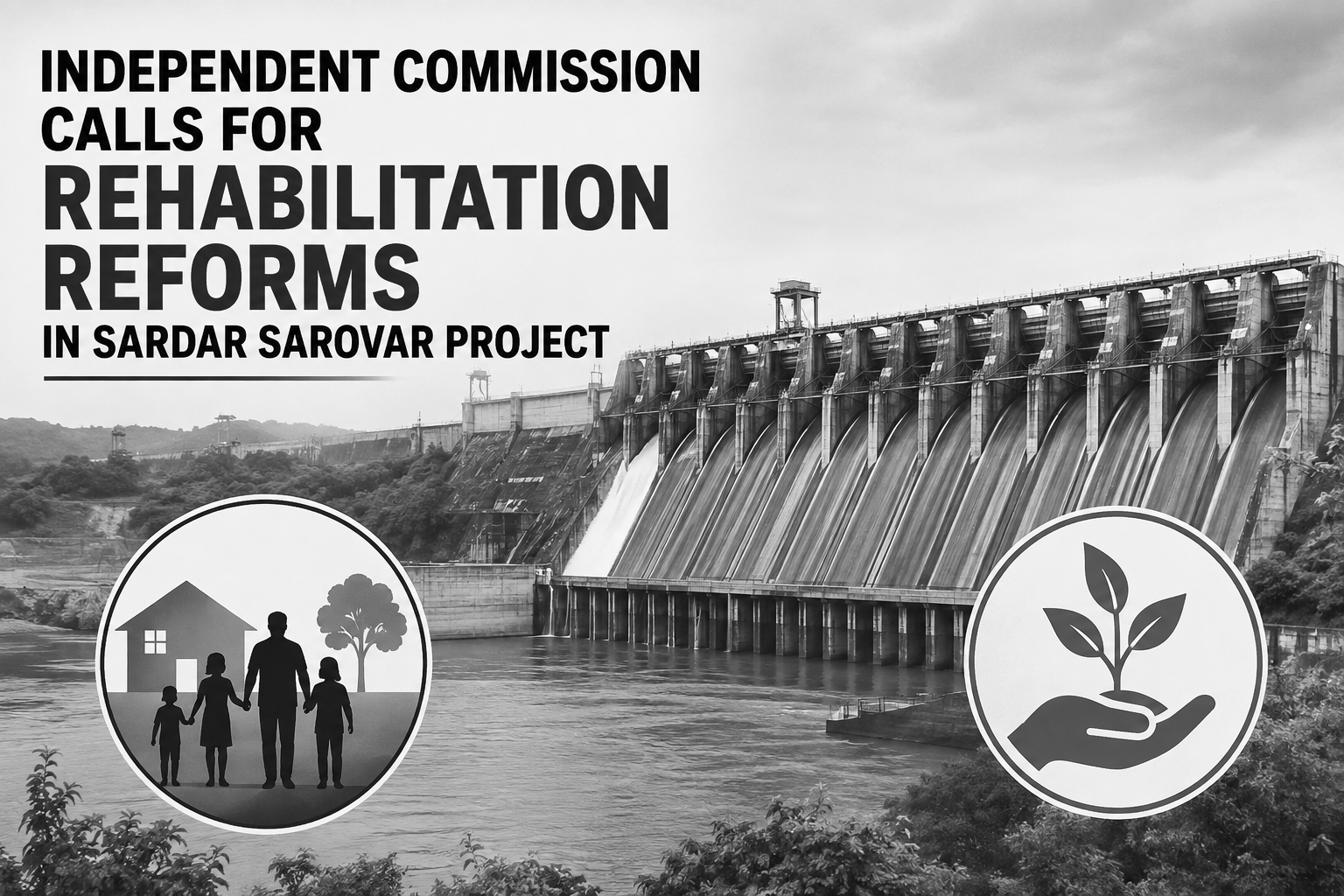
Independent Commission Calls for Rehabilitation Reforms in Sardar Sarovar Project
An independent People's Commission (Jan Aayog) has raised concerns over the rehabilitation of displaced families and the environmental compliance of the Sardar Sarovar Project, recommending a comprehensive review of the Narmada Award, which governs water sharing and project costs among Madhya Pradesh, Gujarat, Maharashtra and Rajasthan.
The 255-page report, released on Saturday by a panel headed by former Patna High Court judge Justice (Retd.) Anjana Prakash, alleges that the project has fallen short of its rehabilitation commitments while several environmental safeguards remain inadequately implemented. It also recommends establishing a National Commission for the Rehabilitation of Displaced Persons to strengthen oversight of resettlement and compensation.
The report comes nearly a month after the four beneficiary states signed a Centre-facilitated agreement on July 7 to resolve pending payment-related disputes under the Narmada Award.
According to the panel, 15,946 families in Madhya Pradesh were denied rehabilitation benefits after revisions to the reservoir's backwater levels. Many are reportedly still living in temporary shelters, damaged homes or government buildings. It also states that several resettlement sites across Madhya Pradesh, Gujarat and Maharashtra continue to lack basic amenities such as drinking water, roads, drainage and healthcare.
Justice Prakash said the project also failed to adequately compensate communities such as fishermen and potters, whose livelihoods were affected despite not owning land. The report further claims that several regions have not received the promised benefits of irrigation, drinking water and electricity. It alleges that nearly 5,000 km of Gujarat's canal network remains incomplete, limiting water supply to drought-prone areas such as Kutch and Saurashtra.
On the environmental front, the panel alleges inadequate implementation of compensatory afforestation and catchment area treatment, while illegal sand mining, industrial pollution and urban waste continue to affect the Narmada River and its reservoir. It also cites limited action on alleged rehabilitation-related irregularities identified by the Jha Commission. No official response to the report was immediately available.