
Independence at 79: The Freedom We Inherited, The India We Must Protect
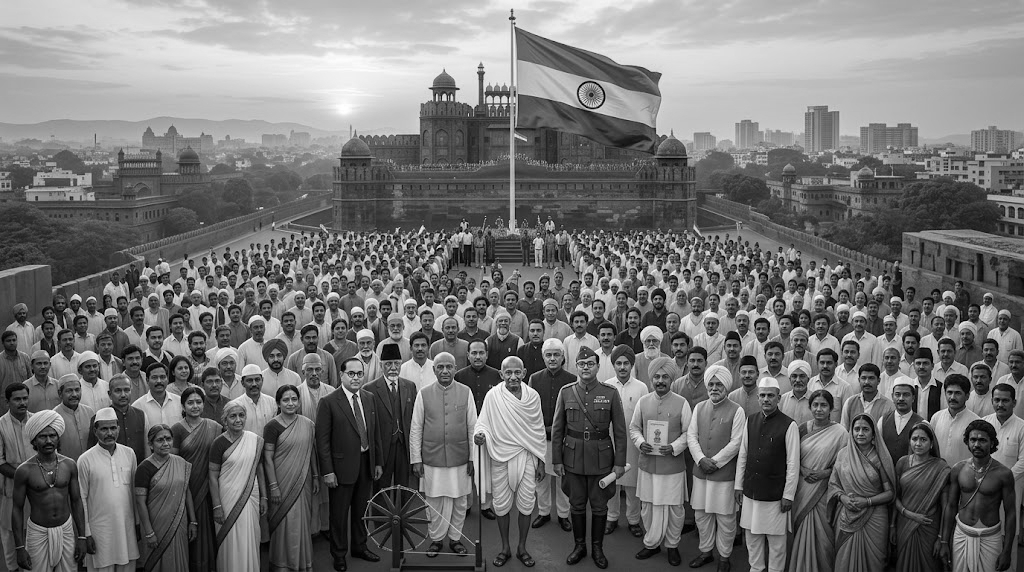
As India celebrates its 80th Independence Day, the Tricolour will rise once again over the Red Fort, government offices, schools and homes across the country. The occasion marks 79 years since India became independent from British rule on August 15, 1947. For millions, Independence Day is a celebration filled with patriotic songs, flag-hoisting ceremonies and cultural programmes. But behind these familiar traditions lies a much deeper story of resistance, sacrifice and an extraordinary struggle that unfolded over generations.
India's freedom was not won through a single movement or by one leader. It was the outcome of nearly two centuries of resistance to colonial rule, involving political leaders, revolutionaries, women, farmers, workers, students, tribal communities and countless ordinary citizens. Different groups adopted different methods, from constitutional politics and economic boycotts to mass civil disobedience and revolutionary action. Together, these efforts gradually transformed opposition to colonial rule into a powerful national demand for independence.
Resistance to British expansion began long before the organised national movement. The Paika Rebellion of 1817, the Santhal uprising of 1855-56 and numerous other regional and tribal uprisings reflected opposition to colonial policies, economic exploitation and interference in traditional systems. These early struggles demonstrated that resistance to British authority existed across different parts of India and among communities whose stories are sometimes overlooked in mainstream accounts of the freedom movement.
The Revolt of 1857 became the most significant early challenge to British authority. Soldiers, rulers and civilians participated in the uprising across large parts of northern and central India. Rani Lakshmibai, Bahadur Shah Zafar, Nana Sahib and Tantia Tope became among its best-known figures. Although the rebellion was ultimately suppressed, it left a lasting legacy of resistance. In its aftermath, the British Crown took direct control of India from the East India Company, fundamentally changing the structure of colonial administration.
The creation of the Indian National Congress in 1885 provided a national political platform for Indians demanding greater participation in governance. Early leaders such as Dadabhai Naoroji, Gopal Krishna Gokhale and Surendranath Banerjee initially relied on constitutional methods. They challenged discriminatory policies and highlighted the economic consequences of colonial rule. Their efforts helped develop political consciousness and laid important foundations for the wider nationalist movement.
The political atmosphere changed significantly after the Partition of Bengal in 1905. The resulting Swadeshi Movement encouraged Indians to boycott British goods and promote indigenous products and industries. Leaders such as Bal Gangadhar Tilak, Bipin Chandra Pal and Lala Lajpat Rai helped strengthen a more assertive form of nationalism. The subsequent Home Rule Movement, led by Bal Gangadhar Tilak and Annie Besant, further popularised the demand for self-government.
The freedom struggle entered a new phase with the emergence of Mahatma Gandhi as a central leader. Gandhi's emphasis on non-violence, civil disobedience and mass participation transformed the national movement. The Non-Cooperation Movement of 1920-22 called upon Indians to withdraw cooperation from British institutions, schools, courts and goods. Although Gandhi suspended the movement following the violence at Chauri Chaura, it demonstrated that millions of ordinary Indians could be mobilised against colonial rule.
The Civil Disobedience Movement, launched in 1930, further challenged British authority. Gandhi's Dandi March against the colonial salt laws became one of the defining images of the freedom struggle. The movement showed how an everyday issue could become a powerful symbol of resistance and brought large numbers of people into direct confrontation with colonial laws.
Alongside the Gandhian approach, revolutionary groups and leaders pursued a different path. Bhagat Singh, Chandrashekhar Azad, Ram Prasad Bismil and Ashfaqulla Khan became symbols of revolutionary resistance. Their courage and willingness to sacrifice their lives inspired large numbers of young Indians. Bhagat Singh's execution at the age of 23, in particular, turned him into an enduring symbol of youthful defiance against colonial rule.
Subhas Chandra Bose also pursued an alternative strategy, seeking to challenge British rule through military action. His leadership of the Indian National Army gave another dimension to the struggle. The INA trials after the war generated widespread public sympathy and contributed to growing political pressure on the British authorities.
Women were equally important to India's freedom movement. Rani Lakshmibai, Sarojini Naidu, Aruna Asaf Ali, Kasturba Gandhi, Usha Mehta and Madam Bhikaji Cama, among many others, participated in political campaigns, underground activities, public mobilisation and resistance. Their contributions demonstrate that the freedom movement was not exclusively a male political struggle.
The movement also extended far beyond famous names. Farmers, workers, students, tribal communities and ordinary citizens participated in protests, boycotts, strikes and acts of resistance. Tribal leaders such as Birsa Munda, Tilka Manjhi and Laxman Naik became important symbols of resistance to colonial policies. Remembering these figures is essential because India's independence was ultimately a collective national achievement rather than the accomplishment of a small group of prominent leaders.
The Quit India Movement of 1942 represented one of the final major mass challenges to British rule. The demand was clear: the British should leave India. Gandhi's call of “Do or Die” captured the determination of the movement, while the British responded with mass arrests and repression. Despite the imprisonment of major leaders, resistance continued through underground networks and local mobilisation.
The Second World War further weakened Britain's economic and political position. The INA trials and the Royal Indian Navy uprising of 1946 added to the pressure. Britain increasingly faced the reality that maintaining colonial rule in India would be politically and economically difficult. After years of negotiations and growing unrest, the Indian Independence Act 1947 provided for the creation of India and Pakistan, bringing British rule to an end on August 15, 1947.
Independence, however, came with enormous human suffering. The Partition of India triggered mass migration and communal violence, displacing millions of people and causing widespread loss of life. While political celebrations took place in Delhi, leaders and ordinary citizens in several parts of the country were confronting the devastating consequences of Partition. The moment of freedom therefore carried both immense hope and profound tragedy.
For today's generation, remembering the freedom fighters is important because independence was never inevitable. People were imprisoned, persecuted, injured and killed. Young revolutionaries gave up their lives, families faced hardship, women entered resistance movements despite social restrictions, and ordinary citizens took risks without knowing whether they would live to see freedom.
The sacrifice of freedom fighters also reminds Indians that the struggle was about more than removing British rulers. It involved larger aspirations for self-government, dignity, equality, political participation and freedom from arbitrary authority. These aspirations eventually found institutional expression in the Constitution, which established a democratic republic based on justice, liberty, equality and fraternity.
That democratic inheritance faces new challenges today. Political polarisation can make public debate increasingly hostile, while communal and social tensions can weaken the spirit of unity that characterised much of the national movement. Democracy requires citizens to disagree peacefully and respect the rights and dignity of people with different political, religious, linguistic and social identities.
The protection of freedom of expression is another continuing challenge. The Constitution guarantees freedom of speech while permitting reasonable restrictions. Maintaining a proper balance between individual liberty, public order and national security remains an important part of democratic governance. A healthy democracy requires citizens, institutions and governments to respect both rights and constitutional limitations.
Democratic institutions are equally important. Parliament, the judiciary, the Election Commission and other constitutional bodies provide checks and balances within the political system. Their independence, credibility and accountability are essential to maintaining public confidence and preventing excessive concentration of power.
The digital age has created another challenge that the freedom fighters could never have imagined. Social media has expanded public participation and made information accessible to millions, but it has also enabled misinformation, manipulated content, online abuse and political propaganda to spread rapidly. Responsible citizenship today therefore includes checking information, questioning sensational claims and distinguishing credible journalism from deliberately misleading content.
The constitutional promise of equality also remains a continuing task. Caste discrimination, communal tensions, social exclusion and economic inequality can prevent citizens from experiencing freedom equally. Political independence has limited meaning if people lack access to quality education, healthcare, employment and economic opportunity. Ensuring dignity and opportunity for all remains central to the ideals that shaped India's democratic journey.
India's federal structure also requires careful protection. Disagreements between the Union and states over finances, legislation, governors and administrative powers periodically test the constitutional balance. Respect for federalism allows India's diverse regions and states to participate meaningfully in national governance while preserving national unity.
Independence Day therefore offers an opportunity to look beyond ceremonial celebrations. The freedom fighters left behind a responsibility that cannot be fulfilled through patriotic slogans alone. Voting responsibly, respecting different opinions, questioning those in power, rejecting violence, protecting minority rights and verifying information are all part of responsible citizenship in a democracy.
The 80th Independence Day in 2026 also carries additional historical significance as India looks towards 2047, when it will complete a century of independence. The year marks 150 years of "Vande Mataram", while the celebrations place emphasis on the country's youth and the vision of a developed India by 2047.
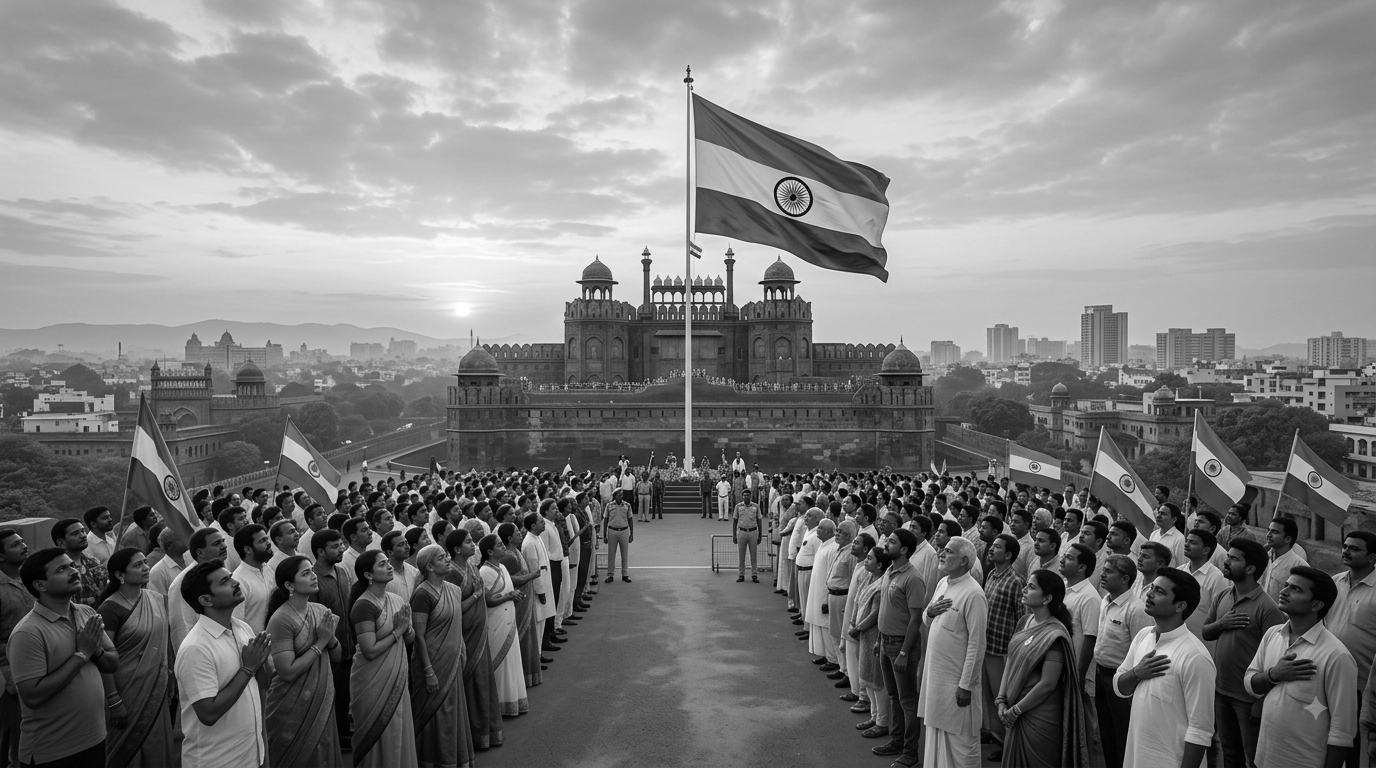
As the Tricolour rises over the Red Fort this Independence Day, it will connect the India of 2026 with the historic moment of 1947. The flag represents not merely the end of colonial rule, but the aspirations of generations who imagined a free country and the sacrifices of those who fought to make that vision possible.
For today's generation, the most meaningful tribute to India's freedom fighters is not simply to remember their names once a year. It is to understand the values for which they struggled and to protect those values in everyday life. Freedom was won by earlier generations, but preserving democracy, constitutional rights, equality, fraternity and national unity is the responsibility of every generation that follows.