
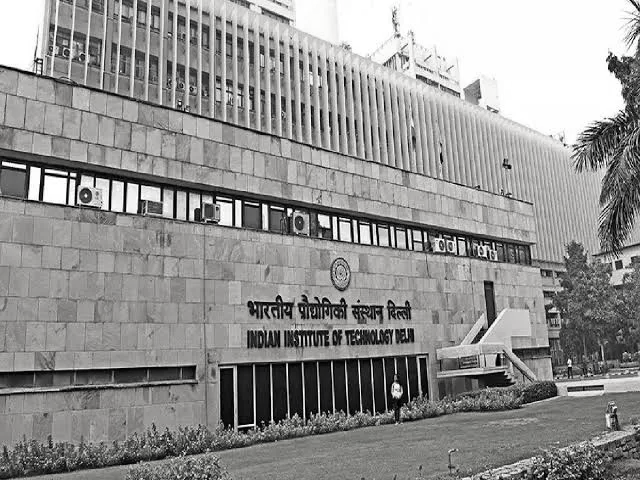
IIT Launches Artificial Intelligence based Lab Assistant
An Artificial Intelligence–based Lab Assistant named AILA has been developed by researchers at the Indian Institute of Technology (IIT) Delhi , enabling scientific experiments to be conducted autonomously in real laboratory environments.
According to IIT Delhi, AILA is built on an AI agentic framework, allowing it to go beyond traditional AI applications that are largely limited to data analysis or scientific writing. The system has been designed to independently plan experiments, operate laboratory instruments, make real-time decisions, analyse collected data and interpret results with minimal human intervention.
A major demonstration of AILA’s capabilities has been carried out using an Atomic Force Microscope (AFM), a highly complex instrument widely used in materials science and nanoscale research. Operating an AFM typically requires years of specialised training and a deep understanding of surface physics and feedback systems.
The institute has stated that AILA can optimize AFM parameters in 7–10 minutes, a task that earlier required an entire day of manual effort by trained researchers. This improvement has been described as significantly accelerating experimental cycles and enhancing laboratory efficiency.
AILA features a simple chat-based interface, through which researchers can provide instructions in plain English. These inputs are automatically converted into executable code, enabling experiments to be performed directly on physical laboratory equipment.
The system has been developed at IIT Delhi in collaboration with researchers from Denmark and Germany and has already been used in active research workflows.
Indrajeet Mandal, a PhD scholar at IIT Delhi, said that AILA has substantially reduced time spent on daily experiments, especially in optimising microscope parameters for high-resolution, low-noise images.
Professor N. M. Anoop Krishnan noted that AILA marks a shift where AI performs science, not just supports it. Professor Nitya Nand Gosvami added that AILA’s autonomous handling of AFM signals a major change in experimental research .
The development is expected to benefit postgraduate and doctoral students, improving access to advanced instruments and allowing greater focus on scientific understanding rather than manual procedures.
The project aligns with India’s “AI for Science” vision and recent government funding through the Anusandhan National Research Foundation (ANRF). IIT Delhi has clarified that AILA assists researchers, rather than replacing them, and represents a step towards AI-enabled laboratories of the future.