
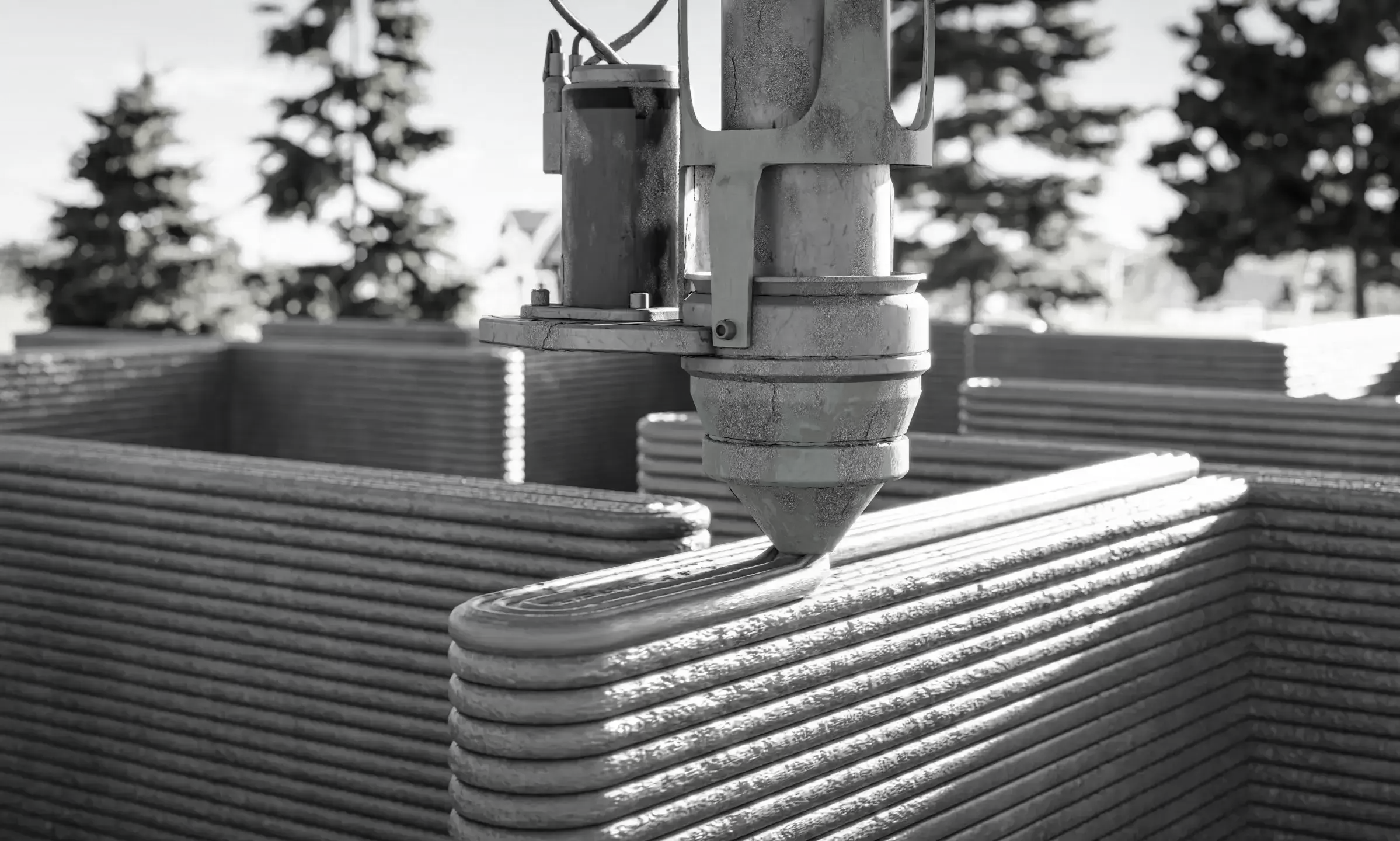
IIT Guwahati develops 3D-printed concrete framework to enhance earthquake-resistant construction
Researchers at Indian Institute of Technology Guwahati have developed an integrated framework aimed at improving the earthquake resistance of 3D-printed concrete structures, addressing a critical gap in the adoption of additive manufacturing in seismic regions.
The research focuses on combining advanced materials and structural design techniques to ensure that 3D-printed buildings can withstand repeated seismic shocks. While 3D printing has gained traction globally for its efficiency and reduced reliance on labour and materials, its application in earthquake-prone areas has remained limited due to safety concerns and lack of standardised reinforcement methods.
To overcome these challenges, the team constructed and tested three full-scale 3D-printed concrete walls under simulated seismic conditions. The study compared conventional printable mortar with a specialised strain-hardening ductile concrete capable of absorbing stress through controlled cracking. A third configuration incorporated a modular steel reinforcement system integrated within the printed structure.
According to the researchers, the use of ductile concrete significantly improved the structural performance by allowing the walls to deform without collapsing. The addition of steel reinforcement further enhanced stability, enabling the structures to maintain integrity even after sustaining damage during repeated loading cycles.
The findings, published in the Journal of Building Engineering , confirm that the combined approach meets both Indian and international earthquake safety standards. The team also developed computational models to predict the behaviour of full-scale buildings and validated the framework through a prototype single-storey structure.
The study highlights the potential of this technology to enable faster, cost-efficient, and safer construction practices, particularly in disaster-prone regions. Researchers plan to extend the framework to multi-storey buildings and explore its resilience against other extreme forces such as impact and blast loading, with the aim of contributing to future construction design standards.