
IIT Bombay Researchers Create Noble Metal-Free Catalyst for Green Hydrogen
Researchers at the Indian Institute of Technology Bombay (IIT Bombay) have developed a low-cost and durable catalyst that could help reduce the production cost of green hydrogen, offering a potential alternative to expensive noble metals used in water electrolysis.
The research team has developed a novel material combining cobalt, nickel, phosphate and exfoliated graphite to accelerate both hydrogen and oxygen generation from water. Unlike conventional catalysts that depend on scarce metals such as platinum, ruthenium and iridium, the new material uses more abundant and affordable elements.
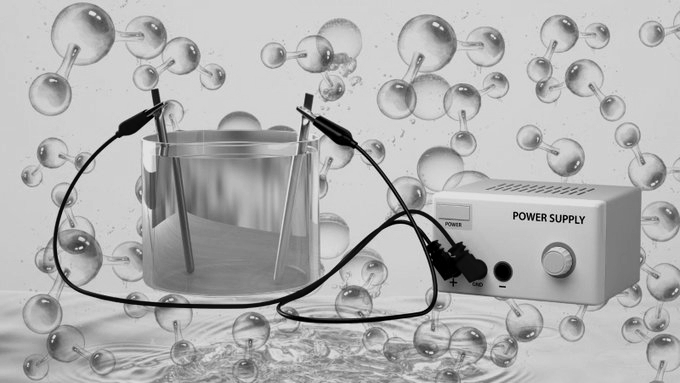
Green hydrogen is commonly produced through water electrolysis, where electricity is used to split water into hydrogen and oxygen. However, the process faces significant kinetic barriers and requires catalysts to accelerate the reactions efficiently. Precious-metal catalysts are effective but can be costly and may degrade under demanding operating conditions.
“The primary motivation was to develop an efficient and durable earth-abundant catalyst for overall water splitting,” said Dr Savi Chaudhary, IIT Bombay researcher and first author of the study.
The researchers used molecular precursor engineering to fabricate the catalyst. The approach involves designing specific molecular and metallic compounds that act as building blocks for advanced materials. Cobalt and nickel phosphate complexes were first prepared and combined with atomically thin layers of exfoliated graphite before being gently heated.
The resulting material functions as a bifunctional catalyst, supporting both the hydrogen evolution reaction (HER) and oxygen evolution reaction (OER). Prof Ramaswamy Murugavel, corresponding author of the study, said the combination of cobalt and nickel provides bifunctional activity, while the conductive graphite support improves charge transport and the utilisation of active material.
The researchers said the development could contribute to cheaper, zero-emission hydrogen production for applications across homes, transportation and industry. They also highlighted molecular precursor engineering as a versatile method for designing precise and advanced electrocatalysts.