
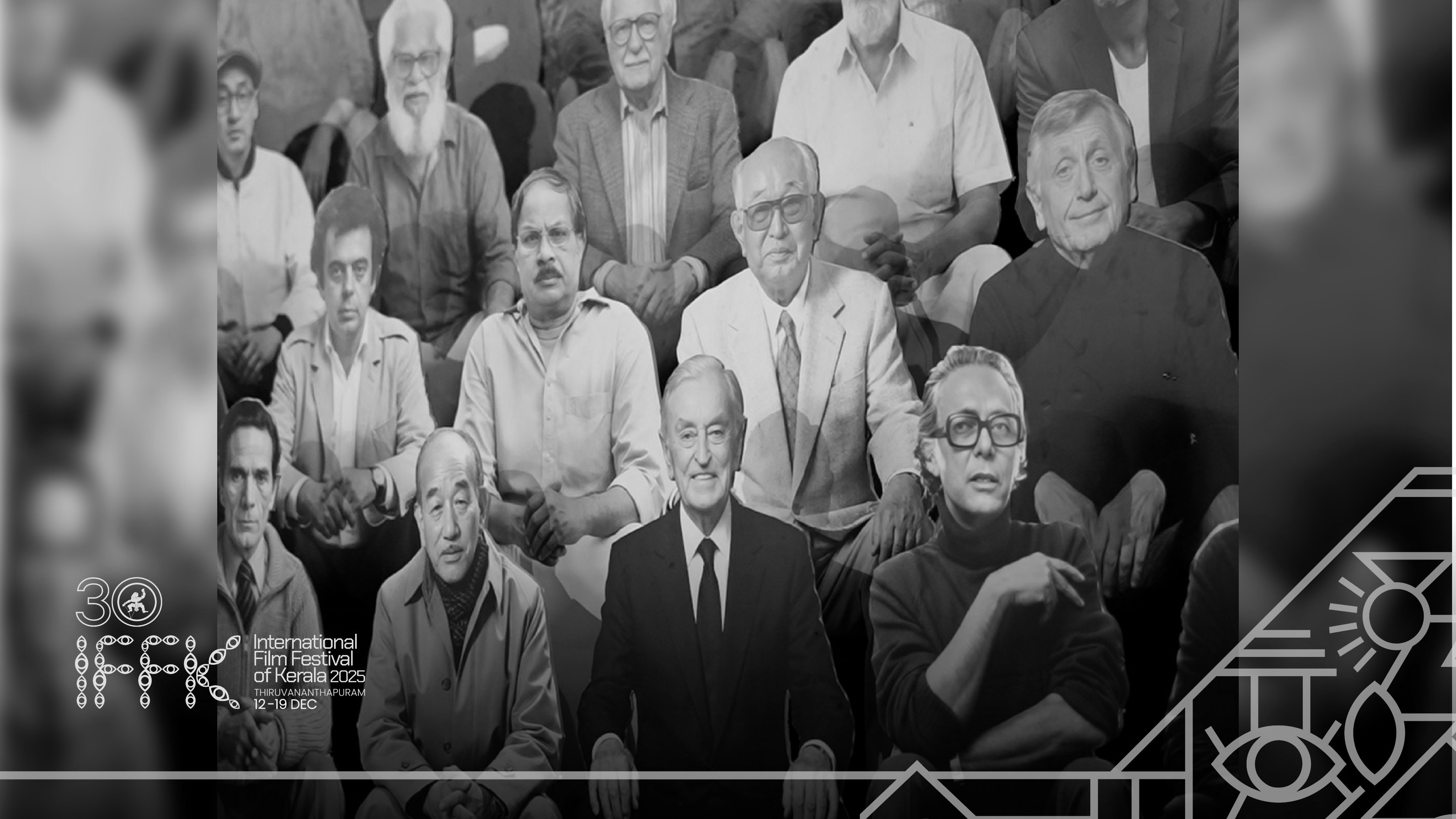
IFFK at 30 Opens with Palestine 36, Showcases Kerala Cinema’s Outsized National Role
As the International Film Festival of Kerala (IFFK) marks its 30th edition, the event once again highlights Kerala’s distinctive position in Indian cinema not as a volume-driven industry, but as one whose influence far exceeds its size. With 206 films from 82 countries being screened across 26 sections till December 19, IFFK has turned Kerala’s capital into a major global meeting point for cinema.
This year’s festival foregrounds world cinema, inclusive storytelling and socially and politically resonant narratives, continuing IFFK’s long-standing focus on voices from Asia, Africa and Latin America. The choice of the opening film, Palestine 36 by Palestinian filmmaker Annemarie Jacir, set the tone by engaging directly with a historic political struggle, underlining the festival’s commitment to cinema as a form of cultural and political dialogue.
A key feature of the 30th edition is the third Kerala Film Market (KFM), organised by the Kerala State Film Development Corporation (KSFDC) alongside IFFK. Held at South Park Hotel from December 14 to 16, the market reflects Kerala’s growing ambition to translate its cinematic reputation into concrete industry outcomes and international collaborations.
The market was inaugurated by Additional Chief Secretary Rajan Khobragade, with KSFDC Chairman K Madhu presiding. Veteran filmmaker T V Chandran attended as chief guest. This year, KFM has expanded significantly, introducing platforms such as the Project Market, Video Library, Industry Voices and PitchBox, designed to connect filmmakers with global producers, distributors, sales agents and festival programmers.
Twelve selected projects and 13 curated films are being showcased at the market, offering structured opportunities for pitching, learning and collaboration. With participation from industry professionals from across the world, the Kerala Film Market aims to strengthen creative and financial partnerships while opening international commercial pathways for Malayalam cinema and other regional industries.
Kerala’s contribution to Indian cinema becomes particularly striking when viewed through measurable indicators. While Malayalam cinema produces roughly 180 to 220 films annually about 10 to 12 per cent of India’s total film output its contribution to quality cinema is far higher. Malayalam films and artists consistently account for nearly 20 to 25 per cent of major National Film Awards, a share that has crossed 30 per cent in some years.
In the sphere of parallel and international festival cinema, Kerala’s footprint is even more pronounced. Malayalam filmmakers are estimated to contribute 30 to 40 per cent of India’s presence at major global festivals such as Cannes, Venice, Berlin and Toronto, despite the industry’s relatively small size. By contrast, Kerala’s share of India’s total theatrical box-office revenue remains modest at around 5 to 7 per cent, reflecting the state’s limited domestic market.
However, in the streaming era, Malayalam cinema’s national visibility has grown sharply. On major OTT platforms, Malayalam films account for an estimated 12 to 15 per cent of India’s regional content consumption, with several titles finding pan-Indian and global audiences.
IFFK’s programming reflects this cinematic philosophy. The World Cinema section alone features 57 films, including acclaimed international titles such as Enzo , Mirrors No. 3 and Amrum . Restored classics like Pulp Fiction , Battleship Potemkin and The Gold Rush are also part of the line-up, creating a dialogue between contemporary and classic cinema.
Sections such as Female Focus spotlight films by women directors, while retrospectives honour cinematic masters including Egyptian filmmaker Youssef Chahine. Indonesian director Garin Nugroho has been featured as Contemporary Filmmaker in Focus, reinforcing the festival’s global and inclusive outlook.
The festival’s competitive sections culminate in prestigious awards such as the Suvarna Chakoram (Golden Crow Pheasant) and Rajatha Chakoram (Silver Crow Pheasant), with the final jury selections to be announced at the conclusion of the festival. Special honours are also being conferred this year, including the Lifetime Achievement Award for renowned Mauritanian-Malian filmmaker Abderrahmane Sissako and the Spirit of Cinema Award for Canadian filmmaker Kelly Fyffe-Marshall.
As IFFK completes three decades, the integration of the Kerala Film Market signals a decisive shift positioning the festival not only as a cultural showcase but also as an industry platform. The numbers tell a compelling story: a state that produces just over a tenth of India’s films contributes nearly a quarter of its most celebrated cinema.
In that sense, IFFK is not merely a festival of films, but a reflection of Kerala’s cinematic identity where strong storytelling, social consciousness and global engagement define its enduring contribution to Indian and world cinema.