
ICE Defends Body Camera Footage Policy After AP Report
US Immigration and Customs Enforcement (ICE) has pushed back against an Associated Press report on its policy for releasing body worn camera footage, saying the rules protect investigations and privacy while also allowing the agency to remain transparent.
ICE acting director David J Venturella said Saturday that the agency’s policy does not stop it from releasing footage. He said it makes clear that recordings should not be made public when doing so could affect an investigation or violate privacy protections.
Venturella said ICE’s approach is similar to policies used by other federal law enforcement agencies and is consistent with the Freedom of Information Act and Privacy Act.
The policy was adopted in February 2025, shortly after President Donald Trump returned to office. It calls for the release of footage after a serious injury or death in ICE custody, ideally within 72 hours, when the release is considered in the best interests of the agency.
However, the policy also gives ICE the option to withhold or delay footage indefinitely if there are “specific and compelling circumstances” that cannot be addressed through redaction or other measures. The decision must be made by the ICE director or a person designated by the director.
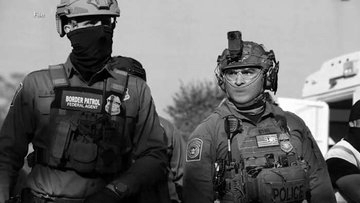
Venturella said ICE is committed to transparency and accountability. He also said the agency is on track to equip every officer and agent working in the field with body worn cameras by the end of August.
He argued that the AP report mixed up the expedited release of footage following a serious injury or death in custody with ICE’s broader authority over body camera recordings.
The AP report cited Christopher Schneider, a sociology professor at Brandon University in Canada, who said selective release of police footage is common in some law enforcement agencies. However, he said such discretion is not always spelled out so clearly in official policies.
The AP also pointed out that body camera rules differ between law enforcement agencies. Some major police departments routinely release footage after serious incidents.
The report cited ICE’s sister agency, US Customs and Border Protection (CBP), as another example. CBP has not released footage from the fatal shooting of Alex Pretti in Minneapolis in January. CBP Commissioner Rodney Scott told lawmakers the footage was part of an ongoing investigation and would be made public “when it's appropriate.”
The dispute comes as ICE faces growing scrutiny over shootings involving its officers. In July, an ICE officer shot and killed a 25 year old motorist in Maine. The officer had a history of violent behaviour. Days earlier, another ICE officer shot and killed a Houston homebuilder who was driving to work.
Neither shooting was recorded on a body worn camera.