
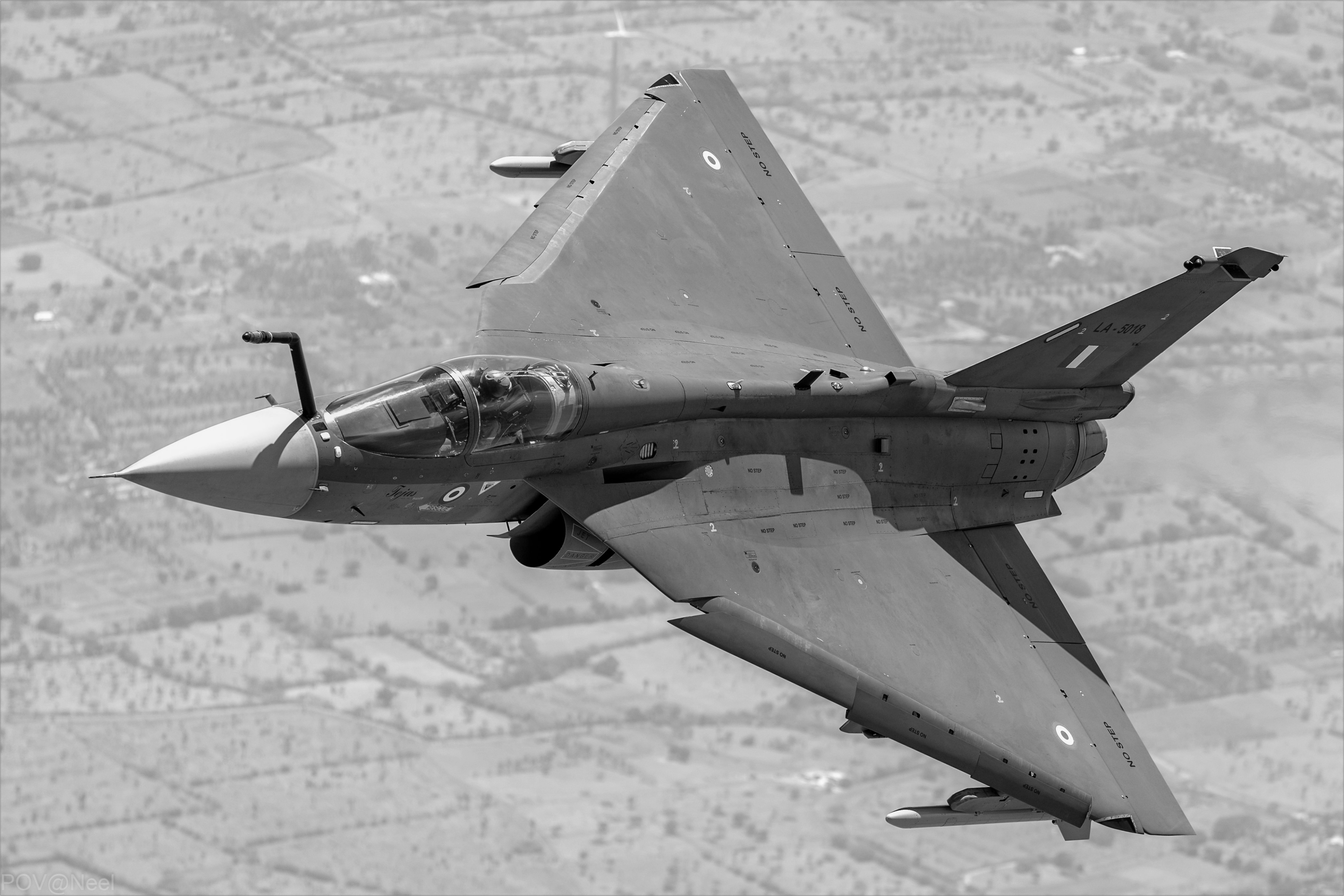
IAF's Tejas fleet to resume flights next week after two-month grounding
The Indian Air Force (IAF) is preparing to bring its Tejas light combat aircraft fleet back into service from April 8, nearly two months after a precautionary grounding triggered by a frontline airbase incident. The development follows a detailed technical review and corrective action led by Hindustan Aeronautics Limited (HAL) , which confirmed that a software-related issue identified during the investigation has now been resolved.
The grounding dates back to early February, when a Tejas jet overshot the runway during landing, reportedly due to a suspected brake malfunction , causing damage to the aircraft’s structure. While the incident involved a single aircraft, the IAF moved swiftly to ground the entire fleet of 34 jets , prioritizing operational safety over continuity. Such fleet-wide suspensions are standard in military aviation, especially when the root cause is not immediately clear.
Subsequent investigations revealed that the problem was not purely mechanical. Engineers identified a glitch in the aircraft’s onboard software , which plays a critical role in managing flight control and braking responses. HAL, working closely with the IAF, developed and tested a revised software package , which has now been implemented across all aircraft. Alongside the fix, authorities carried out comprehensive system checks , including inspections of braking systems, avionics, and structural components, to rule out any underlying hardware issues.
HAL Chairman D. K. Sunil maintained that the issue was a technical anomaly rather than a systemic design flaw , underscoring the aircraft’s overall reliability. The decision to resume operations reflects confidence in the corrective measures, though it also highlights the increasing dependence of modern fighter jets on complex digital systems , where even minor software inconsistencies can have significant operational consequences.
The episode has unfolded against the backdrop of another high-profile incident involving the Tejas platform a crash during an aerobatic show at an international airshow in Dubai. While that event occurred under entirely different conditions and is believed to be linked to high-risk maneuvering at low altitude , it has nonetheless added to scrutiny around the aircraft. Importantly, officials have indicated that the two incidents are unrelated , involving different operational contexts rather than a shared technical fault.
At the same time, the broader Tejas program continues to face delivery challenges , particularly with the upgraded Tejas Mk-1A variant. HAL has indicated that more than 20 aircraft could be delivered by the end of the year , with several nearing completion. However, progress has been slowed by delays in engine supplies from GE Aerospace , which manufactures the F404 engines that power the jets. The company has already missed multiple deadlines, prompting HAL to invoke penalty clauses under contractual provisions.
These delays carry strategic implications. The IAF currently operates 29 fighter squadrons , significantly below its sanctioned strength of 42 , making timely induction of new aircraft critical for maintaining combat readiness. The Tejas, designed as a multi-role, single-engine fighter , is expected to play a central role in bridging this gap by handling missions ranging from air defence to maritime reconnaissance and strike operations .
The government’s commitment to the program remains strong, reflected in major procurement deals worth over ₹1 lakh crore for more than 180 Tejas Mk-1A jets . Yet, the recent grounding serves as a reminder that indigenisation in defence manufacturing is as much about technological maturity and supply chain resilience as it is about scale.
As the Tejas fleet returns to the skies, the immediate crisis may have been resolved through software corrections and rigorous validation , but the episode leaves behind larger questions on system reliability, production timelines, and dependency on foreign suppliers issues that will shape the future trajectory of India’s flagship fighter program.