
Hyderabad's Water Crisis: Are We Prepared for the Summer Ahead?
As summer approaches, Hyderabad is facing an increasingly uncertain water future, with declining reservoir levels, falling groundwater tables and rising demand putting pressure on its drinking-water supply. The city's water crisis is no longer a seasonal concern confined to a few localities. With the Hyderabad Metropolitan Water Supply and Sewerage Board (HMWSSB) warning of a potential shortage of 100 million gallons per day (MGD) from January to August 2027, questions are being raised about whether the city has adequate resources and infrastructure to meet the needs of its growing population. The situation is further complicated by deficient rainfall and drought conditions across Telangana and neighbouring Andhra Pradesh.
The scale of the concern becomes evident from the reservoir storage figures. According to available data, the combined storage in five major reservoirs supplying Hyderabad Osman Sagar, Himayat Sagar, Singur, Manjeera and Akkampally stood at approximately 8.9 thousand million cubic feet (TMC) on October 24, 2026, compared with 25.904 TMC on the corresponding date last year. This represents a decline of nearly 65.6 per cent. A broader assessment covering six supply sources, including Sripada Yellampally, recorded a combined storage of 26.406 TMC on October 27, against a total capacity of 59.130 TMC.
The depletion is particularly visible in Singur and Manjeera, two important sources of drinking water for Hyderabad. Singur held around 3.029 TMC on October 27, just 10.1 per cent of its full capacity, while Manjeera had approximately 0.190 TMC, or 12.7 per cent. In comparison, Osman Sagar and Himayat Sagar had a combined storage of around 4.237 TMC. The Godavari-linked Sripada Yellampally reservoir had comparatively better reserves, holding 17.703 TMC. Although these alternative sources offer some relief, the availability of stored water does not automatically translate into supply, as pumping capacity, treatment facilities and pipeline connectivity also determine how much can reach the city.
HMWSSB Managing Director K. Ashok Reddy has warned that reduced rainfall could affect supplies from Singur and Manjeera for nearly eight months. The two sources together contribute approximately 100 MGD, accounting for a significant portion of the city's supply. Hyderabad currently receives approximately 560–570 MGD daily. To compensate for the anticipated reduction, the Water Board plans to arrange an additional 60 MGD, including around 40 MGD from the Godavari, 10–15 MGD from the Krishna and another 5 MGD from Osman Sagar. Despite these arrangements, a shortage of approximately 40–50 MGD could remain, potentially affecting nearly three lakh water connections between Patancheru and Narsingi.
The western parts of Hyderabad, including Serilingampally and surrounding residential and IT corridors, are among the areas likely to face greater pressure. Localities such as Gachibowli, Madhapur, Kondapur, Nallagandla, Tellapur and Narsingi have expanded rapidly in recent years, increasing the demand for municipal water, borewells and private tankers. The situation raises concerns about whether existing infrastructure can distribute available supplies equally across established neighbourhoods and rapidly growing peripheral areas.
The challenge is not limited to the decline in reservoir storage. Groundwater, which has become an important supplementary source for households, apartments and commercial establishments, is also under severe pressure. Reports have estimated that around 70 per cent of Hyderabad is over-exploiting groundwater. Several mandals are extracting more water than their available groundwater resources can sustainably support. In September 2026, the average groundwater depth in Hyderabad's Core Urban Region reportedly reached 11.58 metres below ground level, compared with 4.73 metres during the same month last year. In several localities, borewells that once supplied water at relatively shallow depths are reportedly failing even after drilling hundreds of feet deeper.
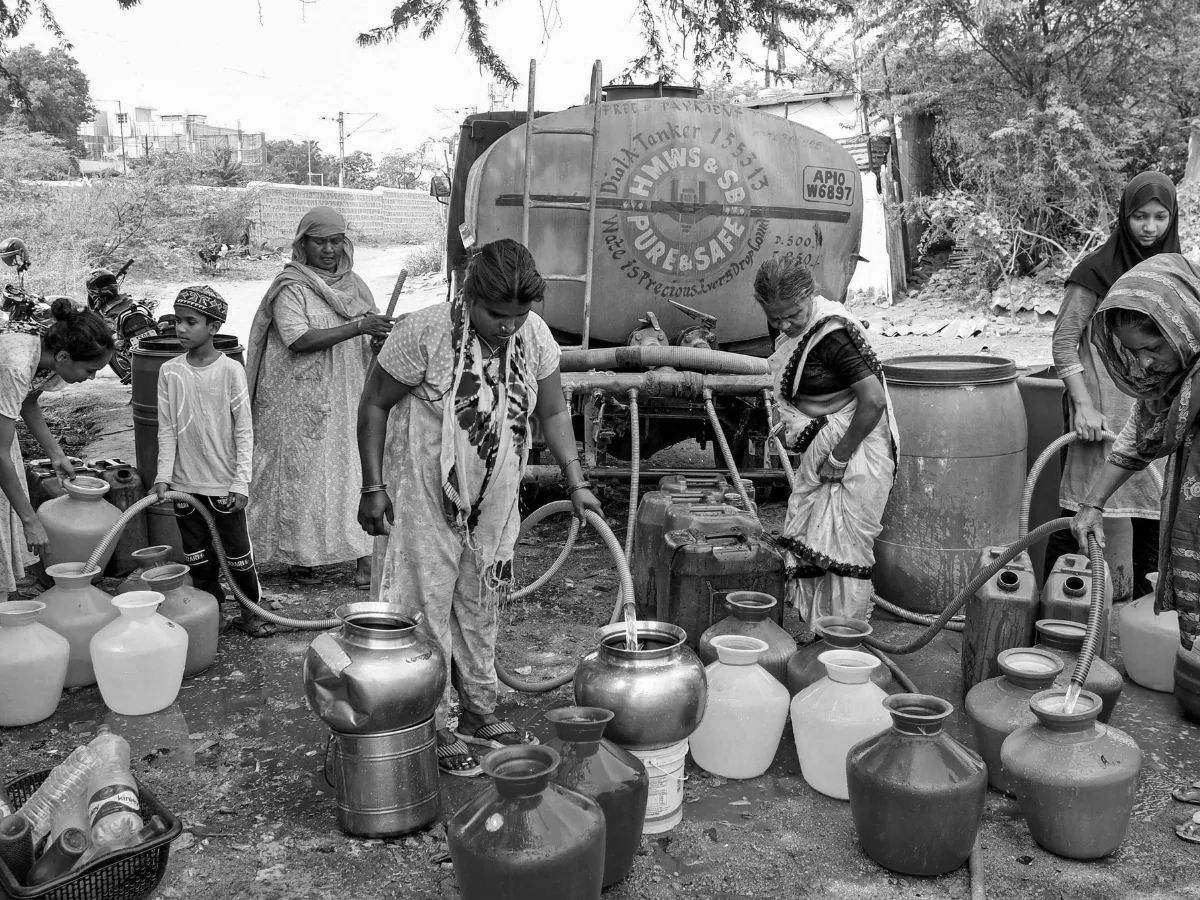
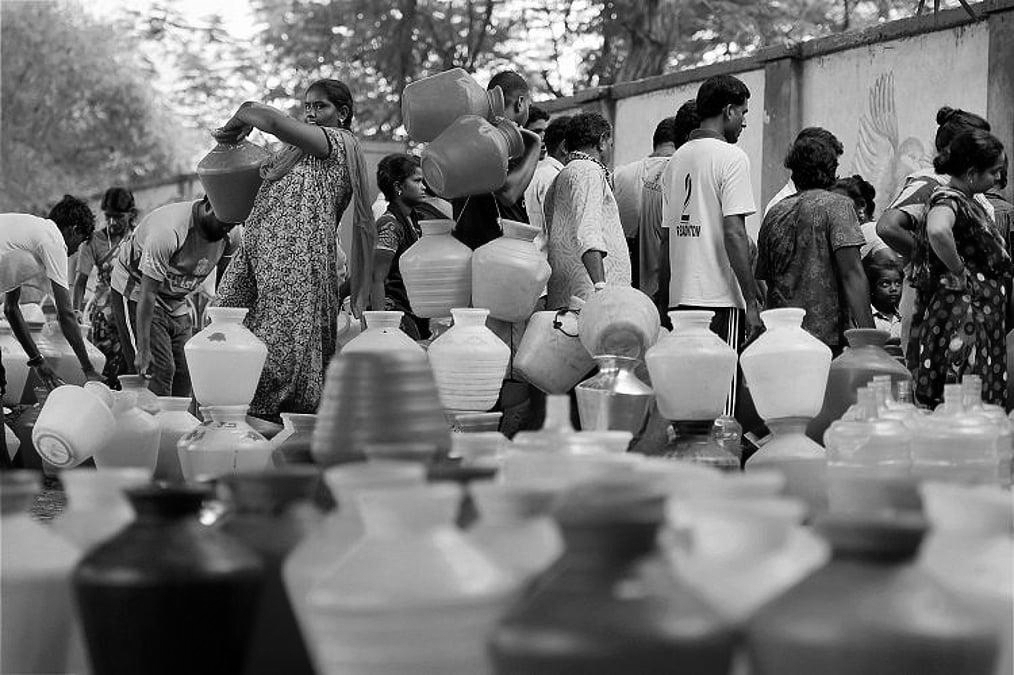
The growing dependence on private water tankers is increasingly translating into higher household expenditure. Tanker bookings crossed 20,000 a day during June 2026, while approximately 3.36 lakh bookings were recorded in May. More recently, residents booked around 8.4 lakh tankers between June and September, spending more than Rs 40 crore during the monsoon months, according to HMWSSB data reported on October 27. With daily bookings reaching 7,000–7,500 during the last week of October, the total expenditure on private and official tanker supplies is projected to cross Rs 100 crore in the coming months if demand continues to increase.
The difference between government and private tanker prices is adding to the financial burden. According to the latest publicly reported HMWSSB tariff figures, a 5,000-litre domestic tanker costs Rs 500, while a 10,000-litre tanker costs Rs 1,000. Commercial consumers are charged Rs 850 for 5,000 litres and Rs 1,700 for 10,000 litres. However, private operators are reportedly charging between Rs 3,000 and Rs 5,000 per tanker, depending on capacity, distance, locality and availability. In some parts of Cyberabad, private tanker prices have already climbed to around Rs 4,000 and could touch Rs 5,000 as demand rises. The difference makes private water several times more expensive than subsidised municipal tanker supplies.
The impact is not the same for every income group. For lower-income families, particularly those living in rented houses, small independent homes and peripheral colonies, purchasing an entire private tanker may be unaffordable. Such households may have to depend on irregular municipal supplies, share tanker deliveries with neighbours or purchase smaller quantities of drinking water separately. When water is unavailable, families also face additional difficulties in maintaining hygiene, cooking and meeting other daily needs. For households already spending a substantial portion of their income on rent, food, transport and electricity, even a modest increase in water expenditure can disrupt monthly budgets.
Middle-class families are facing a different kind of pressure. Residents of apartment complexes may not personally order tankers, but the procurement cost is eventually reflected in monthly maintenance charges. In Cyberabad, the Federation of Gated Communities has indicated that maintenance expenses could increase by around 50 paise per square foot, translating into an additional Rs 1,000 to Rs 1,500 a month for some households. Families may also have to pay extra when apartment associations introduce temporary water charges or increase maintenance contributions to meet repeated tanker purchases. This comes at a time when household expenses are already rising, leaving families with less money for savings and other necessities.
Affluent households and residents of large gated communities may have greater financial capacity to absorb the additional expenditure, but they are not insulated from the crisis. Some high-rise communities in western Hyderabad are ordering 100,000 to 150,000 litres of water every one or two days. Their monthly tanker expenses have reportedly risen from around Rs 2 lakh to more than Rs 5 lakh in some communities, with a few spending as much as Rs 6 lakh to Rs 10 lakh. These costs eventually affect residents through higher maintenance charges. While wealthier families may be able to afford private tankers, additional storage facilities and water-treatment systems, their dependence on external supplies also exposes them to rising prices and delivery delays.
Apartments and gated communities are therefore being forced to reconsider their water-management practices. Communities with functioning sewage treatment plants, rainwater harvesting structures and adequate storage facilities may be better equipped to manage temporary disruptions. However, many residential complexes continue to depend heavily on borewells and tanker deliveries. Rainwater harvesting pits need regular cleaning, leakages must be repaired and treated wastewater should be reused for activities such as gardening, flushing and cleaning instead of using drinking water.
Recognising the need for public participation, the Water Board has launched the PAANI app, an initiative aimed at encouraging citizens to report water wastage. Residents can register as water volunteers and alert officials about overflowing sumps, leaking pipelines and the misuse of drinking water. Officials can inspect complaints and take appropriate action, including penalties. The Board has also appealed to households to reduce consumption by at least 20 per cent. It is promoting treated wastewater for construction, landscaping, gardening and other non-drinking purposes to preserve freshwater supplies.
The water situation in Hyderabad is part of a wider regional concern, with Andhra Pradesh also facing a serious drought situation. The neighbouring state declared 388 mandals across 21 districts drought-affected for the 2026 kharif season. Of these, 283 mandals were classified as severely affected and 105 as moderately affected. Andhra Pradesh recorded a 53.4 per cent rainfall deficit between June and August, receiving 197.6 mm against the normal 424.3 mm. The early drought declaration on October 1 was intended to facilitate relief measures and provide support to affected farming communities.
Rayalaseema has been among the worst-affected regions, with declining groundwater levels creating difficulties for rural households and farmers dependent on borewells. Districts such as Anantapur, Sri Sathya Sai, Nandyal, Annamayya and Chittoor have reported widespread drought conditions. The shortage has affected agricultural activity, with moisture stress disrupting crop development and increasing pressure on available irrigation resources. The situation highlights how prolonged rainfall deficits can affect not only urban drinking-water supplies but also rural livelihoods and food production.
Reservoir management has consequently become important in both states. In Andhra Pradesh, the government has been prioritising drinking-water requirements while managing releases from major projects, including the Srisailam reservoir and systems linked to it. In Telangana, the government is also considering measures to preserve water for drinking purposes. The challenge is to balance the needs of households, farmers, industries and other users when reservoir inflows remain below normal levels.
For Hyderabad, long-term water security will depend on more than emergency tanker supplies and additional transfers from rivers. Rainwater harvesting can improve groundwater recharge, while treated wastewater can reduce the use of freshwater for non-essential activities. Residential associations, commercial establishments and government institutions need to ensure that existing sewage treatment plants function properly and that recycled water is used wherever possible. The Water Board's efforts to encourage conservation will also require regular monitoring, transparent information and cooperation from citizens.
The coming summer will test the city's ability to manage its available resources and ensure reliable supplies across neighbourhoods. The projected shortage does not necessarily mean Hyderabad will run out of drinking water, as alternative sources and emergency arrangements are being planned. However, the possibility of reduced supplies, greater tanker dependence and higher household expenditure cannot be ignored. With groundwater reserves under pressure and reservoir storage significantly lower than last year, the real challenge is ensuring that available water reaches every household without placing an unsustainable financial burden on residents. Whether Hyderabad can manage the summer of 2027 will depend on timely government action, responsible consumption and the willingness of citizens to treat water conservation as a shared responsibility.