
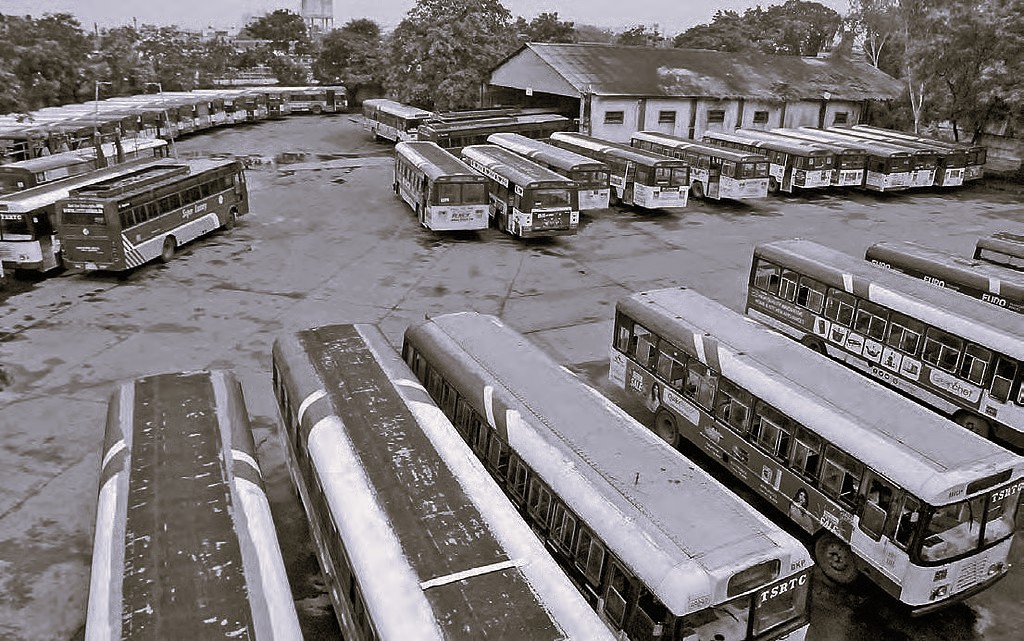
Hyderabad city buses get fare adjustment
The Telangana State Road Transport Corporation (TSRTC) has announced that bus fares in Hyderabad and Secunderabad will increase starting Monday, October 6. The decision comes as part of a broader initiative to modernize the city’s public transportation and support the introduction of a cleaner, greener electric bus fleet. The state government has approved TSRTC’s proposal to levy an additional surcharge on city buses, aimed at generating revenue for essential infrastructure required for electric buses.
The revised fare structure varies depending on the type of service and distance traveled. For City Ordinary, Metro Express, e-Ordinary, and e-Express services, the surcharge will be ₹5 for the first three stages and ₹10 from the fourth stage onward. Metro Deluxe and e-Metro AC services will also see a surcharge of ₹5 for the first stage and ₹10 from the second stage onward. TSRTC clarified that the existing ticket prices will remain unchanged, and the new surcharge is an additional cost intended solely to fund the electric bus transition.
For daily commuters, this surcharge could add a significant financial burden. Passengers traveling beyond the fourth stage on ordinary or AC services may face an additional monthly expense ranging from ₹300 to ₹600, while those on shorter routes may incur ₹150 to ₹300 extra per month. These surcharges will be applied in addition to the current ticket fares.
The fare increase is part of a larger plan to replace 2,800 diesel buses within the Outer Ring Road (ORR) area with electric buses by 2027. Implementing this plan requires substantial investment in infrastructure, including establishing high-tension connections for charging at 19 depots and creating 10 new depots with 10 additional charging stations. TSRTC officials estimate that the total cost of these facilities will be around ₹392 crore over the next year. Given the financial scale, the government has sought public cooperation through the fare increase.
TSRTC has faced additional financial pressure due to the Mahalakshmi scheme, which provides free bus travel to women. Delays in receiving reimbursements from the government have added to the corporation’s funding challenges. Nevertheless, TSRTC emphasizes that these measures are essential for reducing reliance on private vehicles, lowering vehicular emissions, and improving public health by decreasing air pollution-related diseases. A more robust and sustainable public transport system is also expected to ease traffic congestion across the city.
The corporation has urged citizens to consider this fare hike as an environmental contribution. While the surcharge represents a temporary financial burden, it is a critical step toward developing a modern, eco-friendly public transport system in Hyderabad. By supporting the transition to electric buses, residents can actively participate in creating a cleaner, greener, and healthier city for the future.