
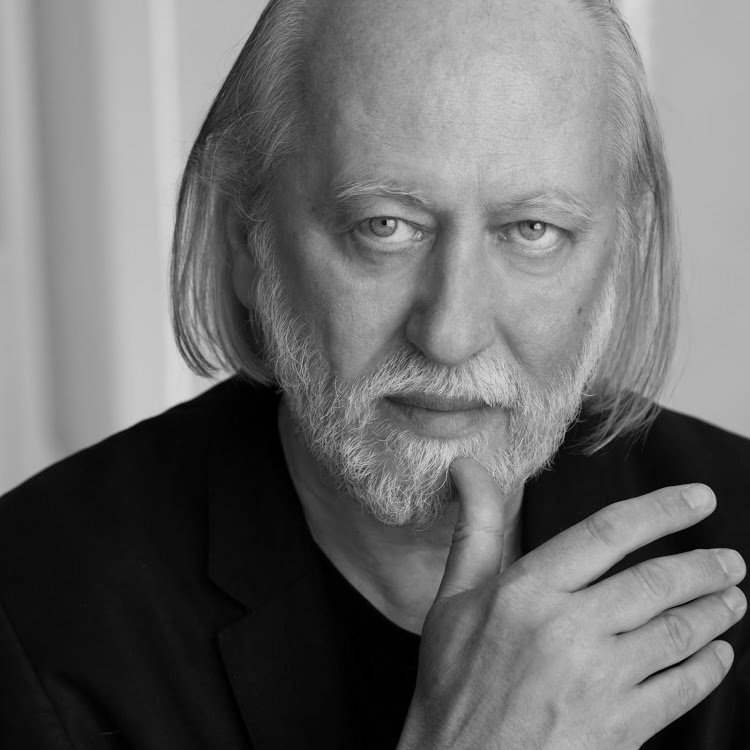
Hungarian Novelist László Krasznahorkai Wins 2025 Nobel Prize in Literature
The 2025 Nobel Prize in Literature has been awarded to Hungarian novelist László Krasznahorkai “for his compelling and visionary oeuvre that, amid apocalyptic terror, reaffirms the enduring power of art,” the Swedish Academy announced on Thursday.
Krasznahorkai, born in 1954 in the small town of Gyula near Hungary’s Romanian border, is celebrated for his dense, immersive narratives that explore the absurdity and grotesque undercurrents of human life. His latest work, Herscht 07769 , has been described as a striking contemporary German novel, noted for its accurate portrayal of social unrest in small-town Thuringen, Germany. “In Herscht 07769 , we are not in a feverish nightmare of the Carpathians, but in a believable town gripped by social anarchy, murder, and arson,” said the Academy, “all set against the haunting legacy of Johann Sebastian Bach. It is a novel written in a single breath, where violence and beauty are 'impossibly' entwined.”
Krasznahorkai’s literary career began with his first novel, Satantango (1985), which became a literary sensation in Hungary, depicting life in remote rural villages. He has drawn inspiration from Asia, particularly Mongolia and China, in works such as The Prisoner of Urga and Destruction and Sorrow Beneath the Heavens .
Influenced by literary giants of Central Europe—from Franz Kafka to Thomas Bernhard —Krasznahorkai’s novels explore existential despair and the search for meaning in a chaotic world. Albert Camus is among his favorites, his works share thematic resonance with his explorations of existentialism and absurdity.
Krasznahorkai’s novels, often set in shivering Central European villages, have captivated readers worldwide and have been translated into more than 20 languages , cementing his status as a contemporary literary master. The late American essayist Susan Sontag famously called him “the contemporary master of the apocalypse,” praising his ability to depict townsfolk searching for meaning in a godless world.
The Nobel Prize in Literature, awarded 117 times to 121 laureates since 1901, with a few instances where the laureates shared the award, continues to spotlight voices that challenge, console, and provoke readers across the globe, bringing literature into the international spotlight.